


The Tragic Aftermath of the Duxbury Murders: A Father’s Journey Through Grief, Forgiveness, and Hope
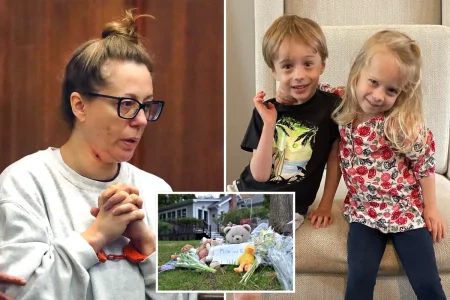
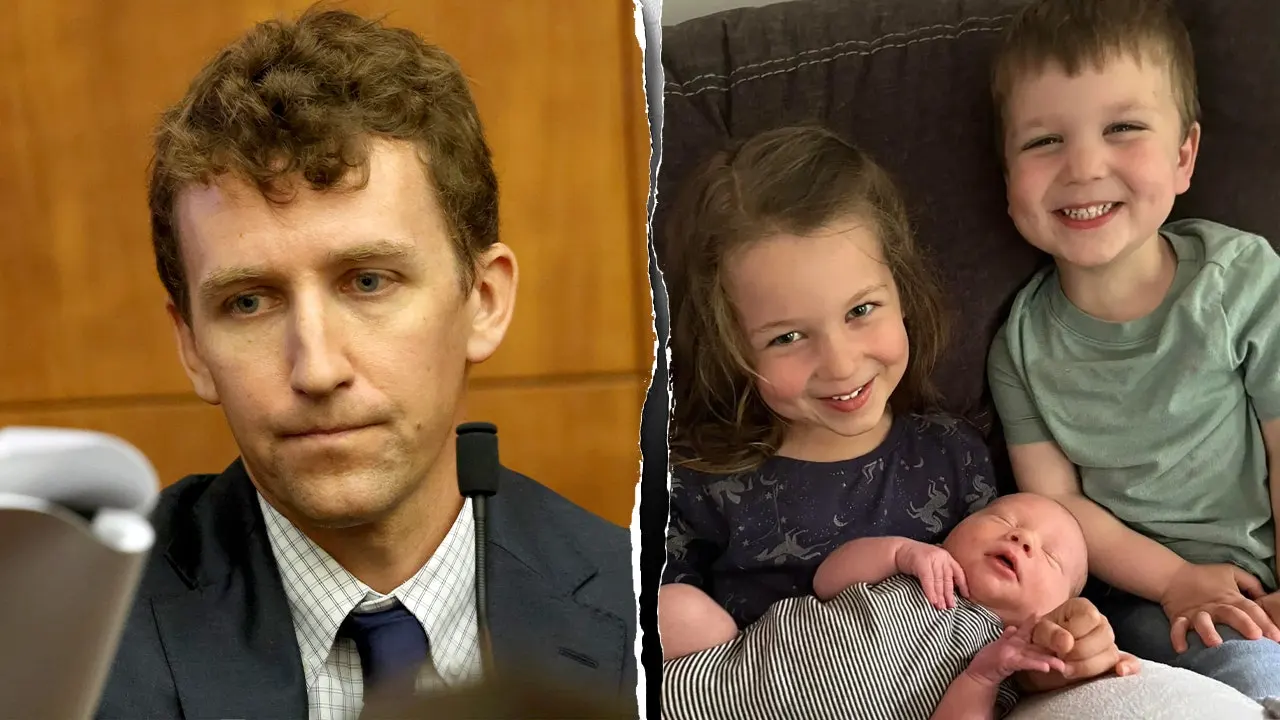
On a cold January morning in 2023, the quiet town of Duxbury, Massachusetts, was shattered by an unimaginable act. Patrick Clancy returned home to find his three young children—5-year-old Cora, 3-year-old Dawson, and baby Callan—brutally attacked in what would become one of the most heartbreaking cases of maternal mental illness in recent memory. His wife, Lindsay Clancy, a labor and delivery nurse, was later found alive after attempting suicide, and she confessed to strangling her children in a state of severe postpartum psychosis. The world watched as a golden family fell into darkness. Now, over a year later, Patrick Clancy has opened his heart to the public in a raw, deeply personal interview on CBS News’ “60 Minutes,” speaking with correspondent Ross Douthat. The interview, which aired in September 2024, came just days after Lindsay’s triple-murder trial ended in a hung mistrial, with 11 of 12 jurors believing she was not criminally responsible due to her mental state. For Patrick, the interview was not about seeking vengeance or reliving trauma—it was a desperate attempt to reclaim the narrative surrounding his children’s short, beautiful lives and to shine a light on the silent crisis of perinatal mental health. In his first extended public statements, he revealed the depth of his loss, the complexity of his forgiveness, and the fragile hope he now clings to as he rebuilds his life.
The most harrowing moments of Patrick’s account revolve around the night of the murders and the fleeting hope he held that at least one of his children would survive. As he stood in the hospital, watching doctors frantically work on baby Callan, he found himself bargaining with the universe. “Just give me one. Just give me one kid,” he recalled, his voice thick with emotion. In his mind, he envisioned a future—solitary but purposeful—where he would raise Callan alone, showering the boy with love, memories of his siblings, and a life that honored what was lost. That dream dissolved when he arrived at Boston Children’s Hospital and saw the expression on a physician’s face. For four agonizing days, Callan’s heart kept beating, a stubborn pulse that refused to surrender. Patrick stayed by his side, holding his tiny hand, whispering apologies for a world that had failed him. And when the end came, he lay down next to his son, cradling him as Callan took his final breath. “I got to lay down next to him. And he died in my arms,” Patrick said, tears streaming down his face. In those horrific hours, Patrick also found the strength to write—letters to all three children, desperately trying to etch their souls into permanence. He feared that if he didn’t capture their essence in words, the world would forget them amidst the chaos of the case and the sensational headlines that followed. Those writings became the foundation of his healing, a painful but necessary tribute to the lives that were extinguished too soon.
Perhaps the most extraordinary element of Patrick’s story is his unconditional forgiveness of Lindsay, a woman who ended the lives of their children. In a world quick to label her a “monster” or a “baby murderer,” Patrick has shown a grace that feels almost impossible. He told Douthat that Lindsay never asked for his forgiveness, but he chose to give it anyway, because he recognized that the woman who committed the acts was not the woman he married. “I believe that it was her mental illness that caused that,” he said firmly. When he asked Lindsay whether she remembered the killings, she described a dreamlike state—her memory fragmented, as if watching a horror film from behind a veil of sleep. Patrick believes that she was as much a victim of postpartum psychosis as the children were victims of her delusions. He spoke candidly about his internal struggle, revealing that he feared anger and bitterness would consume him if he held onto hatred. “I felt that if I didn’t get there, I would be eaten up inside,” he admitted. This act of forgiveness was not a sign of weakness but a calculated choice for survival—a way to honor the love he still felt for the mother of his children while accepting that she was irreparably broken by a medical emergency that went untreated. He has since become an advocate for better screening and support for new mothers, hoping that Lindsay’s case will be a catalyst for change rather than a lurid footnote in true-crime history.
In the months following the tragedy, Patrick’s grief nearly destroyed him. He described a period where the weight of loss was so crushing that he questioned whether he would live to see another birthday. “There was a time where I didn’t think I would live to see my 35th birthday, and I was completely fine with it,” he confessed, the chilling equanimity of his words betraying a profound hopelessness. To escape the constant reminders of the life he had lost, Patrick moved to New York City, a place where he could be anonymous, where his grief was just another face in the crowd. The first birthday of Callan—what would have been his first—found Patrick standing in St. Patrick’s Cathedral, lighting a candle and whispering to his son. As he walked out onto Fifth Avenue, the tears came unbidden, and for the first time, no one stared, no one judged. He wept openly, surrounded by strangers who didn’t know his name or his tragedy, and in that anonymity he found a strange comfort. “I thought, this is where I need to be,” he said. “I can grieve.” His Manhattan apartment became a sanctuary filled with relics of his children—Cora’s beloved baby sloth, a photograph of Callan in an oversized bow tie, Dawson’s little sneakers. Yet even in this safe space, the children visited him in dreams, so vivid and real that he often woke reaching for them. In one dream, Cora walked into their old kitchen and hugged him; he asked her where she had been, and for a fleeting moment, the pain dissolved into pure, unadulterated joy. These dreams, Patrick said, are both a blessing and a curse—a bittersweet reminder of what love feels like, juxtaposed against the emptiness of waking life.
The legal case, however, added a new layer of torment to Patrick’s grieving process. After the mistrial, a wave of online speculation and virality swept social media—what Douthat called “trial by TikTok.” Influencers and amateur sleuths, fueled by an endless appetite for true-crime content, began spinning baseless theories that painted Patrick as a neglectful husband, an unfaithful spouse, or even a mastermind behind the murders. These narratives, delivered with the certainty of those who have never known real loss, became a source of excruciating pain for Patrick. “It’s deeply harmful to the legacy of my children,” he said, his voice carrying the weariness of someone who has been forced to defend his innocence in a court of public opinion. He described the accusation as a “huge distraction from what really matters here, which is perinatal mental health.” The most insidious damage, he explained, is the slow erosion of truth: “After seeing lie after lie after lie, they start to believe it. And that’s what we’re left with.” Despite the online virality, Patrick remains resolute in his mission to keep the focus on the children and on the systemic failures that allowed Lindsay’s psychosis to spiral out of control. He has sought answers from mental health organizations like Postpartum Support International, and he has spoken with psychiatrists to better understand the biological and psychological forces that led to the tragedy. Those conversations have given him a language for his anger, a way to transform rage into advocacy.
Amid the wreckage of his old life, Patrick has found a new reason to smile. In January 2024, he met Dr. Rachel Danis, a fellow runner in a New York City running club. During an early coffee outing, Rachel noticed a photograph on Patrick’s phone—three adorable children—and innocently asked who they were. Patrick’s answer, quiet and heavy, stopped her cold: “Those are my kids.” When she asked if they lived in Massachusetts, he told her they had died. In that moment, instead of fleeing from the overwhelming weight of his past, Rachel leaned in. Their bond deepened through shared miles and honest conversations, and in April 2024, they were married in an intimate ceremony in Manhattan. Rachel, who joined Patrick for the “60 Minutes” interview, spoke with warmth about finding love in the shadow of such profound loss. The couple has not shied away from the future; they talk openly about having children together, and Patrick’s answer to how he will explain Cora, Dawson, and Callan to a new child is simple and profound: “You have different relationships with your kids, but they’re all your kids. And I can’t wait to tell them about their brothers and sister.” As the legal system grapples with what to do next—prosecutors have yet to decide whether to retry Lindsay—Patrick Clancy stands as a testament to the resilience of the human spirit. He is no longer just a grieving father; he is a man who has chosen to live, to love again, and to ensure that his children’s memories are not defined by their deaths, but by the fierce, unbreakable love he carries for them in every step forward.