



Week 1 of the NFL season often feels like a festival of fresh hope: new faces, new playbooks, new chances to dream. But once the confetti is swept away and the highlights have faded, the real story of the league begins to emerge in trainer’s rooms, MRI suites, and quiet conversations between players and coaches. Sunday’s games were brutal in the way football is supposed to be, and that brutality came with consequences. The Philadelphia Eagles walked out of their opening win over the Washington Commanders with a victory, but also with a growing problem on their offensive line. In Minnesota, the Vikings celebrated a hard-fought win against the Green Bay Packers while their starting quarterback was slipping into the fog of concussion protocol. At the same time, the New England Patriots were desperately hunting for a sliver of good news after a ten-point offensive performance that left fans and players alike searching for answers. Meanwhile, the Los Angeles Chargers were holding their breath over a young wide receiver who had just delivered one of the most exciting performances of the afternoon before disappearing into the sideline medical tent with a chest injury. Monday, then, became its own kind of game day—a day when teams sorted through the fallout, ticked through the injury report, and tried to figure out who could still suit up and who needed to be shut down. For every player who walked off the field under his own power, another one sat in front of a doctor with an ice pack and a worried expression. For every coach who talked about “the next man up,” there was a player in the back of his mind thinking, “That next man might be me.” The injury report is not a footnote to Week 1; in many ways, it is Week 1, a reminder that the sport’s beauty and its costs are impossible to separate.
No story captured the strange mixture of pride and vulnerability better than the one coming out of Philadelphia. Landon Dickerson, the Eagles’ veteran left guard and a three-time Pro Bowler, had been playing on a knee he knew was not right. He had been rolled up on during practice a few weeks earlier, and although the pain had dulled enough during the week to let him convince himself he was ready, the reality of an NFL game is brutally different. In the opener against the Commanders, Dickerson struggled. He later admitted that he had been a liability, and he did so with an honesty that is rare in professional football. “I played like s— yesterday,” he said. “I was a complete liability yesterday.” That kind of self-criticism is hard for any athlete to utter, especially one who has built his career on toughness and reliability. But Dickerson went further, acknowledging that he had let his own determination override better judgment. The imaging on Monday confirmed what his body had been screaming all along: a bone bruise, the kind of injury that does not heal if you keep slamming it over and over. The Eagles made the call that Dickerson himself had been avoiding, placing him on injured reserve and effectively taking him out of action for at least four games. For a 27-year-old offensive lineman who had already undergone meniscus surgery and had probably returned from that surgery too soon, this was more than a physical setback; it was an emotional gut punch. It also created a real crisis for the Eagles, because the offensive line is the engine that makes everything else run. Losing a Pro Bowler at left guard means asking a second-year player, Drew Kendall, to step into the starting lineup, with rookie Willie Lampkin also waiting in the wings. Dickerson tried to keep his spirits up, noting that bone bruises stop hurting once you actually let them heal. But his tone suggested a player who was exhausted by his own body, frustrated by the decision he had made, and learning the hardest lesson in football: sometimes the bravest thing you can do is take yourself out of the game before it takes you out for even longer.
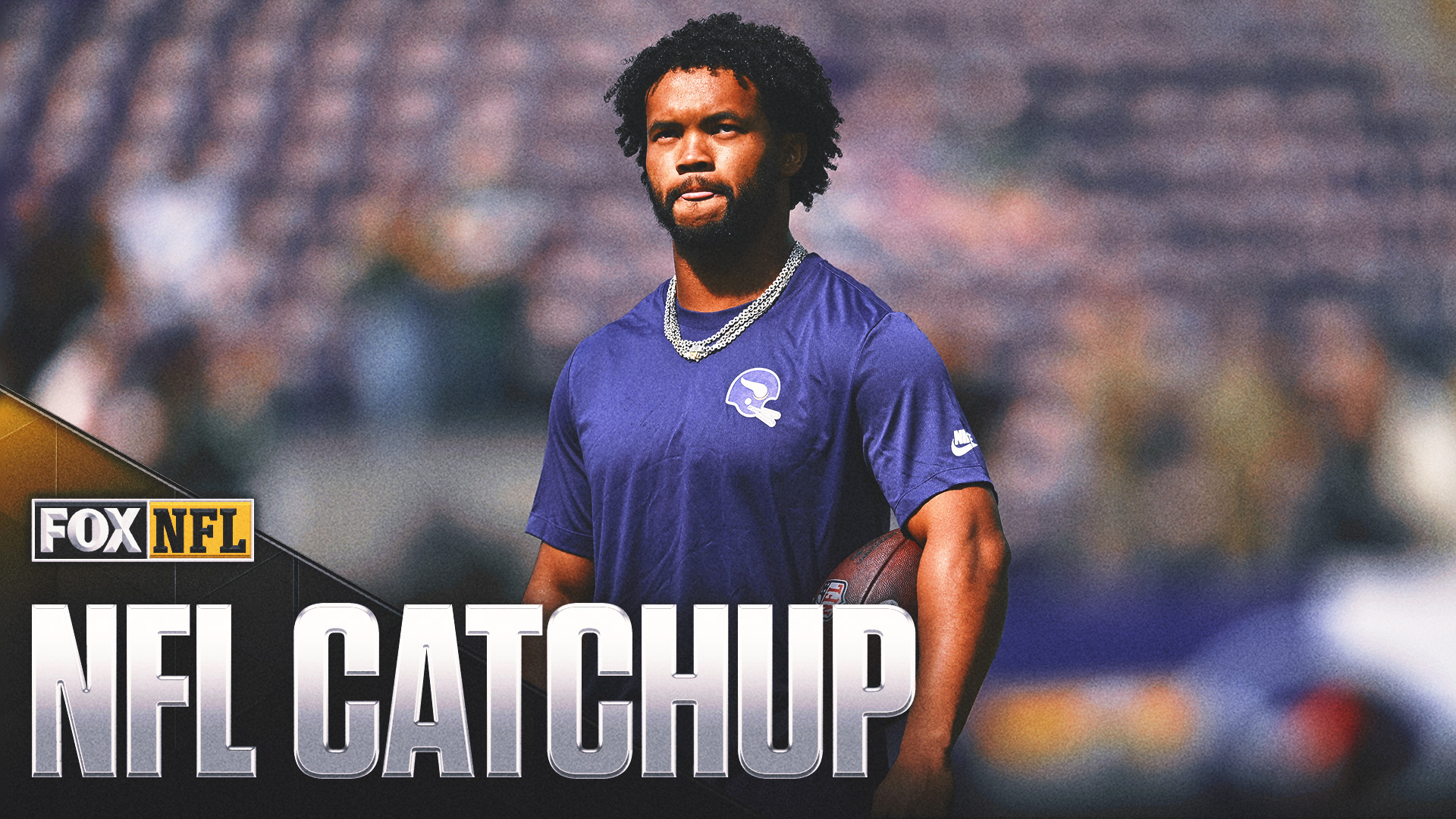
Across the state line, the Minnesota Vikings were dealing with a much scarier situation. Their starting quarterback, making his first start in the team’s purple and gold, had been knocked out of the lineup by a violent hit to the head while sliding. He had already thrown an interception on the opening drive, the kind of nerve-racking mistake that can weigh on a quarterback’s mind in a new environment. Then, on the third drive, came the play that made everyone in the stadium go quiet: a hard, direct shot to the head, the slide not quite enough to protect him, and suddenly a season opener had turned into a medical emergency. The update on Monday was not much of an update at all. Head coach Kevin O’Connell said that the quarterback remained in concussion protocol and offered no timeline for his return. “We’ll monitor his progress,” O’Connell said, which in coach-speak means “we don’t know.” The uncertainty leaves the franchise in limbo. If the starter cannot clear the required protocols before the team’s next game against the Chicago Bears, Carson Wentz would likely get the call, with J.J. McCarthy serving as the backup. That is not the way any team wants to build momentum two weeks into a season. But there was another layer to the story that offered a bit of hope: Wentz, after stepping in against the Packers, threw three touchdowns and reminded everyone that he could still handle the pressure of a starting job. Still, no one in Minnesota was in a celebratory mood. The image of a quarterback walking slowly toward the sideline, teammates’ hands on his shoulder pads, his eyes glazed and his balance uncertain, is a grim reminder that the NFL’s speed and violence have consequences that no playbook can protect against. The human brain does not care about division rivalries or contract years. All that matters is whether the dizziness fades, whether the headaches stop, whether sleep comes easily again. Until those things happen, the quarterback will be treated like fragile cargo. For his teammates, the lesson is simple: the show goes on, but only if the player’s health comes first.
The New England Patriots experienced a different kind of Week 1 pain, one born from the humiliation of a loss that felt less like a setback and more like an identity crisis. Their offense was stagnant from the opening series, their touchstones missing, their energy flat. By the time the final whistle ended their game against the Seattle Seahawks, they had mustered only ten points, and the mood around the team was as dark as a New England winter afternoon. But on Monday, head coach Mike Vrabel handed the organization a small, welcome gift: running back TreVeyon Henderson, who had not practiced since August 24, was going to return to practice. That may not sound like much to the outside world, but inside the building it felt like the first break of the season. Henderson has the kind of explosive acceleration, lateral quickness, and home-run hitting ability that can transform an ordinary offense into something dangerous. The Patriots need that exactly right now. With a star wide receiver already on injured reserve and the receiving corps dealing with other nagging injuries, the offense is starving for playmakers. Even if Henderson is not immediately cleared to suit up for the next game, his presence on the practice field is a morale boost for a team that has spent the past few days trying to ignore the sting of an ugly opening defeat. If Henderson cannot go, Rhamondre Stevenson would once again have to carry the load as a bell-cow back, taking hit after hit and trying to manufacture yards that were simply not there against Seattle. But the hope is that Henderson’s return brings a spark, not just to the running game but to the whole offense. Vrabel did not promise that Henderson would play, only that he would practice. After a week like that, practice sounds like a victory.
Across the league, the Chargers were dealing with a more painful kind of optimism. Ladd McConkey had been the clear bright spot of their offense against the Arizona Cardinals, pulling in five catches for 82 yards and a touchdown, a performance that had fans checking the stat line twice and wondering just how big this kid could become. Then, in the middle of the field, he took a hit that knocked the excitement out of everything. He left the game with what was initially described as a chest injury, and the afternoon suddenly became less about his statistics and more about his health. On Monday, coach Jim Harbaugh offered an update that felt like a collective exhale: the injury was to the rib area, and McConkey was listed as day-to-day. No injured reserve. No talk of surgery or long-term absence. Just the football phrase every player loves to hear—“day-to-day”—which means he might miss a game, but he has not lost the season. The Chargers will prepare their game plan for the Las Vegas Raiders with contingency options already in place. If McConkey cannot play, the receiving duties would be shared among Quentin Johnston, Tre Harris, and rookie Brenen Thompson. That is enough talent to hold the fort, but it is not the same. McConkey is the kind of receiver who creates separation out of nothing, runs precise routes, and makes contested catches look routine. His absence would alter the rhythm of the entire passing attack. But for the moment, the mood in Los Angeles is relief. A rib injury might hurt like the devil, especially when someone hits you again, but it is not a knee injury. It is not a concussion. It is not the kind of setback that can redefine a season. In a league where one awkward landing can rewrite a career, hearing the words “day-to-day” is as close to good news as any player could ask for. The human part, of course, is that McConkey will want to play no matter how much pain he is in. And the coaches will have to be the adults in the room, protecting him from his own desire to be on the field.
As Monday wore on and the official injury reports began to circulate, a larger truth settled over the NFL: this is a marathon, and Week 1 is just the opening mile. The Eagles lost a starting left guard for at least a month, and now they will ask a young, unproven lineman to protect their franchise quarterback’s blind side. The Vikings face the very real possibility of changing quarterbacks in Week 2 because one poorly executed slide changed the trajectory of their entire week. The Patriots are clinging to the return of a running back as if he were the last life raft on a sinking ship. And the Chargers are counting their blessings because a rib injury could have been a much more serious disaster. This is the human side of football, the side that often gets lost in the glow of highlight reels and fantasy football projections. Players will hide pain, coaches will lean on trainers, and teams will keep playing as other men fall around them. But there is also something beautiful in these stories. There is Dickerson’s humility, his willingness to admit that he was not good enough and that he needed to step back. There is Wentz’s unexpected redemption, a reminder that veterans can still rise when circumstances demand it. There is Henderson’s determination to get back on the field, and there is McConkey’s brilliant flash of stardom before injury interrupted the moment. “Next man up” has become such a cliché that we sometimes forget what it actually means. It means a backup quarterback walking onto the field with cold hands and a racing heart. It means a rookie offensive lineman trying to remember his assignments while two of the league’s best pass rushers stare at him. It means a team that was embarrassed in Week 1 finding one reason to smile. For all the analytics, all the schemes, and all the strategy that dominate modern football, the sport is still built on flesh, blood, and spirit. The first injury report of the season is a reminder that every celebration, every comeback, and every heartbreaking loss begins with a person willing to put everything on the line for a game.