



Paragraph 1
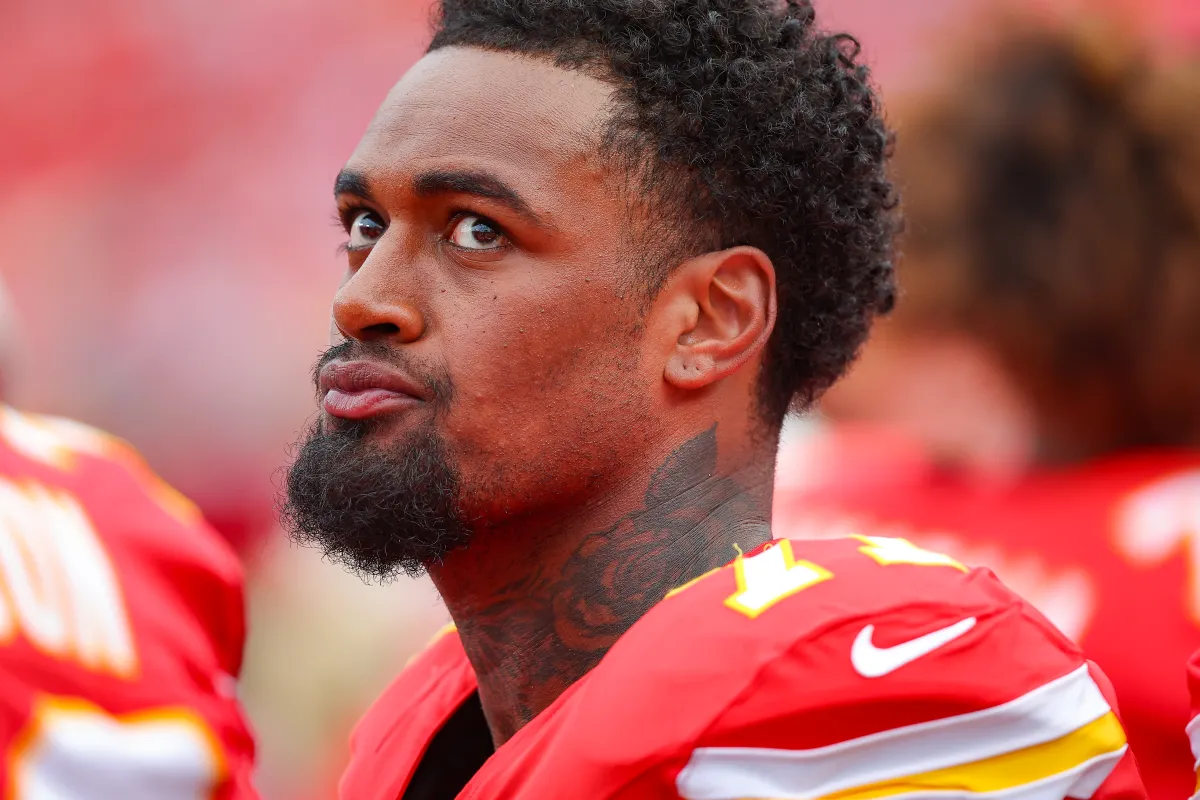
For the Kansas City Chiefs, the start of a new season should feel like a breath of fresh air. The painful memory of Patrick Mahomes’ devastating knee injury, the one that cut a promising year short and left a championship city holding its breath, has slowly begun to fade. With a dominant season-opening performance behind them, there is optimism in the air. But underneath that hope, an unsettling question has begun to take shape—one that has nothing to do with Mahomes and everything to do with the big man paid to protect him. Josh Simmons, a second-year offensive lineman, is not where the Chiefs need him to be. A month ago, during the grind of training camp or in the middle of a routine practice, Simmons hurt his back. At first, it seemed like the kind of injury that would heal quietly, with a few days of rest and a couple of cautious steps forward. But a month has passed, and Simmons remains a mystery. No clear explanation has been offered, no firm date has been set, and no one seems willing to say exactly when the young lineman will return to the field. The silence around his condition has become its own kind of noise, and it has started to worry fans, teammates, and even people inside the organization. When you rely on a player to keep your franchise quarterback safe, every day he spends in the training room is a day that carries extra weight. And when the injury itself is wrapped in ambiguity, the anxiety only grows. The Chiefs have tried to keep things professional, to offer updates without giving away too much, but the longer Simmons disappears from practice, the more the situation feels like something bigger than a typical midseason setback. This is not a story about a player being cautious or a team being overly careful. This is a story about uncertainty, and in the NFL, uncertainty is the enemy of success.
Paragraph 2
The man at the center of it all, Josh Simmons, has spent the last few weeks doing everything he can to get back on the field, but progress appears slow. Two weeks ago, troubled by the lack of improvement, Simmons decided to seek a second opinion on the injury. It is a move that players often make when they are frustrated, when their own recovery is stalling, or when they simply want to make sure that their long-term health is not being placed at risk for a short-term gain. The fact that Simmons felt the need to do this is telling. It suggests that the pain is not going away as quickly as everyone hoped and that the medical staff’s first plan may not have produced the results they wanted. When Chiefs head coach Andy Reid addressed the media on Friday, he did his best to sound calm, but his words carried a hint of something less reassuring. Reid told reporters that the medical staff would go back and reevaluate Simmons, adding that Simmons is feeling better than he was before. But then came the part that made everyone stop and listen: “As far as good enough to play? We’ll see.” That phrase, “we’ll see,” may have been intended as a simple avoidance of commitment, but to listeners, it sounded like a coach who does not know when his player will be available. For a player this young, for a player the Chiefs were counting on, that is not the kind of answer anyone wants to hear. In a league built on certainty and timing, on weekly game plans and carefully coordinated schemes, a vague timeline can be more damaging than a definitive bad one. At least with a bad one, you can plan. With “we’ll see,” you are left in limbo, waiting for a resolution that may not come soon. Reid has always been a players’ coach, someone who protects his guys and keeps their struggles private, but even his trademark optimism could not hide the reality that Simmons is still nowhere close to returning to action.
Paragraph 3
The situation became even more concerning when Jordan Foote, a reporter covering the Chiefs for Kansas City Chiefs on SI, pointed out what was happening on the practice field. Simmons missed yet another practice, Foote noted, and all signs pointed toward him sitting out the team’s upcoming Sunday Night Football matchup against the Indianapolis Colts at home. Missing time in practice is one thing. Players do it all the time. Some are veterans who get veteran’s days off. Others are managing minor aches and pains that would not stop them from playing in a real game. But this is different. Simmons’ absence is not a maintenance day or a precautionary rest period. It is a forced absence, the kind that comes when a player’s body simply will not cooperate no matter how much he wants it to. What makes the situation even more troubling, according to Foote, is that Simmons has not even been around the team in the way that other injured players have. While his teammates have been out on the field, going through drills and preparing for the Colts, Simmons has spent his time primarily inside the team facility, rehabbing alone. That separation matters. Football is a game built on relationships, on communication, on feeling like you are part of something bigger than yourself. When you are injured, you can quickly feel disconnected from the group. You are still on the payroll, still in the building, but you are no longer in the middle of the action. You are watching from the sidelines, and sometimes, you are not even doing that. You are in a weight room or a training room, working on a back that refuses to heal while your teammates are preparing to go to war. That kind of isolation can take a toll on a player’s mental state. It makes every day feel longer, every recovery milestone feel smaller, and every setback feel like a mountain. For a second-year player trying to establish himself, that experience is especially hard. Simmons has not had the chance to prove himself consistently, and now he is watching his opportunity slip away, one missed practice at a time.
Paragraph 4
Perhaps the most alarming assessment comes from a man who knows exactly what it takes to play offensive line in the NFL. Geoff Schwartz, a former professional player who now works as an analyst, shared his thoughts on social media in response to a video of Reid’s comments. Schwartz was quick to say that he had no inside information, that he was not speaking to anyone within the Chiefs organization, and that what he was about to say was simply his gut feeling. But in a world where analysts are often careful with their words, Schwartz did not hold back. “I have doubts Simmons plays much this season,” he wrote. “Not sure how you can think otherwise at the moment.” Those words sting because they come from a place of experience. Schwartz has been through the grind. He knows how hard it is to return from a significant injury, especially one involving the back. He knows the difference between feeling better and being able to perform at an elite level. He knows that there is a massive gap between being healthy enough to walk around the facility and being healthy enough to anchor a professional offensive line against some of the most powerful pass rushers in the world. When a former player looks at the situation and says he does not think Simmons will play much this season, it is impossible to ignore. It is one thing for a reporter to note that Simmons missed a practice. It is another for a coach to say “we’ll see.” But when a former player, someone who has lived the game and understands the toll it takes on the body, expresses serious doubt, the situation becomes much more real. Schwartz’s comments reflect what many fans have been quietly thinking but were too afraid to say out loud. Maybe Simmons is not coming back this year. Maybe his season is effectively over, even if no one wants to admit it yet. Maybe the Chiefs are going to have to move forward without him and hope that the rest of the offensive line can hold up under the pressure of a long, demanding NFL season.
Paragraph 5
If Simmons is unable to contribute, it will be a significant blow to the Chiefs, a team that has made no secret of its goal to keep Patrick Mahomes upright at all costs. Last year, Mahomes went down with a terrifying knee injury that ended his season earlier than anyone in Kansas City wanted. The image of the franchise quarterback writhing in pain was enough to send shockwaves through the organization and its fan base. The Chiefs responded by rebuilding, by adding pieces, by making sure that Mahomes would have the protection he needed to thrive. Simmons was supposed to be a part of that plan. He was supposed to be a young, developing lineman who could help shut down opposing pass rushes and give Mahomes the time he needs to make the magic happen. Without him, the offensive line is thinner, less experienced, and more vulnerable. The pressure falls on other players to step up, players who may not be ready for the responsibility. The concern is real, but the Chiefs have at least some reason for hope. In his season debut, a dominant 31-10 victory over the Denver Broncos, Mahomes looked like his old self. He moved around the pocket with confidence, threw the ball with precision, and showed no obvious signs of fear or hesitation. He was sacked only twice in that game, a number that the Chiefs would gladly accept on any given Sunday. It was a reminder that even when things are not perfect, Mahomes has a way of making them work. He has the ability to escape pressure, to extend plays, to turn broken moments into highlights. But relying on that ability is a dangerous game. Every quarterback, no matter how talented, needs a solid line in front of him. Every play, every drive, every season depends on the men up front doing their jobs. If Simmons cannot be one of those men, the Chiefs will have to find someone else, and that is a thought that keeps coaches up at night.
Paragraph 6
So what happens now? The Chiefs move forward, as they always do, with or without the players they hoped would be there. Josh Simmons will continue to rehab, continue to seek answers, continue to fight for a return that may or may not come this season. The medical staff will reevaluate him, as Reid promised, and they will try to figure out what is causing the back to heal so slowly. Maybe they will find a solution. Maybe a few more weeks of rest and treatment will be enough. Maybe Simmons will walk back onto the practice field one day and pick up right where he left off, giving the Chiefs a boost at exactly the right time. It is possible. Injuries are unpredictable, and players have returned from worse situations to make meaningful contributions. But it is also possible that this is a lost season for Simmons, a year in which he learns more about patience and perseverance than he does about football. If he cannot return, the Chiefs will face a long list of questions, not only about their offensive line but about the way they handled his injury, the way they communicated with him, and the way they planned for a future without him. They will have to adjust, to adapt, to find a way to win without one of their young building blocks. For Mahomes, the mission remains the same. He wants to play deep into January, to put the Chiefs back at the top of the NFL, to erase the memory of last year’s injury with a season that ends in triumph. Whether Simmons is by his side or not, the journey will go on. But as the days pass and the mystery around Simmons deepens, one thing becomes clearer: football is a sport that thrives on certainty, and right now, the Chiefs have very little of it when it comes to their young lineman. All they have is a back injury, a second opinion, a “we’ll see,” and hope. In the NFL, sometimes hope has to be enough.