


Behind every regulatory action and product recall, there is a human story, and in this case it begins with Yufang Lan, a 46-year-old worker whose life ended far too soon. California officials believe Lan died following an occupational pesticide exposure at Joel Michaely Farms, a sprawling marijuana cultivation operation in Lake County. She was brought to a local hospital by an unidentified man on August 21, suffering cardiac arrest, and spent six days in intensive care before dying on August 27. The man who brought her in remains unidentified, and the circumstances surrounding her arrival remain shrouded in uncertainty. What is known is that her death prompted an investigation by the California Department of Cannabis Control, which ultimately shut down the farm on September 8 and suspended its license. It is a sobering reminder that the legal cannabis industry, for all its promise and prosperity, still relies on laborers whose health and safety can be overlooked in the pursuit of profit. Lan was not just a name in an affidavit; she was someone’s family member, someone’s friend, and her death should never have happened in a regulated industry.
The state’s response moved quickly, but for those who had purchased cannabis products connected to the farm, the news came as a disturbing surprise. The DCC recalled at least four products deemed “adulterated,” meaning they were produced under unsanitary conditions and through methods that did not conform with pesticide statutes and regulations. Among the recalled items are Iced infused flower, produced by Natura Distribution and sold at twenty retailers across California, and Martini’s Pre-Roll, produced by Peace and Joy and sold at several Los Angeles stores. The agency confirmed that both of these recalls are connected to Joel Michaely Farms. Two other products—Tree House Flower, also produced by Peace and Joy, and Cali Lean Tincture, produced by 510 Consultants—were also recalled, though it remains unconfirmed whether they came from the same farm. These products were not necessarily recalled because someone got sick after consuming them, but because the conditions in which they were cultivated were dangerous enough to warrant pulling them from dispensary shelves. For consumers, the recall is a warning that the cannabis they thought was safe might have been grown in an environment contaminated by illegal chemicals and unspeakable working conditions.
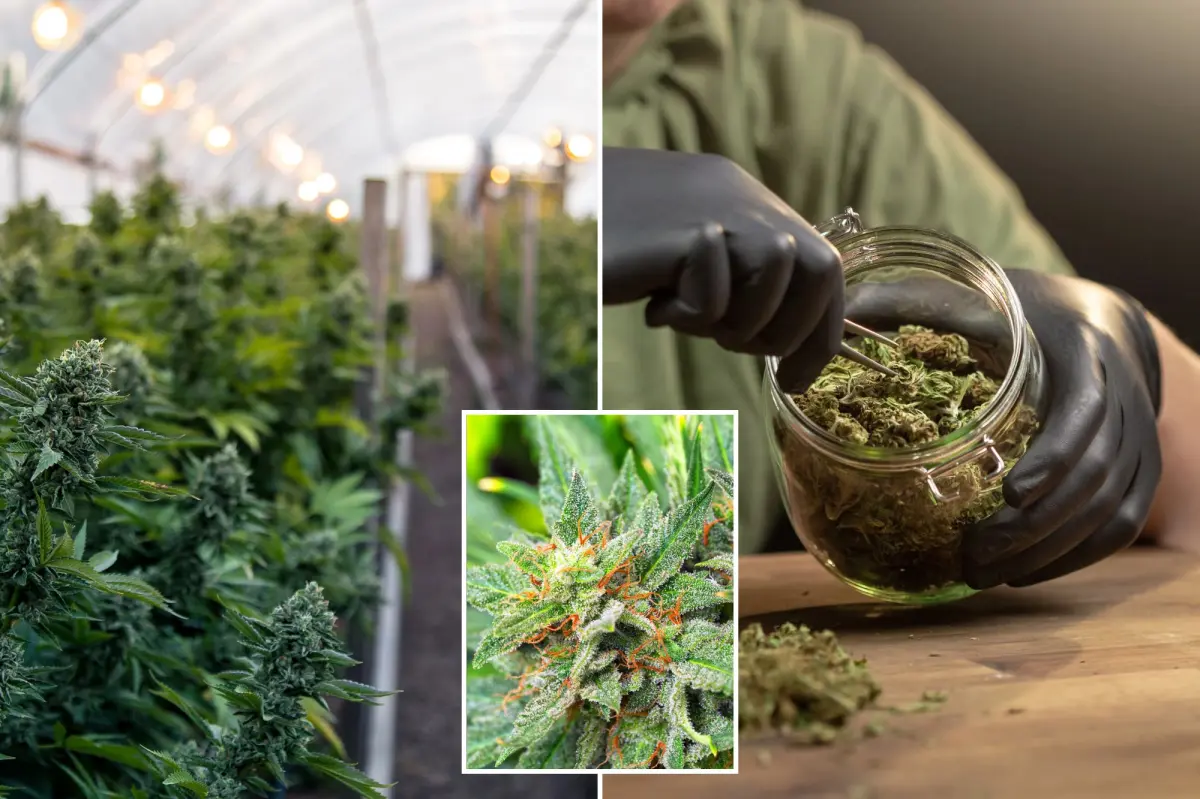
The sheer scale of the farm makes this case even more alarming. Lake County planning records show that Joel Michaely Farms was approved for nearly one million square feet of cannabis canopy, a massive operation that would require enormous resources, labor, and oversight. When investigators executed a search warrant on August 31, they found 55,069 cannabis plants, 6,000 pounds of processed cannabis, and what they described as “illegal chemicals” scattered throughout the property. In addition, they uncovered approximately 20,000 gallons of contaminated liquid requiring specialized disposal—an environmental hazard that likely threatened not only the workers on site but the surrounding land and water. All of the cannabis was destroyed. It is difficult to comprehend how such a large operation could operate under the radar of a supposedly regulated market, or how it could be approved for so much growing space without more rigorous inspections. The discovery of this enormous, hidden farm paints a picture of an industry still struggling to enforce its own rules.
The investigation also revealed a disturbing array of banned and unapproved chemicals. DCC Special Investigator Jaime Musuda noted in an affidavit that the farm consisted of two outdoor cultivation areas and 112 hoophouse structures. Inside roughly twenty of those hoophouses, investigators found cans of “Real-Kill Indoor Fogger,” a fumigant pesticide positioned several feet apart—suggesting it was being used deliberately and on a large scale to treat pest problems. Outside, they discovered several bottles of illicit foreign-labeled pesticides, along with three pesticides unapproved for use on cannabis: Eagle 20, which contains myclobutanil; Sanmite SC, which contains pyridaben; and Altus, which contains flupyradifurone. Each of these chemicals carries its own risks, and their presence on a cannabis farm is deeply troubling because they can leave residue that ends up in the lungs and bodies of consumers. The use of such substances violates state regulations and exposes everyone in the supply chain to potential harm, from the workers who breathe in the chemicals to the patients and recreational users who simply trusted that the products were safe. This is not just a bureaucratic violation; it is a public health crisis waiting to happen.
Perhaps the most heartbreaking part of this story is the condition of the workers themselves. According to Musuda, about ten to fifteen workers lived on the property in cramped, unsanitary conditions, with moldy walls and no indication that they had any other place to go. All of them spoke Mandarin, and none had been paid because the farm had yet to turn a profit. The onsite cultivation manager told investigators that reaching profitability “could take years,” meaning these workers were essentially trapped in a cycle of labor with no compensation and no way out. It is unclear whether Yufang Lan was among the workers living on the property, but her death raises urgent questions about how many more people are living in similar conditions across California’s cannabis farms. These are vulnerable, primarily immigrant workers who may not know their rights, may fear speaking up, and may have no access to legal assistance or healthcare. They are the invisible backbone of an industry that advertises wellness and care, yet they are treated as disposable. The moldy walls, the unpaid labor, the dangerous pesticides—all of it paints a portrait of exploitation that cannot be allowed to continue.
As California officials continue their investigation, more recalls may follow, and the industry must confront uncomfortable questions about oversight, enforcement, and the human cost of its supply chain. How was a farm of this size allowed to operate with so many violations? Why were workers living in such conditions without pay? And how many other farms are operating in a similar shadow, hidden behind legal licenses and approved permits? The death of Yufang Lan is not an isolated tragedy; it is a symptom of a system that has prioritized production over people. State agencies must do more than issue fines and recall products after the damage is done. They need to implement stronger worker protections, regular and unannounced inspections, and meaningful penalties that make it impossible for farmers to treat laborers as expendable. Consumers, too, should demand transparency about where their cannabis comes from and how it was grown. For now, the emotional weight of this story lies with Lan, whose life was cut short by the very work that was supposed to sustain her. Her death should be a turning point—a moment when California’s cannabis industry recommits itself to the values of safety, dignity, and justice that it claims to represent.