


Imagine waking up one morning to learn that your government is considering a law that could send you to prison for three years—not for violence, not for theft, but for buying olives from a farm on the other side of a contested hill. That is the stark reality now facing Norwegian citizens and companies under a proposed law from Norway’s Ministry of Foreign Affairs. The legislation would make it a criminal offense to knowingly import goods from Israeli communities in the West Bank, including East Jerusalem, or to export goods to those communities. It would also restrict real estate purchases, construction and engineering services, and investments in businesses headquartered and operating in those areas. The penalties are severe: intentional violations could bring fines, up to three years in prison, or both, while even negligent violations could result in fines or up to six months behind bars. The proposal is still under public consultation, with responses due September 19, so nothing has been enacted yet. But the very idea has already ignited a firestorm of criticism, with opponents saying the law does not target a border or a policy—it targets Jewish people. For those who live in these communities, or who trade with them, the message feels personal, existential, and deeply discriminatory.
From the Norwegian government’s perspective, however, this is not about religion or ethnicity. It is about international law and moral responsibility. The Ministry of Foreign Affairs points to United Nations Security Council findings and advisory opinions from the International Court of Justice, both of which have long held that Israeli settlements in territories captured in 1967 violate international law. Norway’s Foreign Minister, Espen Barth Eide, framed the proposal as a necessary step to ensure that Norwegian citizens and companies do not profit from or support activities that sustain what he called Israel’s “unlawful settlement activity in Palestine.” In the government’s own words, the settlements contribute to “displacement, extreme violence and a situation that makes a peaceful solution impossible.” The proposed restrictions are designed to cover imports and exports, property purchases, certain property-related services, and acquisitions of businesses with headquarters and production in the settlements. At the same time, the draft includes exemptions for humanitarian activities and for transactions that the government determines have “sufficient Palestinian ties” and do not contribute to the construction, expansion, or maintenance of Israeli communities. For Oslo, this is an attempt to draw a clear commercial line: do not help build or sustain settlements, but do not harm ordinary Palestinians either. It is a policy rooted in a two-state solution, however distant that solution may seem today.
But for Israel, the proposal is not a principled stand—it is an obsession. Israel’s Ambassador to the United Nations, Danny Danon, did not mince words. He called the proposal “the latest expression of their obsessive and openly hostile policy toward Israel,” adding that Norway has chosen “political grandstanding, selective outrage and punitive measures against Israel.” In his view, the law damages bilateral relations, encourages rejectionism, and shows how detached Norwegian policy has become from the realities of the Middle East. The Israeli Foreign Ministry’s Northern Europe Department echoed that sentiment in a statement on X, accusing Norway’s foreign minister of “obsessive anti-Israel activism on the global stage.” The ministry said Norway has “repeatedly chosen to sacrifice its bilateral relationship with Israel in favor of one-sided rhetoric and hostile actions that serve domestic interests, undermine efforts to reach peaceful solutions, and are completely detached from the reality in the Middle East.” There is genuine anger here, and it is hard to separate it from a larger feeling of betrayal. Norway has long been seen as a mediator and a friend in the region, a country that helped facilitate the Oslo Accords in the 1990s. Now, in the eyes of many Israelis, it has become just another European voice calling for boycotts and criminalization, singling out the Jewish state while the world’s worst abuses go unanswered.
Perhaps the most painful criticism comes from within Norway itself, from a Christian leader who sees the law as a form of religious and ethnic discrimination. Dag Juliussen, national director of the Norwegian branch of the International Christian Embassy Jerusalem, argues that the exemptions in the bill reveal its true nature. The law would permit business with Palestinian residents—Muslim, Christian, Arab, or Bedouin—while criminalizing comparable transactions with Jewish residents living in the same territory. Imagine two farmers standing on the same road, selling the same kind of produce. One is Palestinian, and buying from him is legal. The other is Jewish, and buying from him could land you in prison. Juliussen says the determining factor would effectively be the identity of the seller, which makes the law “deeply racist toward Jews.” He also warned that the bill is based on a “fundamentally misguided understanding of the Middle East conflict” and a rewriting of history. In his words, such a law would “effectively serve as a reward for terrorism,” because it punishes Jewish communities while ignoring the violence and extremism that have driven so much of the conflict. For him, the law does not bring peace closer. It deepens divisions, hardens identities, and gives extremists on all sides more reason to believe that peaceful coexistence is impossible.
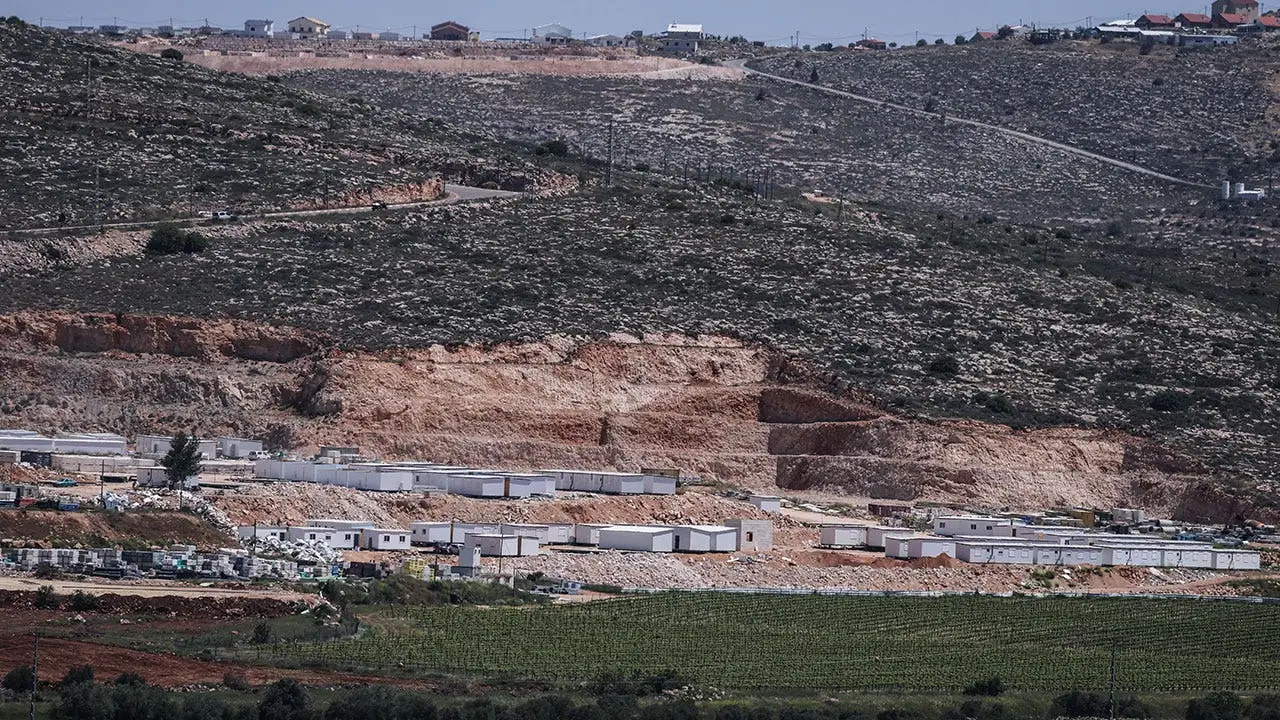
The broader context makes this debate even more charged. Norway formally recognized a Palestinian state in 2024, and since the Hamas-led terrorist attacks of October 7, 2023, it has become one of Israel’s strongest European critics. For many Israelis, that timing feels like a betrayal. They remember the horrors of October 7, the hostages, the trauma, and they see Norway choosing to punish Israel rather than stand with it against terrorism. For many Palestinians and their supporters, however, Norway’s move is a long-overdue acknowledgment of their suffering—decades of occupation, settlement expansion, displacement, and violence that have made a Palestinian state seem like a fading dream. The settlements themselves are not just a political abstraction. They are communities with schools, farms, businesses, and families. To Israelis, they are part of their ancestral homeland, rooted in biblical history and security needs. To Palestinians and much of the world, they are an illegal encroachment on land that was supposed to be the foundation of a future Palestinian state. The law sits at the intersection of these two narratives, and it is impossible to understand the fury it has provoked without understanding that both sides feel they are fighting for their very existence. The Norwegian government insists it is trying to uphold international law and prevent complicity in wrongdoing. But to critics, the law feels like a weapon aimed at one people, dressed up in the language of human rights.
In the end, this proposal is more than a trade restriction. It is a mirror reflecting how deeply the Israeli-Palestinian conflict has fractured even the most well-intentioned efforts to address it. The Norwegian government says it wants peace, security, and a two-state solution. Israeli leaders say they want the same, but they see this law as pushing peace further away. Christian Zionists like Juliussen warn that criminalizing Jewish residents of the West Bank will not liberate anyone or heal any wounds. Instead, it will reward those who believe violence is the only answer, and it will punish people simply for living where they believe they have a right to live. The law is not yet in force. It is still a consultation document, a proposal, a draft. But the conversation it has started is already real. It has forced Norwegians to ask themselves what kind of country they want to be: one that takes bold moral stands, or one that gets lost in the complexities of a conflict it cannot solve. It has forced Israelis to ask whether Europe is still a partner or an adversary. And it has forced all of us to confront an uncomfortable truth: in a land where two peoples claim the same soil, every law, every trade agreement, and every word of condemnation can become another brick in a wall—or another bridge toward a peace that still seems just out of reach. The question is whether Norway’s lawmakers will listen to the critics, refine the proposal, or push forward into a future where even buying a jar of honey can be a crime.