

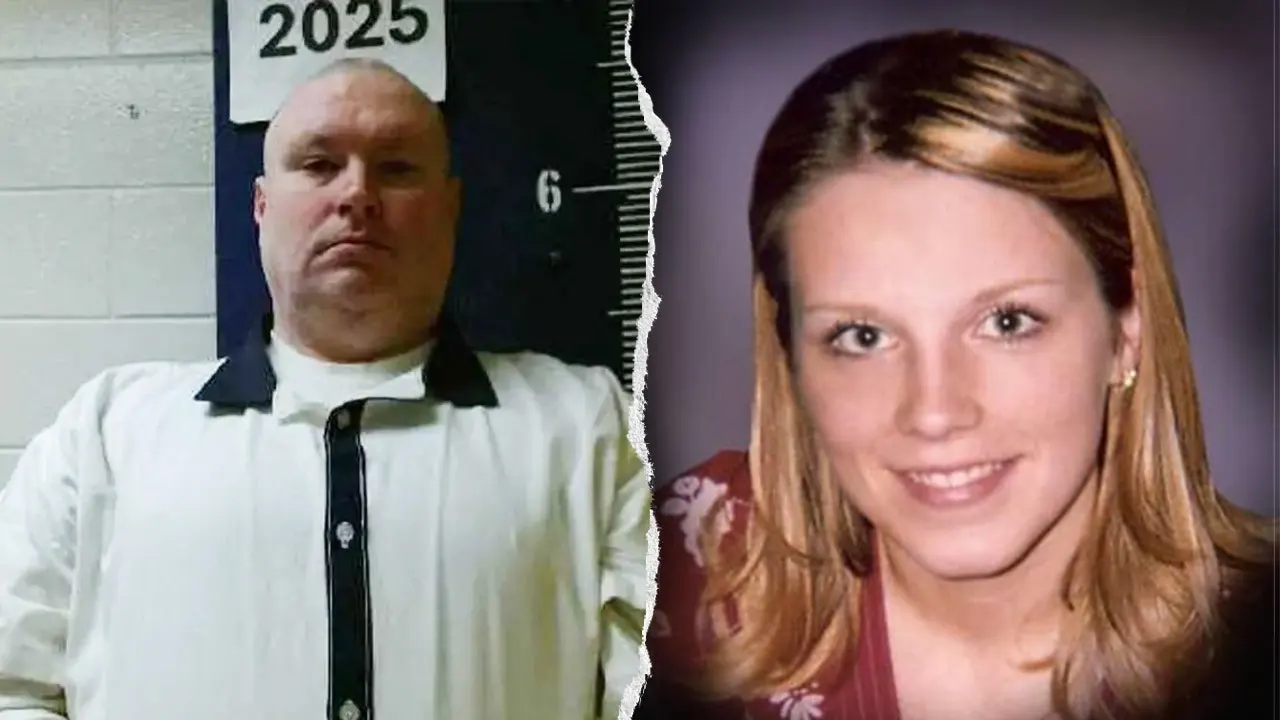
In the hushed, waiting silence that surrounds a death row cell in Jackson, Georgia, a mother’s grief remains as sharp as it was nearly twenty-three years ago. Linda Brown has spent more than two decades carrying the weight of a devastating loss—the murder of her daughter, Lori Brown, a twenty-one-year-old real estate agent with a radiant, infectious spirit who was killed alongside her colleague and friend, Cynthia “Cyndi” Williams, thirty-three. Barring an unexpected judicial stay or executive clemency, Stacey Ian Humphreys, now fifty-three, is scheduled to be executed on September 16 at the Georgia Diagnostic and Classification Prison. For Linda, the date is not a piece of legal jargon or a news headline; it is the closing chapter of a long and agonizing journey that began when two young women went to work in an upscale subdivision and never came home. Remembering her daughter, Linda speaks not with bitterness but with a tender ache, describing a girl who was “a rascal” growing up, full of gregarious energy, someone who “never met a stranger.” Lori was a natural fit for real estate, a career where her warmth and ability to connect with people could flourish. She had already found the man she wanted to marry, her high school sweetheart, and in the days before her death she was busy tasting wedding cakes and touring venues. Her wedding-planning notebook sat neatly on her office desk, a heartbreaking symbol of a future that was stolen in a random act of violence. Linda sometimes wonders if she should have steered her daughter away from the profession, but she knows in her heart that Lori was going to follow her own path. “Sometimes I think it’s my fault,” she admits, “I should have never let her go in this direction with real estate. But, you know, she was going to do what she was going to do.” That mix of guilt and pride is the terrain of a grieving mother who has had to live with the unthinkable for over two decades.
The day the world shattered was November 3, 2003. Lori Brown and Cyndi Williams were working from a model-home office inside the Oakwind subdivision in Powder Springs, a rapidly growing, upscale residential development where unfamiliar visitors were a routine part of the job. Real-estate agents are, by nature, welcoming; they open doors to strangers, walk into empty houses with people they have just met, and trust that the fundamental decency of others will protect them. On that fateful afternoon, Williams returned to the office after lunch and encountered Humphreys first. Brown arrived shortly afterward, unaware that she was walking into an armed robbery already in progress. Humphreys held both women at gunpoint, forced them to strip, and then killed them before stealing their ATM cards. There was no evidence of sexual assault, adding a layer of eerie, calculating coldness to the crime. Ed Greathouse, a retired supervisory investigator with the Cobb County Judicial Circuit who assisted the prosecution, later told Fox News Digital that investigators never determined why Humphreys chose that particular office over the others in the development. It was, seemingly, random evil. The women were doing nothing wrong; they were simply doing their jobs, being accessible and brave. Their vulnerability was the very thing that made them good at their work—open, trusting, ready to help someone find a home. Linda Brown has replayed that afternoon in her mind countless times, imagining what her daughter’s last moments must have been like. She clings to the knowledge that Lori was not alone when she died, that Cyndi was with her, but that offers little comfort. She knows her daughter was terrified, and that knowledge is a splinter that never stops hurting. The loss of Lori was not just the loss of a daughter; it was the loss of a wedding to plan, grandchildren to hold, and a lifetime of laughter that was extinguished in a moment of senseless brutality.
In the chaotic aftermath of the murders, Humphreys did not vanish into the shadows quietly. He used the women’s stolen bank cards to withdraw more than $3, 000, a trail of greed that led authorities to him. On November 8, 2003, he was arrested in Wisconsin after a high-speed chase in a rental Jeep Grand Cherokee. Inside the vehicle, investigators found the murder weapon, with Williams’ blood on the gun; inside Humphreys’ personal vehicle, they found Brown’s blood. The evidence was overwhelming, closing the case with a certainity that rarely comes in such violent crimes. Greathouse speculated that Humphreys was heading to Canada, a common refuge for fugitives who believed they could avoid extradition if the prosecutor did not seek the death penalty. But Humphreys would not escape justice. When questioned, he insisted he did not remember killing the women, yet he told investigators, “I know I did it. I know it just as well as I know my own name.” That strange mixture of denial and admission revealed a man who was not merely a monster but a complex, troubled individual who had been behind on vehicle payments and had taken out a high-interest payday loan he could not afford. His motive, as far as investigators could tell, was financial desperation—a cold, calculated attempt to get money that resulted in the deaths of two innocent people. The cruelty of the crime was almost impossible for the community to process. These were not women living dangerous lives; they were women who spent their days showing beautiful homes to strangers, dreaming of the future. The loss resonated far beyond their families, touching the entire real-estate industry and raising questions about the safety of professionals who work in isolated, open environments. For Linda, the arrest brought no relief, only the beginning of a long legal battle that would test her patience and her faith in the system. She would have to wait four and a half years for the trial, all while re-living the horror of her daughter’s death in courtrooms and legal filings.
In 2007, a Glynn County jury convicted Humphreys of two counts of malice murder, along with armed robbery, kidnapping and aggravated assault. He also pleaded guilty to possession of a firearm by a convicted felon. The sentence was death, a punishment that Greathouse noted was rare in capital cases. “I did 13 death penalty cases in Cobb County during my tenure, and that was, I think, one of two we actually achieved the death penalty,” he said. “It’s really rare.” For Linda, the death sentence was a validation of her belief that justice needed to be served, but it did not bring closure. She found herself in an impossible limbo, waiting for an execution date that kept getting postponed by legal challenges and clemency hearings. At one point, the state scheduled Humphreys’ execution for December 17, 2025, but the State Board of Pardons and Paroles postponed the date and his clemency hearing amid ongoing legal battles. Just this past week, Humphreys’ attorney filed a motion to throw out his death sentence over claims of jury misconduct, but a judge rejected that motion on Thursday, according to FOX 5 Atlanta. Each legal maneuver reopened the wound for Linda, forcing her to relive the trauma and to wonder whether the man who killed her daughter would ever face the ultimate punishment. “Not only did we lose these two girls,” she said, “but we had to go through 4.5 years waiting for a trial to come to an end. So, here we are 23 years later.” Her voice carries the exhaustion of someone who has been forced to become an expert in the legal system she never wanted to know. She remains steadfastly in favor of the death penalty for Humphreys, not out of revenge but out of a deep-seated belief that his crime deserves the most severe consequence the law can offer. “I’m still in favor of the death penalty for this man that took their lives,” she said, her words measured and firm.
Through her grief, Linda Brown has found a purpose: advocating for safety in the real-estate profession. Every September, the industry observes National REALTOR® Safety Month, an initiative designed to raise awareness about the risks that real-estate professionals face every day. Linda speaks about her daughter’s case during this month, not to frighten agents but to empower them. After Lori’s death, many of Linda’s friends assumed she would walk away from real estate, unable to face the danger that had taken her daughter’s life. But Linda made a different choice. “A lot of my friends had said to me at that time, ‘We know you’ll probably want to get out of real estate,'” she recalled. “I thought about it a long time, and I decided that I was not going to let this man drive me out of my profession.” That decision was an act of defiance, a refusal to let fear and violence dictate the course of her life. She adapted her practices, becoming more cautious without becoming paranoid. She avoids taking clients into basements, where she could become cornered; she walks behind prospective buyers while showing homes, never letting herself be trapped in a room; she is acutely aware of exits and escape routes. But she also acknowledges that no amount of vigilance could have saved Lori and Cyndi. “I’m not saying that what happened to Lori and Cyndi, that they could have done anything different from what they did. They were very vulnerable,” she said. Their vulnerability was not a flaw but a feature of the profession—the openness, the willingness to trust, the belief that most people are good. Linda’s message to other agents is not one of fear but one of awareness. She encourages them to check in with colleagues, to share their schedules, to trust their instincts. She wants to turn her daughter’s legacy into a safety net for others. She cannot bring Lori back, but she can, in some small way, help prevent another mother from experiencing the same unthinkable loss.
As the execution date draws near, Linda Brown finds herself in a strange emotional place—one part weary hope, one part deep sorrow, and one part unresolved grief. She has been waiting for this moment for twenty-three years, through appeals, postponements, and procedural battles. She has attended hearings, given interviews, and spoken to reporters, all while carrying the private weight of a mother’s loss. On September 16, if Humphreys is executed, she will witness the end of a man’s life, but she will not receive her daughter back. The wedding cakes will never be tasted, the venues will never be toured, the grandchildren will never be born. What she will receive, perhaps, is a sense that the world has been made slightly safer, that a killer will never again be able to harm another family. But she also knows that justice is not closure. She has lived too long and lost too much to believe in easy resolutions. What she holds onto is memory—a gregarious, rascal of a girl who loved people, who was “really good at” real estate, who had a bright future ahead of her. She holds onto the image of Lori’s smile, the sound of her laugh, the way she connected with strangers and made them feel at home. And she holds onto the friendship between Lori and Cyndi, two women who died together, whose spirits are intertwined in an unbreakable bond. Linda’s story is not just about a death penalty case; it is about the resilience of a mother who refused to be destroyed by hatred. She has turned her grief into advocacy, her pain into purpose. As the date approaches, she dares to hope that this time, finally, the long nightmare will come to a conclusion. But even if it does, she will carry Lori with her always, into every safety talk, every memorial, every quiet moment when she closes her eyes and rembers her daughter’s face. In that way, Lori Brown lives on—not as a victim, but as a daughter, a fiancee, a friend, and a catalyst for change. And Linda Brown, a mother who has borne an impossible burden, continues to meet each new day with courage, because that is what Lori would have wanted.