



1. The Restless Earth Beneath Saturday’s Quiet Routine
It was supposed to be just another Southern California Saturday. For most people, the day promised a stretch of simple pleasures: sleeping in, a slow cup of coffee, a few hours spent running errands or watching the kids play in the park. But beneath that familiar surface, the earth was quietly, insistently stirring. In the early hours of the morning, at roughly 2:30 a.m., those in the Westmont neighborhood of South Los Angeles were pulled from the comfort of their beds by a sudden, sharp jolt. The US Geological Survey confirmed that it was a 2.7-magnitude earthquake, a modest number on the scale of geological power, but a powerful enough nudge to remind thousands of people that the ground they walk on is never truly static. The night’s silence was broken not by sirens, but by the unmistakable, low rumble of the planet shifting. Dogs started barking, cupboards rattled, and a collective sense of alertness spread through the homes and apartment buildings of the area. It was brief, almost fleeting, yet it left a lingering sharpness in the air, an unspoken acknowledgment that something significant—however small—had occurred.
2. A Swarm of Small Tremors in South Los Angeles
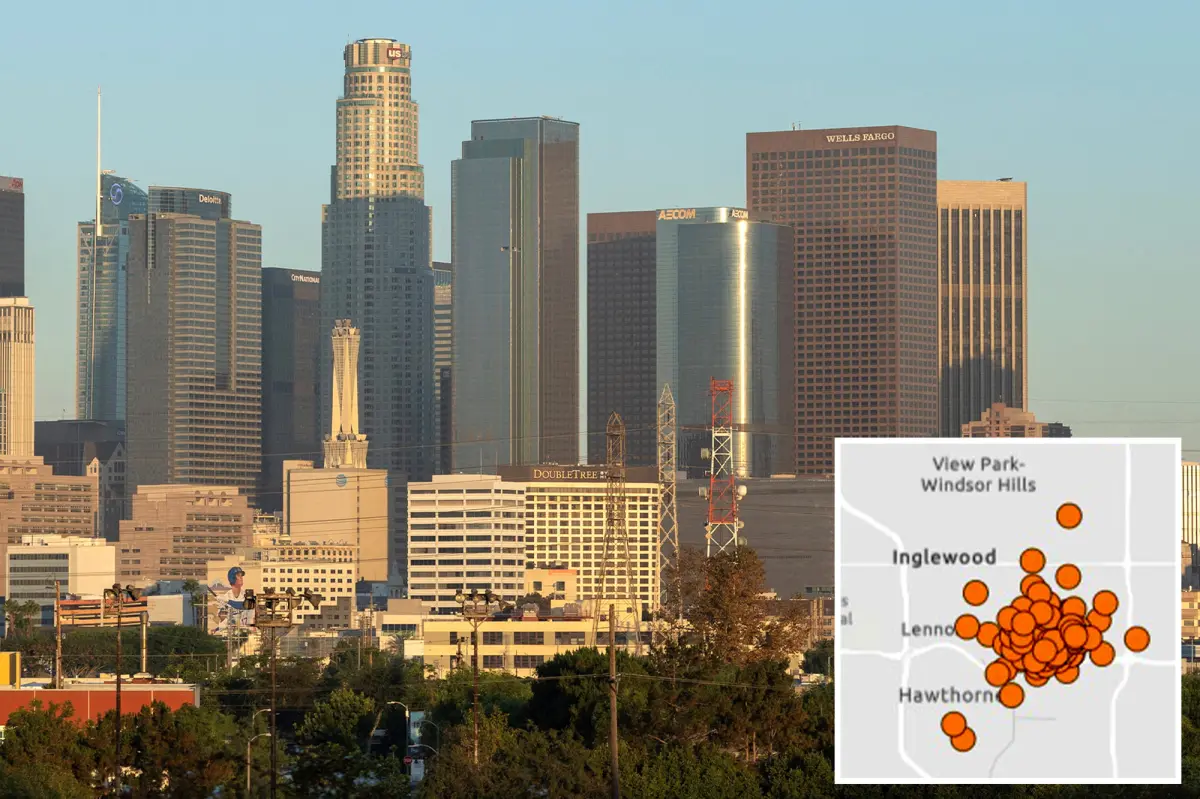
As the sun rose over the city, the news began to trickle out. The early morning shake was not an isolated incident. In fact, it was part of an impressive and concentrated burst of seismic activity that centered itself on the South Los Angeles region throughout the day. According to data collected by the US Geological Survey, more than sixty individual earthquakes hit the area on that Saturday. The vast majority of them, as is often the case with such events, were almost imperceptible, registering under magnitude 2.0. These tiny tremors are the geological equivalent of whispers, so faint that they usually slip by without detection by the human senses, captured only by the highly sensitive instruments that monitor the region’s faults. However, the cluster also included a second, more noticeable event alongside the early morning 2.7-magnitude quake. At approximately 4:30 p.m., as many families were sitting down to dinner or unwinding after a long day, a 2.6-magnitude temblor again shook the Westmont area. Seismologists refer to this phenomenon as an earthquake swarm—a sequence of quakes that occurs in a relatively short period and a localized area, without a singular, dominant main shock leading the charge. The South LA swarm was a textbook example of this, a rhythmic pulse of energy being released from beneath the urban landscape.
3. The Human Experience of the Shaking
For those who live in the neighborhood—a dense, vibrant community of single-family homes, bustling commercial corridors, and tight-knit residential streets—the day held an unusual tension. The initial lurch at 2:30 a.m. was enough to send some residents to doorways, the traditional place of safety that has been passed down through generations of Californians. Others lay still in the dark, trying to determine whether the sensation was real or just the phantom of a dream. Social media quickly lit up with posts from people asking, “Did you feel that?”—the quintessential Southern California expression of shared uncertainty. By the afternoon, with the second noticeable quake arriving during the routine of the day, the reactions began to shift from surprise to curiosity. Conversations between neighbors on the sidewalk inevitably turned to the earth’s continuing rumblings. People checked their walls for cracks, glanced at their ceiling fixtures, and recounted the exact sensations they had felt. There was apprehension, certainly, but also a certain familiarity born of long experience. The small tremors served as an intimate reminder of the invisible forces at play, turning an ordinary Saturday into a day marked by a shared, hushed awareness of the tectonic plates shifting miles below their feet.
4. A State Living in Perpetual Preparation
This seismic occurrence in South Los Angeles is just another chapter in California’s long and complicated relationship with earthquakes. The state sits along a complex web of fault lines where the Pacific and North American plates grind against one another in a slow, relentless dance. While the San Andreas Fault often captures the public imagination, it is the smaller, more localized faults that frequently produce the everyday reminder of this dynamic pressure. The Los Angeles Basin is crisscrossed by these fractures, some of which, like the Newport-Inglewood fault, lie close to the neighborhoods now feeling the tremors. For residents, these events are a part of the cultural fabric. From a young age, Californians learn to “Drop, Cover, and Hold On.” Many keep emergency go-bags by their doors, stocked with water, flashlights, and radios. Families have designated meeting spots in case of a major disaster. The state has invested heavily in early warning systems like ShakeAlert, which sends notifications to cell phones seconds before the worst shaking arrives. Saturday’s cluster, while minor in magnitude, acts as another powerful moment of calibration—a gentle nudge that ensures the public’s readiness isn’t forgotten, and that the structures we live in remain our primary shield against the unpredictable whims of the earth.
5. What the Experts Make of the Rumbling
To seismologists and geophysicists, the swarm in Westmont represents less a source of dread and more a fascinating, real-time stream of data. The US Geological Survey tracks these events with intense precision, and while any seismic activity can momentarily raise public anxiety, experts are often quick to contextualize the numbers. A quake of 2.7 magnitude is considered minor, far below the threshold for structural damage. The gentle shaking rattles nerves but rarely produces more than a few fallen picture frames or a toppled glass. The broader significance of such a swarm is often a topic of debate within the scientific community. For some, it is simply a stress release—a routine adjustment of the earth’s crust that occurs with regularity. For others, it serves as a reminder that small tremors can sometimes be a precursor to a larger event, although they are far more often just a passing phenomenon. The constant monitoring of these clusters allows scientists to map the hidden geometry of faults, understanding the geology deep beneath the urban grid. In the grand scheme, the swarm is a blip on the radar, but it provides vital information that adds to the collective knowledge about how this complex region functions.
6. The Resilience of Living on Moving Ground
When the sun finally set on that Saturday in South Los Angeles, the ground was once again still. The dozens of small events had ceased, leaving behind nothing but the memory of a strange, briefly unsettling day. In the end, these earthquakes were modest interruptions—more notable for their number than their individual size. But their collective effect was to inspire a form of quiet reflection. Living in Southern California requires a fundamental acceptance of uncertainty. It means surrendering the illusion of absolute control over one’s environment and embracing a resilience that is built into the very character of its population. It is a shared experience that connects an entire region, from the early morning wake-up to the evening shakes, creating a silent bond among neighbors who all look up from what they are doing to acknowledge the same momentary wobble. Days like this do not dramatically alter lives; they subtly remind us of the solid ground beneath our feet, which is, in reality, never quite as solid as we imagine. As residents of Westmont and the wider region drift back to sleep once more, they carry with them a quiet awareness of the powerful, ancient, and ever-moving forces that shape their world. They understand that life here is a partnership between humanity and a restless planet—and on a quiet Saturday, the planet simply chose to say hello.