


Fire Aboard June Aster: Manila-to-Coron Voyage Turns Into a Maritime Emergency
A Routine Crossing Turns Tense
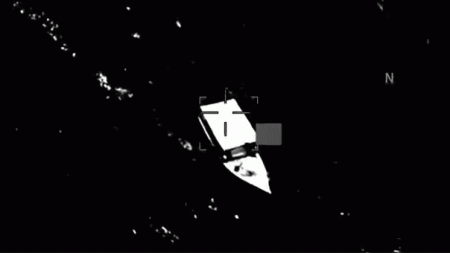
In the busy waters of the Philippines, what should have been an ordinary sea journey suddenly became a frightening ordeal. The June Aster, a passenger vessel sailing from the bustling capital of Manila to the coastal town of Coron, was making its way across the water when a fire broke out aboard the ship. Coron, a popular tourist destination known for its island scenery and clear blue waters, is a frequent spot for both local vacationers and international travelers. For many passengers, the trip had started as a joyful escape from the city. But by the time the first traces of smoke began to appear, that sense of excitement quickly dissolved into fear and uncertainty.
The incident occurred while the vessel was navigating one of the most heavily traveled ferry corridors in the region. This route is a vital gateway for tourists heading to Coron and nearby island communities, and every day, hundreds of passengers rely on ships like the June Aster to carry them safely across the sea. When word of the fire began to spread, it sent a ripple of alarm through maritime communities and travel circles alike. Local radio stations carried early warnings, and social media platforms soon lit up with messages from anxious relatives waiting for news at dockside terminals. The June Aster, which had left Manila in what appeared to be good condition, was now at the center of an emergency that no one had expected.
Fire at sea is one of the most dangerous situations a vessel can face. The ocean offers no escape, and a ship, no matter how large or modern, can quickly become a trap if flames gain momentum. The crew aboard the June Aster understood this immediately. They knew that every second mattered, and that the safety of dozens of passengers depended on swift action and calm decision-making. As the fire took hold somewhere within the vessel’s structure, thick smoke began to rise into the air, visible from a distance to other ships in the vicinity. The port of Manila, the destination at Coron, and the surrounding coastal communities all turned their attention to the unfolding drama. It was a moment that would test not only the strength of the ship, but also the effectiveness of emergency procedures and the courage of everyone on board.
Passengers and Crew React to the Flames
When the first alarm sounded, many passengers were caught completely off guard. Some were seated in lounge areas, looking out at the sea. Others were on deck, enjoying the breeze and taking photographs of the passing coastline. A few were already thinking about their arrival in Coron, excited for the days of rest and adventure that lay ahead. Then, without much warning, the atmosphere changed. A strange smell drifted through the corridors. Moments later, people noticed smoke curling through vents and stairwells. The quiet hum of the ship’s engines was replaced by a louder, more urgent noise. Panic began to take hold as travelers realized that something was seriously wrong.
In the midst of the confusion, the ship’s crew moved into action. Their training kicked in as they directed passengers away from the source of the smoke and toward designated safety areas. Life jackets were distributed, and crew members shouted instructions, trying to keep the situation as orderly as possible. Passengers later described a mixture of emotions—fear, confusion, relief that help was on the way, and gratitude for the crew members who worked calmly under immense pressure. Some people helped each other with life jackets, while others comforted children who did not fully understand what was happening. It was, by all accounts, a frightening experience, but it also brought out moments of shared humanity.
The cause of the fire was not immediately clear. Initial reports suggested that it may have started in the engine room or in another lower section of the ship, where machinery and fuel systems create a constant risk of overheating or sparks. On any vessel, engine rooms are among the most vulnerable places when it comes to fire, and even small mechanical failures can quickly escalate if safety systems fail to respond. The crew attempted to battle the flames using onboard extinguishers and other firefighting equipment, but as the fire grew more intense, it became obvious that external help would be needed. The captain made the difficult decision to issue a distress call, alerting the coast guard and nearby vessels to the emergency. It was the kind of call that no captain wants to make, but it was also the one that likely saved lives.
Rescue Operations Underway in Busy Waterway
The moment the distress signal went out, a coordinated rescue operation began to take shape. Philippine Coast Guard units were dispatched immediately, and nearby commercial ships, fishing boats, and private vessels also responded to the call for assistance. In these situations, the maritime community often becomes a tightly connected network of first responders, and the waters off the coast leading to Coron proved no different. Boats from different directions altered their courses and rushed toward the burning ferry, their crews ready to offer whatever assistance they could provide. The sight of multiple vessels converging on the June Aster must have been both comforting and overwhelming for the passengers still waiting to be evacuated.
Rescue teams worked carefully to bring people aboard their vessels, prioritizing the elderly, children, and anyone showing signs of distress. The transfer of passengers from a damaged ship to other boats in open water is a delicate process, especially when smoke is still rising and the sea is not fully calm. Yet the operation proceeded with a sense of purpose and urgency. Officials on shore monitored the situation closely, communicating with rescue vessels and making preparations to receive survivors at ports along the route. The goal was simple: get everyone off the June Aster as safely and as quickly as possible.
Early reports from the scene indicated that the evacuation was largely successful, though the exact number of passengers and crew members aboard the ship was still being confirmed. Local authorities said that they were working to account for every person who had been on the vessel, and that families waiting for news would be given updates as soon as information was available. The absence of immediate reports of serious injuries offered some relief, but the incident had been a close call for everyone involved. In the hours that followed, the June Aster was brought under control, with the fire eventually extinguished after significant effort. The ship, now badly damage, had to be towed to a safer location for further inspection. For the passengers, the ordeal was over, but the memories of smoke, sirens, and the open sea would not fade quickly.
Impact on a Lifeline Tourist Route
The fire aboard the June Aster served as a stark reminder of how much the region depends on maritime travel. The route from Manila to Coron is more than just a ferry line; it is a lifeline for tourism, trade, and daily life in the coastal areas that rely on regular connections to the capital. Coron has grown into a popular tourist destination, drawing visitors with promises of pristine beaches, lively coral reefs, and a slower, more peaceful pace of life. Resorts, dive shops, local restaurants, and transportation services all depend on a steady flow of visitors arriving by sea. When something goes wrong on that route, the effects are felt far beyond the passengers aboard a single vessel.
News of the incident spread quickly, and travel experts immediately began to assess the potential impact on tourism. Travelers who had planned to take the same ferry route started calling their hotels and tour operators to ask whether it was still safe to proceed. Some may have considered changing their plans altogether. In a country where tourism is a significant source of income for many coastal communities, any disruption to regular ferry service can have a real economic consequence. The incident also raised broader questions about the safety standards of passenger vessels operating throughout the region. Tourists want adventure, but they also want security. When a ship catches fire in the middle of a voyage, it creates a sense of vulnerability that cannot be easily erased with brochures and marketing campaigns.
Officials were quick to acknowledge these concerns. Transportation authorities said that while the cause of the fire was still under investigation, every effort would be made to ensure that ferries operating on the Manila-to-Coron route met the highest possible safety standards. Additional inspections were announced for passenger vessels, particularly those preparing to sail with full loads of tourists. The message from officials was clear: public confidence in maritime travel was essential, and the lessons learned from this near-disaster would be taken seriously. For Coron, which relies so heavily on its reputation as a safe and welcoming destination, the coming weeks would be a period of recovery and reassurance. Local business owners hoped that the response to the incident would demonstrate strength and accountability, rather than allow fear to keep visitors away.
Investigators Search for Answers
As the smoke cleared and the passengers found safety, the attention shifted to a new phase of the crisis: finding out exactly what went wrong. The investigation into the June Aster fire began in earnest, with maritime officials, safety experts, and potential insurance representatives all examining the ship’s records, equipment, and condition. The vessel was to undergo a thorough inspection, with investigators carefully documenting the extent of the fire damage and collecting evidence that might help explain how the flames had started. The goal was not only to understand the incident but also to prevent something similar from happening again on another vessel.
The search for answers involved looking closely at the ship’s maintenance history, the age of its equipment, and the training of its crew. Investigators also reviewed the vessel’s safety protocols, including how emergency drills were conducted and whether all necessary fire suppression systems had been in operation at the time of the incident. Questions were raised about whether the June Aster had been properly inspected before departure, and whether any warning signs had been missed. These are the kinds of questions that are always easier to ask after an incident has occurred, but they are crucial to creating a clearer picture of what happened.
Experts noted that fires on passenger vessels are not rare, but they are often preventable. Flaws in fuel lines, electrical faults, or poor maintenance routines can all contribute to the outbreak of flames. In the case of the June Aster, investigators needed to determine whether this was an unavoidable failure or a lapse in safety measures. The findings would play an important role in shaping future regulations and inspection requirements for ships operating in Philippine waters. For the passengers who had lived through the terrifying experience, the investigation was more than a technical matter. They wanted answers. They wanted to know that the danger they faced was not caused by carelessness or neglect. And, more importantly, they wanted reassurance that other families would not have to go through the same ordeal.
Lessons for Maritime Safety and the Road Ahead
The June Aster fire is a story that could have ended in tragedy, but it instead ended with survivors, relief, and important questions about the future of maritime safety. In the days after the incident, port workers, officials, and ordinary citizens all reflected on what had been lost and what had been saved. The ship itself suffered significant damage, but no loss of life was reported, and that was something for which everyone could be profoundly grateful. The timing of the rescue, the cooperation among vessels, and the quick action of the crew all contributed to a successful outcome. Yet the incident should also be seen as a warning, one that highlights the constant need for vigilance when people place their lives in the hands of a ship and its operators.
For the maritime industry in the Philippines, the lessons are clear. Fire safety equipment must be maintained with rigor. Crew members must be trained to respond to emergencies swiftly and clearly. Passengers must be informed about evacuation procedures before a crisis occurs. These are not new ideas, but incidents like this serve as powerful reminders of why they matter. In the aftermath of the June Aster, there is an opportunity to strengthen the culture of safety throughout the sector. The tragedy of a different outcome would have been immense, but the near miss offers a chance to improve, to refine old procedures, and to build greater awareness among everyone who works and travels by sea.
For the passengers who had boarded in Manila with plans and dreams, the voyage ended far differently than expected. Some may never feel entirely comfortable on a ferry again, while others will accept the risk as part of the experience of island travel. For the crew of the June Aster, the memory of the fire and the rescue will remain etched into their professional and personal lives. And for Coron, the popular tourist destination that had been the ship’s destination, the incident will serve as a subtle reminder that even paradise is not completely separated from the dangers of the world. But as the port terminals reopen and the ferry routes continue, there is also resilience. Passengers will board new vessels, captains will take command of their ships, and travelers will once again look out at the horizon, hoping that sea will remain calm and that the stories of emergencies will be few. The June Aster fire will not be forgotten, but it will become part of the ongoing conversation about safety, responsibility, and the simple but powerful act of moving people from one place to another without harm.