


There’s a particular kind of traveler—and maybe you recognize yourself here—who would rather spend money on a memorable dinner, a guided excursion, or a truly nice hotel than on the airplane seat itself. I’m that traveler too. But there’s a catch: if you’re on the taller side, or you simply value the ability to stretch your legs without playing an elaborate game of footsie with the stranger beside you, standard economy can feel like a punishment. That’s where premium economy comes in. It’s the middle child of air travel, but in the best possible way: more space than economy, a bit more comfort than you’d expect, and a price tag that, while higher than the cheapest fare, doesn’t require you to remortgage your home the way business or first class might. And the perks don’t stop when you leave the tarmac. Premium economy often means a more generous baggage allowance, faster check-in, and a shorter wait to board—all small luxuries that make the whole journey feel calmer. Lately, airlines seem to have noticed that more of us are willing to pay a little extra for this middle ground, and they’re responding with a wave of upgrades designed to make the cabin more private, more spacious, and, in some cases, genuinely luxurious. From privacy screens and sculpted headrests to sleep pods and cozy slippers, the future of premium economy is looking a lot more interesting than it used to.
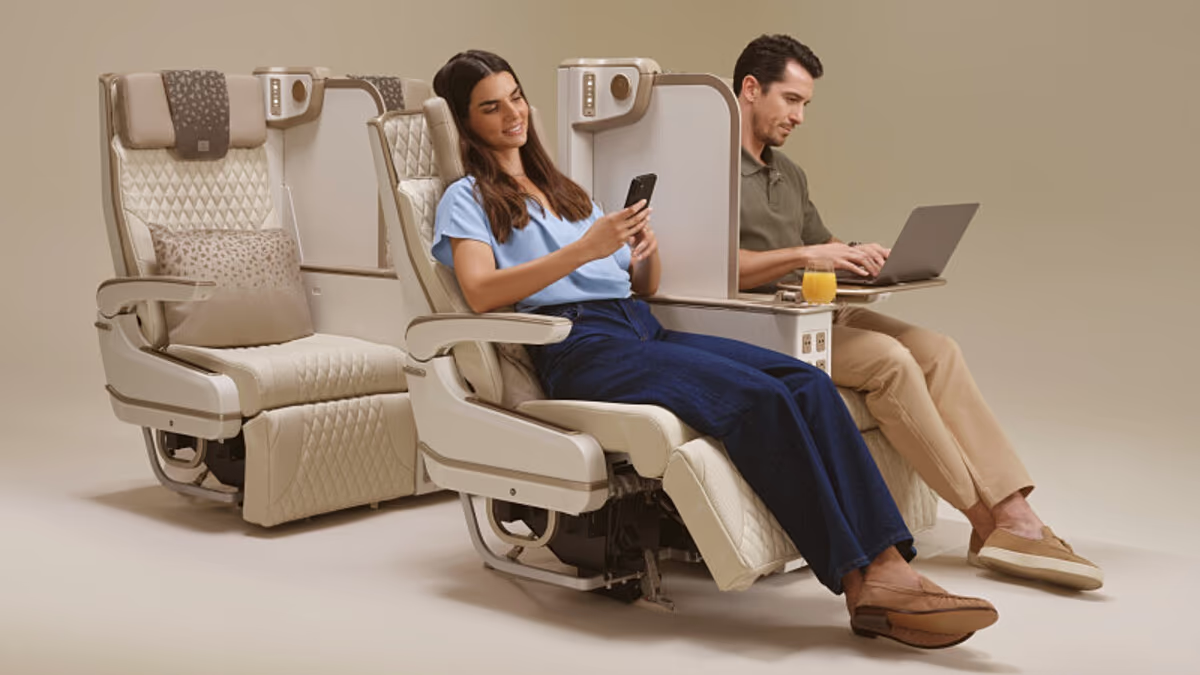
Take Emirates, for example. This month, the Dubai-based carrier unveiled what it claims is the world’s first electric premium economy seat with a full-height privacy screen. That’s a big deal if you’ve ever spent a long flight trying to avoid making eye contact with your neighbor or awkwardly leaning away from their elbow. The new seats will be rolled out on the airline’s Airbus A350 aircraft, with a 2-3-2 configuration across 28 seats. Passengers can raise and lower the divider using the seat controls, which means you get to decide exactly how much interaction you want—whether that’s a fully open cabin feel or a cocoon of personal space. The same control unit also lets you adjust your seating position, so you can find that perfect recline without having to contort yourself. And for anyone who’s ever landed with a dead phone after relying on it for entertainment, Emirates is also introducing wireless charging facilities in its premium economy cabins. It’s a small touch, but it’s the kind of thoughtful detail that makes a journey feel less like a cattle call and more like a deliberate, comfortable experience. The privacy screen, in particular, feels like a response to a very real desire: the wish to be left alone in peace, even at 35,000 feet.
American Airlines is also betting on the idea that premium economy should feel more like a proper upgrade. In September, the carrier launched its first retrofitted Boeing 777-300ER into commercial service, featuring 44 premium economy seats and deployed on some of its long-haul routes. The redesigned seats come with sculpted headrests—those contoured shapes that actually support your neck instead of just looking like a pillow—and adjusted calf and foot rests, which make a huge difference when you’re trying to sleep or simply sit comfortably for hours. There’s also wireless charging, plus both USB-C and AC power outlets, so you can keep all your devices juiced up without having to fight over the one working socket. American has also been busy expanding its network, announcing a number of new European flights for next summer, and as part of its Main Cabin Extra offering, it’s rolled out 30 extra legroom seats. Passengers in that cabin can watch hundreds of titles on the inflight entertainment system, and if they’re AAdvantage members, they get free high-speed Wi-Fi. It’s a reminder that premium economy isn’t just about the seat itself—it’s about the whole package, from the moment you sit down to the moment you land, and American seems to be paying attention to that.
Over in Europe, Lufthansa has taken a slightly different approach, focusing on the culinary side of the premium economy experience. As part of its “Future Onboard Experiences” initiative, stylised as FOX, the airline introduced revamped in-flight offerings in May, coinciding with the 100th anniversary of its founding. The upgrade includes dining options that feel a step above the usual airplane fare: a business class-level appetizer, three hot main meals to choose from, and a side of toasty bread to round things out. The meal finishes with pastries or a slice of cake, which is the kind of small indulgence that makes you feel like you’re being looked after. And for extra comfort, the premium economy cabin now provides passengers with “cozy” slippers. It’s a simple thing, but slipping your feet into something soft after hours in shoes is a surprisingly effective way to make a long flight feel more human. Meanwhile, TAP Air Portugal launched its own premium economy offering in June, branded “Economy Prime.” Available only on long-haul flights, the cabin has 12 seats in total, with four seats per row—but here’s the clever part: passengers will always have the seat next to them left empty. That means no awkward middle-seat situation, no fighting for the armrest, just a little breathing room. In-flight dining includes a choice of two hot dishes, followed by a snack served before you reach your destination. Economy Prime travelers also get an amenities kit and access to a selection of films and series on the carrier’s 13-inch HD screens. On the ground, the perks are just as generous: premium check-in, fast track, premium boarding, and priority baggage, plus an allowance of one 10kg cabin bag and two 23kg checked bags. The fare is divided into two options, Prime and Top Prime, with the latter adding flexibility—you can change or refund your ticket at no added cost. It’s a thoughtful structure that recognizes different travelers have different needs.
If you thought premium economy was only for full-service carriers, think again. Hungarian low-cost airline Wizz Air has put its own spin on the concept with “Wizz Class,” launched earlier this year. The premium add-on gives passengers a seat in the first row, with a choice of window or aisle, while the middle seat is kept empty for extra space. That’s a clever way to offer a bit of privacy and comfort without completely overhauling the cabin. Other perks include extra legroom seats, priority boarding, two items of cabin baggage, and a snack and soft drink onboard. It’s available on selected flights to and from Budapest, Bucharest Otopeni, London Luton, London Gatwick, Rome Fiumicino, and Warsaw—so it’s not everywhere yet, but it’s a sign that even budget airlines are seeing the value in a middle ground. And then there’s Air New Zealand, which is taking things to an entirely different level with its Skynest sleep pods. The airline says this will be a world first, and it’s set to debut on ultra long-haul flights between New York and Auckland starting in late December. Up to six premium economy—and standard economy—travelers at a time can swap their seat for a bed, booking a four-hour session to “recharge in comfort” in their own private pod. Each pod comes with a privacy curtain, ambient lighting, USB charging outlets, and personal stowage. The sessions are priced from NZ$495, which is about €250.45, and that includes a kit appropriately named “Nestcessities” containing earplugs and an eye mask. Because if you’re willing to pay extra to sleep at 35,000 feet above sea level, you may as well make yourself as comfortable as possible.
What all of these developments point to is a broader shift in how airlines think about the space between economy and business. For a long time, premium economy was just a slightly wider seat and a bit more legroom—nice, but not exactly transformative. Now, it’s becoming a cabin in its own right, with its own identity, its own perks, and its own sense of purpose. Privacy screens, sculpted headrests, better food, cozy slippers, empty middle seats, and even sleep pods—these are all ways of acknowledging that air travel doesn’t have to be a test of endurance. It can be a chance to relax, to recharge, to arrive at your destination feeling like a human being rather than a crumpled piece of luggage. For those of us who prefer to spend our travel budget on experiences rather than fares, premium economy offers a happy medium: a way to splurge just a little, without going all the way to business or first class. And with airlines competing to make this middle ground more appealing, the future looks bright for travelers who want a bit of extra comfort without breaking the bank. Whether you’re tall, tired, or just someone who appreciates the small luxuries in life, the new wave of premium economy is proof that you don’t have to choose between affordability and comfort. You can have both—and maybe even a slice of cake and a pair of slippers to go with it.