


It’s not the kind of distinction any institution would want, but Cantor Fitzgerald carries it every day: no other organization lost more loved ones on September 11, 2001. The firm’s offices occupied the 101st through 105th floors of the World Trade Center’s North Tower, high above the point where American Airlines Flight 11 slammed into the building at 8:46 that morning. There was no escape from that height, no emergency path, no way to outrun fire and smoke. Of the 960 people who worked for Cantor in New York, 658 perished. Fifty more contractors and visitors were killed alongside them. Another 61 were lost at Euro Brokers, which has since become part of Cantor. But no statistic can carry the weight of what that means. Behind every number was a person with a favorite song, a particular way of laughing, a habit that drove colleagues crazy, an unfinished joke, a family waiting at home. Those people were parents and children, spouses and siblings, mentors and best friends. They were the kind of people whose absence is still felt in ordinary moments, not just on anniversaries. Edie Lutnick knows that absence intimately. Her office was on the 101st floor, but she happened not to be there that morning. Her brother Gary was on the 104th floor and died. Her other brother, Howard—then Cantor Fitzgerald’s Chairman and CEO—was spared because he was doing something beautifully ordinary: taking his son to the first day of kindergarten. That simple act of fatherhood placed him outside the North Tower at the moment the plane hit. He was left not only with devastating loss but with the strange guilt and responsibility of survival. The Lutnicks became the center of a grief that was both deeply personal and impossibly communal.
Three days after the towers fell, on September 14, 2001, Edie and Howard co-founded the Cantor Fitzgerald Relief Fund. There was no playbook, no established protocol for helping hundreds of families rebuild after a catastrophe of this scale. The firm’s payroll was gone; the company had lost two-thirds of its New York workforce in a single morning. The people who survived were wounded, exhausted, and uncertain about the future. Yet they understood that the families of the lost needed support immediately—financially, emotionally, and practically. At first, many of those families were strangers to one another. They were scattered across different communities, different backgrounds, different lives, and they had little in common except the awful symmetry of their loss: someone they loved had gone to work at Cantor Fitzgerald and never returned. But as the Relief Fund began its work, those strangers started to find one another. They gathered in support groups, attended memorials together, and slowly built a network of care that became a new kind of family. Caroline Aiken Koster joined Cantor Fitzgerald in 2002, entering a company forever marked by grief. Every year, the firm holds its annual Charity Day, raising money for hundreds of charities around the world and for disaster relief efforts. During those events, Caroline would ask a simple question of the movie stars, athletes, and colleagues who attended: “Where were you on September 11?” In the early years, the answers mirrored her own experience—people described heading to work, dropping off children at school, watching the television in shock. But as time passed, the answers began to shift. People spoke of high-school chemistry class, middle-school homeroom, first grade. Then came the response that was inevitable, yet still startling: “I wasn’t born yet,” a young actor in his twenties said one day. Soon there were memorial volunteers who had no firsthand memory of the attacks at all. The story was no longer something they had lived through; it was something they had inherited.
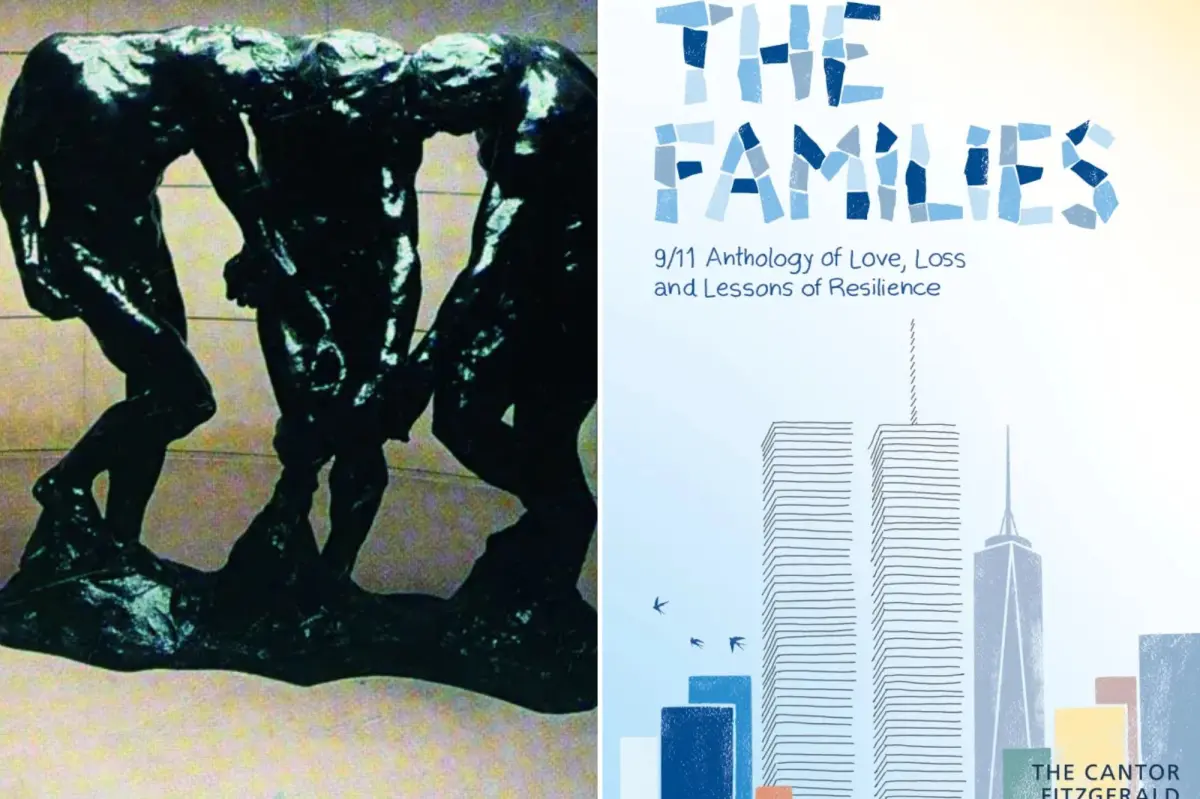
Every September 11, we say the words “Always remember.” Many people post #NeverForget. But the painful truth is that memory fades—not because people stop caring, but because time moves forward and new generations inherit the world without having known the one that came before. Edie thought back to the years she spent laying out Cantor’s names for the National September 11 Memorial, carefully choosing meaningful adjacencies so that friends, colleagues, and family members could be remembered side by side. She used to know every single name of the lost. Twenty-five years later, she found that some of those names were harder to summon. If even the people closest to the loss were struggling to hold the details in their minds, what would a generation or two removed remember? Would they know the texture of the grief, the resilience that followed, the bonds that were forged in ash and sorrow? As the twenty-fifth anniversary approached, a decision began to take shape: the voices of Cantor’s families needed to speak directly to the generations who had not been born when the towers fell. The survivors could not rely on memory alone; they needed something written, something permanent, something that could be held in the hands and passed down like a family heirloom. That need became “The Families: 9/11 Anthology of Love, Loss and Lessons of Resilience.” Cantor families answered the call with extraordinary honesty, contributing 176 essays, letters, poems, and recollections. They did not write to impress publishers or to appear heroic. They wrote because silence felt like a betrayal of the people they loved, and because the lessons they had learned—sometimes through unbearable pain—were too important to disappear. Those who worked on the anthology were profoundly changed by the determination and hope in the stories they received.
The pages of the anthology are filled with voices that refuse to be reduced to tragedy alone. Burn survivors write not about anger but about gratitude—for the strangers who carried them, the medical teams who fought for them, the second chances they never expected to receive. A West Point cadet who lost his brother channels his grief into a PTSD program for veterans, finding purpose in service to others who carry invisible wounds. A father who lost two sons embraces a deeper faith, not as an easy answer but as a source of strength that allows him to keep living. Mothers describe raising children with joy against impossible odds, building homes where laughter exists alongside tears. And then there are the voices of people who weren’t yet born on September 11—like the son who never met his father. He grew up with a ghost in his house, a man whose face he knew only through photographs and other people’s stories. He now finds his own path forward, even as he grapples with something scholars call generational grief: the sorrow that passes from parent to child, not through blood but through love and longing. The anthology does not pretend that grief can be solved or tidily resolved. Instead, it offers something more honest: proof that people can survive unimaginable loss and still find a reason to get up in the morning. Other contributors write candidly about addiction, depression, and the struggle to keep functioning after the world collapsed. Their honesty is both painful and necessary. They write about turning pain into purpose through service and philanthropy, about choosing to help others when helping themselves felt impossible, about discovering that even broken people can become companions to one another in healing.
The work of compiling these stories required the editors to go back into the wreckage of their own memories. Edie knows firsthand that revisiting the heartbreak of September 11 is never easy. While working on the anthology, she recalled the early days after the attacks: the twenty-hour days, the thousands of checks written by hand to widows and new mothers, the building of support groups and family networks from nothing, and the unbearable rhythm of attending too many funerals. She remembered watching people in their worst moments and learning that human beings are capable of extraordinary tenderness in the midst of chaos. But the hardest part was always personal. Returning to her last phone call with Gary is still painful. That call was ordinary—the kind of simple conversation you assume you will have again a thousand times. There was no premonition, no dramatic last words, no chance to say everything she wished she had said. That is the reality of sudden loss, and it does not soften with time. Yet Edie kept returning to the memories anyway, not because she wanted to relive the trauma, but because she understood that the names on the memorial are not a list—they are a generation of people who mattered. The process of building the anthology forced everyone involved to sit with the discomfort of grief longer than most people would choose. It required them to call up widows who had remarried, children who had grown up without fathers, colleagues who had taken early retirement because they could no longer enter an office building without feeling the walls close in. What they found was not merely sadness but resilience shaped by necessity. They discovered that when you share your story with someone else, it becomes a gift they can carry forward. That is what the contributors to “The Families” did: they turned their pain into something that could be held by future generations, so that even when memory fades, the lessons remain.
The true gift of “The Families” is in the lessons its contributors share: how to show up for each other in moments of crisis, how to find a mission bigger than your own pain, and how to allow joy and grief to share a single sentence. Those lessons belong not only to Cantor Fitzgerald families but to anyone who has ever had to keep living after losing someone. Grief is not a problem to be solved; it is a relationship that continues in a new form. The people who write in this anthology teach us that we can be both heartbroken and whole, that we can honor the dead by tending to the living, and that the smallest acts of kindness—a meal delivered, a hand held, a check written by hand in the middle of the night—can become the foundation of a rescued life. Caroline saw the changing answers to her question over the decades and understood that remembrance is not automatic. It must be renewed. The anthology is a way of renewing it, not with clichés or hashtags, but with the raw, human truth of people who loved and were loved. As the twenty-fifth anniversary arrives, the message of the book is clear: we do not move on from loss; we move forward with it. Edie Lutnick and Caroline Aiken Koster, along with all the families who contributed their stories, have made sure that Cantor Fitzgerald’s fallen will not be erased by time. “The Families: 9/11 Anthology of Love, Loss and Lessons of Resilience” is now available, and all proceeds from the book benefit the Cantor Fitzgerald Relief Fund. In that way, the cycle of care continues: stories purchased by readers become support for families who still need it. That is the lesson that matters most—that remembering is not something we do once a year. It is something we do every time we choose to reach out, to tell the truth, to say the names of the people we loved, and to keep their light alive in our own.