


Paragraph 1: The Return of the Captain
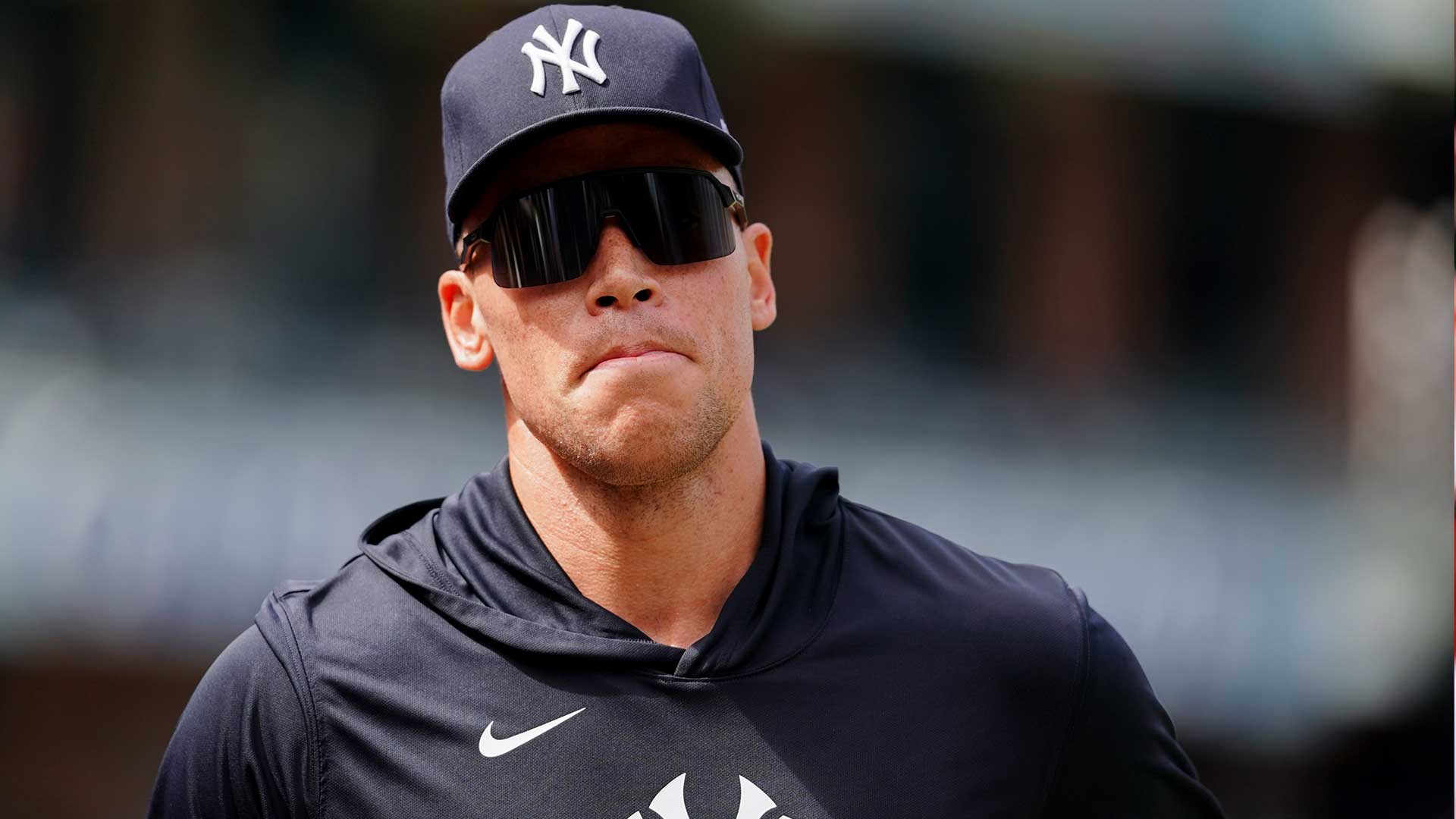
The baseball world exhaled a collective sigh of relief on Tuesday night as Aaron Judge, the towering slugger and heart of the New York Yankees, stepped back onto the grass at Yankee Stadium. After 99 agonizing days of watching from the dugout, nursing a broken rib that had sidelined him since late May, Judge took his familiar spot in right field and batted third against the Colorado Rockies. The ovation was deafening, a mix of pent-up frustration and unbridled joy from a fanbase that had witnessed their team stumble through the summer without its most feared presence. At 34 years old, showing no lingering stiffness as he jogged out to his position, Judge was finally back where he belonged. He had skipped the usual minor-league rehab assignment, a decision that turned heads but underscored his relentless determination to return to the fiery cauldron of a pennant race. For a team that had managed to stay afloat in the wild-card picture, his return felt like a late-season trade acquisition, an infusion of power and leadership that could shift the balance of power in the American League. The captain was back, and with him came the hope that the Yankees’ struggling offense, which had been a shadow of its former self, might finally roar to life again.
Paragraph 2: The Slow Fade Before the Break
Judge’s season leading up to the injury had been a tale of two distinct narratives. When he first landed on the injured list on May 31, the Yankees were riding high at 36-23, partly on the strength of his early production. In his first 31 games, he was a force of nature, slashing a robust .263 with seven home runs and 20 RBIs, showing flashes of the MVP-caliber player who had dominated the league just two years earlier. But beneath those numbers, something was clearly amiss. Over his final 18 games before the injury, Judge managed just one solitary home run, his swing looking disconnected and labored. The culprit was a sneaky, non-contact injury that occurred on April 26 in Houston, when he attempted to avoid a collision with his own second baseman, Jazz Chisholm Jr., while pursuing a pop-up. The awkward diving maneuver bent the ribs, and though he tried to play through the discomfort, the pain worsened. His overall stat line at the time of the injury was still respectable—a .248 average, 17 homers, 38 RBIs, and a .907 OPS—but the decline in his power numbers was a red flag. The team finally had no choice but to shut him down, and the subsequent diagnosis of a broken rib explained the frustrating inconsistency. Now, after months of rest and rehabilitation, Judge was ready to reset both his body and his approach.
Paragraph 3: The Offensive Void and Team Struggles
The impact of Judge’s absence was impossible to ignore, not just in the win-loss column but in the raw, grinding reality of a lineup that suddenly looked punchless. In the 84 games he missed, the Yankees went 45-39, a respectable but far from dominant record that exposed their glaring dependence on their one true superstar. The team’s batting average during that stretch plummeted to a ghastly .227, which ranked 29th among the 30 major league teams, ahead of only the lowly Seattle Mariners at .225. The power numbers were a bit more forgiving—107 homers in that span—but the overall offensive output was inconsistent, with too many games where the heart of the order vanished. In the 59 games through May 31, when Judge was in the lineup, the Yankees hit .243 with an OPS of .770. But once the big slugger went down, those numbers dipped to .227 and .681 respectively, a stark reminder of how much fear Judge instills in opposing pitchers. The standings reflected the struggle: New York entered the game against Colorado at 81-62, sitting four games behind the AL East-leading Tampa Bay Rays and just two games ahead of the Boston Red Sox for the top wild-card spot, though they held the crucial tiebreaker over their bitter rivals.
Paragraph 4: A History of Hard Knocks
This latest injury is just another chapter in Judge’s career-long battle with physical setbacks, each one as frustrating as the last. In his historic 2022 MVP campaign, when he hit a career-high .331 with 53 homers and 114 RBIs, he still managed to miss 10 games from July 26 to August 4 due to a flexor strain in his right elbow, an injury that occurred from a routine throw to home plate on July 22 in Toronto. That required a platelet-rich plasma injection, though he avoided surgery. Then came the bizarre 2023 season, when a fractured right big toe—suffered after crashing into the right-field fence at Dodger Stadium—forced him to miss 42 games. He skipped any rehab assignment that year too, returning directly to the majors, and in his 57 games after that injury, he hit a modest .245 with 18 homers and 35 RBIs, far below his usual standards. Now, in 2024, it was a broken rib. The pattern is clear: Judge plays through pain, pushes his body to the limit, and sometimes pays the price. Yet his resilience and refusal to take the easy path have endeared him to fans, who know that the big man will give everything he has, even when his body is screaming for a rest.
Paragraph 5: The No-Rehab Gamble
Perhaps the most talked-about decision surrounding Judge’s return was his choice to skip a minor-league rehab assignment altogether. In a sport where players routinely spend a week or more in the minors to fine-tune their timing, Judge went straight from simulated games and batting practice into the fire of a major-league lineup. It was a bold move, one that drew both praise for his confidence and concern for his readiness. But Judge has never been conventional when it comes to his preparation; he prefers the adrenaline of real competition over the tedium of minor-league parks. The Yankees, for their part, were confident in his physical condition, knowing that he had faced live pitching in extended spring training and had been hitting in the cage for weeks. The risk of rust was real—his swing might be a tick off, his pitch recognition a half-second slower—but Judge’s sheer talent usually overcomes such gaps. Moreover, the team was in a desperate need for a jolt. With the playoffs just a few weeks away, every game mattered, and they couldn’t afford to let their captain sit out even one more contest. His return with no ramp-up was a declaration that he was not just healthy, but ready to lead.
Paragraph 6: The Postseason Push Ahead
As Judge settled into the batter’s box for his first at-bat, the weight of the moment was palpable. The Yankees, sitting at 81-62, had a comfortable but not safe lead for the wild-card spot, and the division title, while not out of reach, would require a miraculous run against a formidable Tampa Bay team. With Judge back in the fold, the offense immediately gained a dimension it had sorely lacked: a fearsome right-handed power presence that could change a game with one swing. The manager could now construct a lineup with Judge protecting the other hitters, forcing pitchers to throw strikes to those around him, and giving the team a psychological edge. Judge’s own numbers before the injury—a .248 average, 17 homers, 38 RBIs, and a .907 OPS—were solid but far from his MVP standard, and he will be keen to prove that he is still one of the best hitters in the game. His teammates, who had carried the load admirably but unevenly in his absence, welcomed him back with open arms. The road ahead is tough, but with their captain at the helm, the Yankees feel they have a fighting chance. For Judge, this is another chapter in a career defined by resilience, and he is determined to finish the season strong, leading his team into October and perhaps delivering the kind of magical moments that have defined his legacy. The return is complete; the real test now begins.