


# Cryptocurrency Market Stumbles Then Recovers: Bitcoin and Altcoins Close Week Flat Amid Macro Uncertainty
## Volatile Trading Session Caps a Rollercoaster Week for Digital Assets
The cryptocurrency market demonstrated its characteristic volatility this week, as digital assets experienced sharp fluctuations that ultimately left the sector virtually unchanged. After riding a wave of optimism from the previous week’s explosive rally, traders witnessed a dramatic pullback followed by a partial recovery, highlighting the persistent uncertainty that continues to define the digital asset landscape.
## Bitcoin’s Wild Ride: From Multi-Week Highs to Consolidation
Bitcoin, the world’s largest cryptocurrency by market capitalization, embarked on a turbulent journey throughout the week that tested investor patience and resolve. The leading digital asset briefly surged past the $81,000 threshold on Tuesday, building on momentum from the previous week’s impressive gains. This upward trajectory, however, proved short-lived as the market encountered significant resistance at higher price levels.
The subsequent decline saw bitcoin retreat into a consolidation phase, trading within a narrow range between $77,000 and $79,000 for approximately 48 hours. This period of sideways movement suggested that traders were taking a cautious approach, carefully evaluating market conditions before committing to directional positions.
By Thursday, renewed buying pressure emerged, propelling bitcoin back above the $81,000 mark for the second time within a single week. This resurgence demonstrated the underlying strength of demand, even as broader macroeconomic factors continued to influence investor sentiment. The week concluded with bitcoin reclaiming the $78,000 level by Saturday afternoon, ultimately posting a modest 1% weekly gain that belied the significant intraday volatility experienced throughout the period.
## Macroeconomic Factors Shape Market Sentiment
The cryptocurrency market’s performance this week cannot be examined in isolation from the broader macroeconomic environment. Market participants closely monitored developments surrounding Federal Reserve Chair Kevin Warsh’s address at the Jackson Hole symposium, an event that historically serves as a platform for signaling future monetary policy directions.
The anticipation surrounding this speech created an atmosphere of uncertainty, prompting many investors to adopt a defensive posture in the days leading up to the address. Trading volumes diminished as market participants awaited clarity on the Federal Reserve’s approach to interest rates and quantitative tightening measures.
The interplay between traditional financial markets and the cryptocurrency sector has become increasingly pronounced in recent months, with digital assets demonstrating greater correlation with macroeconomic indicators. This week’s price action reinforced the notion that cryptocurrency markets are no longer operating in isolation but rather as an integrated component of the broader global financial ecosystem.
## Gold Correlation Sparks Debate About Institutional Positioning
One of the most intriguing developments this week was the observed parallel movement between bitcoin and gold, a precious metal traditionally viewed as a safe-haven asset during periods of economic uncertainty. This correlation has ignited discussions among analysts and investors regarding whether institutional capital is increasingly flowing toward assets perceived as hedges against fiat currency debasement.
Himanshu Sahay, co-founder and CTO of Arch Lending, offered valuable perspective on this emerging trend. According to Sahay, the simultaneous movement of bitcoin and gold should not be automatically interpreted as institutional investors fleeing fiat currencies. Instead, he suggests that the market may be witnessing a more fundamental shift in how investors evaluate scarce assets within their portfolios.
“What I do think we’re seeing is a broader reassessment of scarce assets,” Sahay explained. “Gold has traditionally played that role, while bitcoin increasingly occupies a similar position for investors who are comfortable with a higher-volatility asset. The fact that they’re moving together is important because it suggests bitcoin is increasingly being traded within a broader macro framework rather than purely on crypto-specific narratives. That’s a meaningful evolution for the asset.”
This perspective highlights the growing institutional acceptance of bitcoin as a legitimate investment vehicle, capable of serving multiple purposes within a diversified portfolio. The evolving narrative surrounding bitcoin has shifted from its origins as a niche technological experiment to a recognized asset class deserving of serious consideration from sophisticated investors.
## Altcoin Market Presents Mixed Picture
While bitcoin’s performance captured significant attention, the altcoin market presented a more complex and varied picture throughout the week. Digital assets beyond bitcoin demonstrated divergent trajectories, with some cryptocurrencies posting substantial gains while others experienced notable declines.
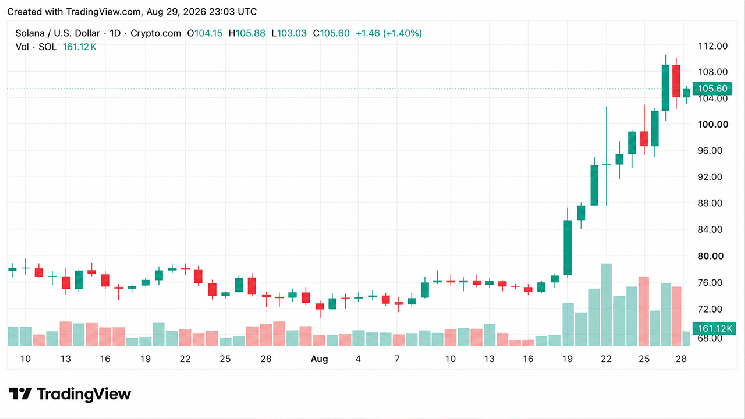
Solana emerged as one of the week’s standout performers, buoyed by the announcement that financial services giant Charles Schwab would be adding support for the digital asset alongside AVAX and LINK in the near future. This institutional endorsement provided a significant boost to Solana’s market position, highlighting the importance of mainstream adoption for altcoin valuation.
The announcement from Charles Schwab represents another milestone in the ongoing integration of cryptocurrency services within traditional financial institutions. As established financial players continue to expand their digital asset offerings, the line between conventional finance and the cryptocurrency sector becomes increasingly blurred.
Monero, the privacy-focused cryptocurrency, also delivered impressive gains during the trading week. The digital asset climbed from $425 to reach $463 by Saturday, representing a substantial appreciation that outperformed many of its peers. This performance suggests continued demand for privacy-focused digital assets, even as regulatory scrutiny of the cryptocurrency sector intensifies globally.
Among large-cap cryptocurrencies, RAIN delivered the standout performance with an impressive 24% surge during the week. This remarkable appreciation caught the attention of market observers and demonstrated that significant opportunities exist within the altcoin sector for investors willing to conduct thorough research and accept higher levels of risk.
## Downside Pressure Affects Previously Outperforming Assets
Not all altcoins shared in the week’s gains, however, as several digital assets experienced significant downward pressure. XRP, which had been among the previous week’s top performers, saw its gains erode with a decline of nearly 7%. This reversal underscores the importance of profit-taking and the challenges associated with maintaining momentum in the highly competitive cryptocurrency market.
Dogecoin, the meme-inspired cryptocurrency that has captured retail investor attention, also experienced a challenging week, dropping 7.2% as enthusiasm appeared to wane. The performance of dogecoin continues to demonstrate the speculative nature of certain cryptocurrency investments, where sentiment and social media influence can outweigh fundamental factors.
Several other major altcoins faced even steeper declines, with ADA, XLM, and BCH all experiencing losses exceeding 10%. These substantial drawdowns highlight the increased volatility present in the altcoin market and serve as a reminder of the risks associated with investing in smaller-cap digital assets.
Despite these individual losses, the combined market capitalization for altcoins managed to post a 4% gain for the week, rising from $1.13 trillion to $1.18 trillion by Friday. This aggregate performance suggests that despite individual setbacks, the altcoin market as a whole continues to attract investment capital and demonstrate resilience in the face of challenging market conditions.
## Outlook: Positioning for Continued Uncertainty
As the cryptocurrency market enters a new trading week, investors find themselves navigating a complex landscape characterized by both opportunities and risks. The recent price action has demonstrated that while digital assets possess significant upside potential, they also remain susceptible to sharp corrections and extended periods of consolidation.
The growing interconnection between cryptocurrency markets and traditional macroeconomic factors suggests that digital asset investors must maintain awareness of broader financial developments. Federal Reserve policy decisions, inflation data, and geopolitical events all possess the capacity to influence cryptocurrency valuations in meaningful ways.
The continued evolution of institutional participation in cryptocurrency markets represents a double-edged sword. While increased institutional involvement brings additional liquidity and credibility to the asset class, it also introduces new dynamics that can amplify market movements in both directions.
For investors maintaining positions in digital assets, the current environment demands patience and a long-term perspective. Short-term volatility, while unsettling, has historically been a defining characteristic of cryptocurrency markets and does not necessarily diminish the long-term investment thesis supporting digital assets.
The coming weeks are likely to provide additional clarity regarding the trajectory of both the cryptocurrency market and the broader macroeconomic environment. As always, investors are advised to conduct thorough research, maintain appropriate risk management strategies, and avoid making impulsive decisions based on short-term price movements.
The cryptocurrency market’s ability to absorb this week’s volatility and close essentially flat demonstrates a level of maturity that was not always present in earlier market cycles. Whether this resilience represents a foundation for future gains or merely a pause before further consolidation remains to be seen, but the market’s behavior suggests that digital assets have become an enduring component of the global financial landscape.