



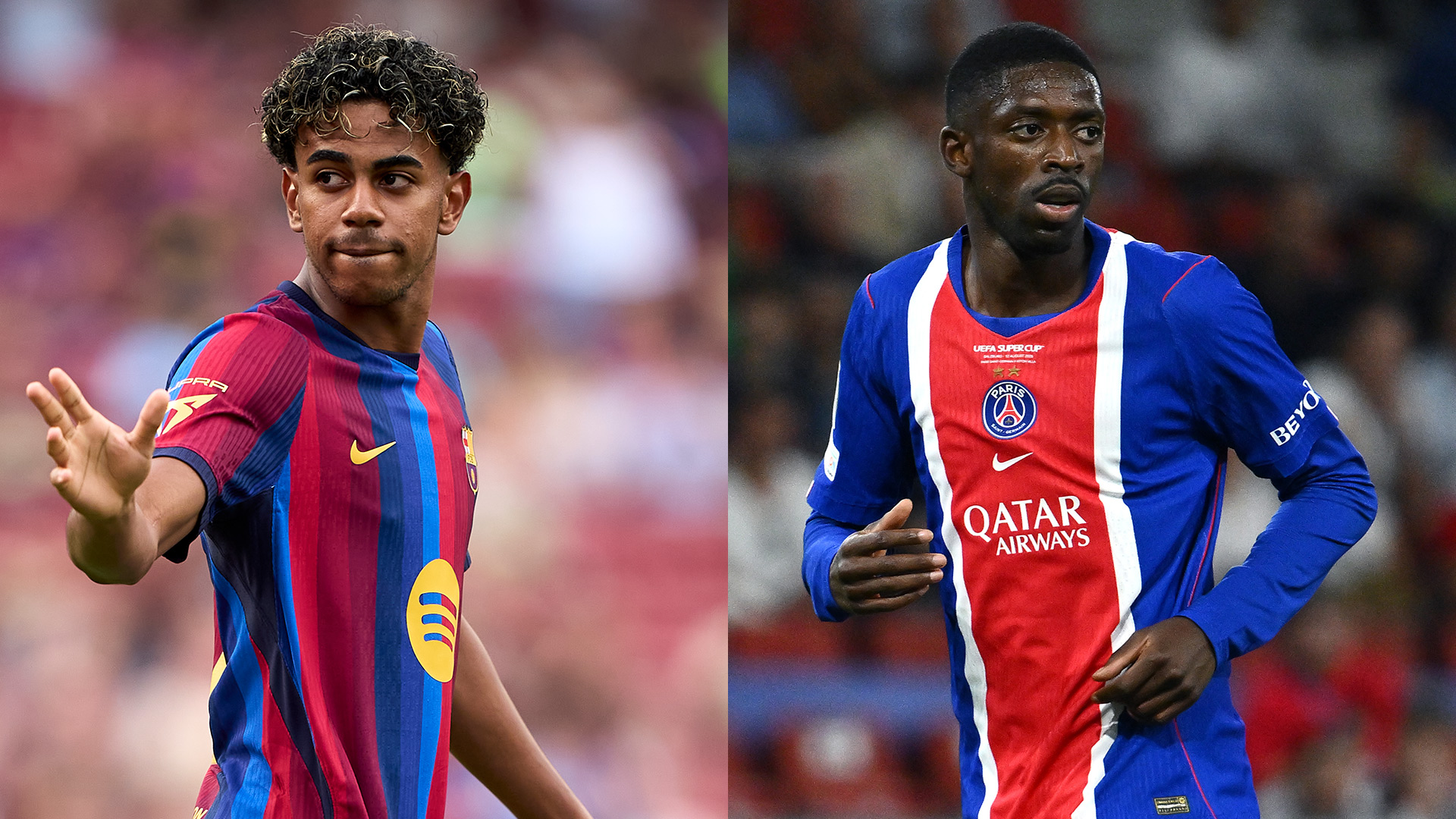
Thursday’s draw for the Champions League main phase felt less like a clerical exercise and more like the opening scene of a movie franchise, packed with old grudges, unexpected reunions, and long-haul journeys to places that once existed only on the fringes of European football. The two-time defending champion, Paris Saint-Germain, must have felt a mixture of pride and unease when the Uefa software handed them a schedule that reads like a greatest-hits album of modern European football. They will host Manchester City in a mouthwatering clash at the Parc des Princes, and then travel to Barcelona, a city that carries enormous emotional weight for the Parisian club. PSG have actually won their last three visits to Barcelona, including a 2-1 victory in the league phase last October, which has helped soften the trauma of the infamous “Remontada” in March 2017, when Barcelona overturned a 4-0 first-leg deficit with a stunning 6-1 win. That night remains one of the most astonishing implosions in Champions League history, but the current PSG generation seems to have exorcised those ghosts, at least a little. Their schedule also includes a trip to Aston Villa, a team they beat in the Super Cup earlier this month, and a visit to Como, the glamorous Italian newcomer coached by Cesc Fabregas. It is a slate that promises box office drama from the first whistle to the last, and it underlines how the Champions League’s new league-phase format has turned every match into a potential classic, no longer hidden inside a cozy group where the biggest teams could coast through with a rotated lineup and still finish top of a small table.
Real Madrid, as always, will greet the draw with the calm of a club that believes it belongs in the final, and this time the fixture list gave them a little bit of everything. The European aristocrats will host Inter Milan at the Santiago Bernabéu, a clash that brings together two of the most decorated names in the competition’s history, and they will also make two trips to London, first facing Arsenal in a game already marked on every football fan’s calendar, and then playing Shakhtar Donetsk at Stamford Bridge. That second London appointment carries a particularly poetic touch, because Shakhtar’s home matches, due to the ongoing conflict in Ukraine, will be played at the home of Chelsea. For Real Madrid, entering Stamford Bridge means returning to a stadium where their beloved former coach José Mourinho once ruled as the self-proclaimed “Special One,” winning two Premier League titles and making Chelsea into a juggernaut. Mourinho’s relationship with the blue half of London is complicated but still warm, and seeing him walk into that locker room as the coach of Real Madrid is sure to stir memories for fans of a certain age. It is a fixture that feels personal, not just tactical. Meanwhile, Barcelona will host two English clubs, Manchester City and Europa League winner Aston Villa, plus Como, which means the spotlight will follow Fabregas back to the club where he began his European career as a teenager. Barcelona’s long, remote trip to Baku to face Sabah, the Azerbaijani champion making its debut in this competition, serves as a reminder that the new format is also about expansion, bringing football’s biggest clubs to places they might never have visited before. For the fans, this is both a burden and an adventure, a chance to tick off a destination like the Caspian Sea while knowing the team will have to perform on artificial turf in an unfamiliar atmosphere.
Arsenal, the beaten finalist last year, received a draw that will test their credentials immediately. The north London club will host Real Madrid and Borussia Dortmund at the Emirates, where the atmosphere will be positively thunderous, and they will also welcome Sabah in what looks on paper like a more manageable night. But their away schedule is brutal, starting with a trip to Bayern Munich, a team that always seems to find another gear in the Champions League, especially against English opposition. Bayern themselves were handed a fascinating mix of old and new rivals, with a trip to Manchester United that will reignite one of the most storied rivalries in European club football, along with two Norwegian opponents, hosting Bodø/Glimt and visiting Viking. That is a reminder that no matter how big a club’s name, they still have to fly to the far north and play on narrow pitches in front of passionate, noisy crowds that make every pass feel difficult. Bayern will also travel to Atlético Madrid’s Metropolitano Stadium, a venue that will host the final this coming May, giving that match a strange, prophetic quality. Liverpool, meanwhile, seem to have come away with one of the kinder draws, with trips to Inter Milan and Fenerbahce, although those two names are hardly pushovers. Atlético Madrid will again travel to Anfield, where Liverpool produced an epic 3-2 victory last September, and the memory of that night, with the Kop roaring and the players charging forward in stoppage time, is enough to send shivers through any Liverpool supporter. Atlético’s schedule also takes them to Norway to face both Bodø/Glimt and Viking, meaning they are one of four teams who will travel inside the Arctic Circle to play on Bodø/Glimt’s artificial turf. Borussia Dortmund, Lille, and newcomer LASK will also make the pilgrimage to that remote fishing town, and one poor team must make that trip in January, when the sun barely rises and the wind whips in off the sea. These small details are what humanize the Champions League, turning it from a television product into a genuine physical and mental challenge.
The four debutants in this year’s edition give the competition a fresh identity, and their stories are worth telling. Como, from Italy, is coached by Cesc Fabregas, who played for Barcelona and Arsenal and brings a bit of modern tactical sharpness to a club that feels like a holiday destination. They will travel to Spain twice, to face Real Betis and Barcelona, and they will host both PSG and Manchester United at their picture-postcard lakeside stadium, a venue that might be the most beautiful in Europe. LASK, from Austria, are less famous but determined, and Viking from Norway represent another chapter in the rising quality of Scandinavian club football. The most intriguing debutant, however, is Sabah from Azerbaijan, a club founded only in 2017, which now finds itself rubbing shoulders with giants. Their coach, Valdas Dambrauskas, has an origin story that belongs in a sports drama: as a young man in Lithuania, he won money on the TV quiz show “Who Wants to be a Millionaire?” and used those winnings to fund a trip to England to study coaching. That kind of backstory makes the Champions League feel less like a closed shop and more like a dream that anyone with courage and a little luck can chase. Another first this season is an African coach taking his team into the main phase. Yaya Touré, the former Manchester City and Barcelona midfielder, guided Slovakian champion Slovan Bratislava through a tense qualifying playoff on Wednesday, and now Slovan will visit PSG and host Inter Milan. Touré is a towering figure in African football, and his presence on the sideline adds a layer of representation and pride that goes far beyond the scoreboard. For fans of these smaller clubs, the draw is a lottery ticket that pays off in moments, in photographs, in the sight of their players sharing the pitch with the heroes they grew up watching on television.
The format itself is still new enough to confuse people, so it is worth explaining in human terms. Instead of the old group of four teams playing each other twice, there is now a 36-team league phase, where every club plays eight matches, four at home and four away. The draw software allocated those eight opponents based on a seeding system that looks at each team’s European results over the past five years, taking two opponents from each of the four seeding pots. A team can never face another club from its own country, which protects the romance of international competition. The first round of games begins on September 8–10, with the first six rounds played through December, and then the league phase resumes in January, with the eighth and final round on January 27. At that point, the top eight teams in the final standings go directly to the round of 16 in March, while teams placed ninth through 24th enter knockout playoffs in February to determine the other eight spots. Teams that finish 25th to 36th are simply eliminated, which sounds harsh but was always the risk of this expanded model. For fans, the format means more midweek trips, more ticket purchases, more late nights in front of screens, and more moments of drama. It also means that the group-stage dynamic is gone, replaced by a table that changes after every round like a tense election night. The system rewards consistency and punishes even a single bad away performance, because every match carries the same weight as a final. The January schedule is particularly tricky, because players are coming off winter breaks or mid-season slumps, and the prospect of traveling to Baku, Norway, or a small Austrian town in the middle of winter is hardly anyone’s idea of a holiday. And yet, it is precisely these challenges that make the Champions League special, because the best teams are the ones that can adapt to any environment, whether it is a roaring stadium in Madrid or a silent, cold pitch above the Arctic Circle.
At the center of all this is money, roughly two and a half billion euros in prize money, about $2.9 billion, distributed among the 36 participating teams. That number is staggering, but behind it lies a more human calculation, of club accountants breathing easier, of players negotiating contracts, of stadium owners dreaming of new stands. The expanded format was designed not just to create more drama, but to spread wealth and opportunity more widely, and in that sense it is already succeeding. Sabah, Como, Viking, and LASK may not win the trophy, but they will leave a mark on this season, and their players will tell their grandchildren about the night they faced PSG or Manchester United. For the giants, the prize is not just money but legacy, the chance to be remembered as the team that mastered the new format, that handled the ridiculous travel and the brutal schedule and still lifted the trophy in Madrid next May. The draw on Thursday did not decide anything, it only created the stage, but what a stage it is. From the glamour of Barcelona to the raw adventure of Sabah’s home in Baku, from the emotional return of José Mourinho to Stamford Bridge to the quiet pride of Yaya Touré leading Slovan into the main phase, this Champions League feels less like a tournament and more like a sprawling, human epic. Every match is a separate story, and taken together they form a season that will be remembered long after the final whistle. In the end, that is what football is all about, not just the results, but the journeys, the memories, and the shared belief that on any given night, under the lights, anything is possible.