



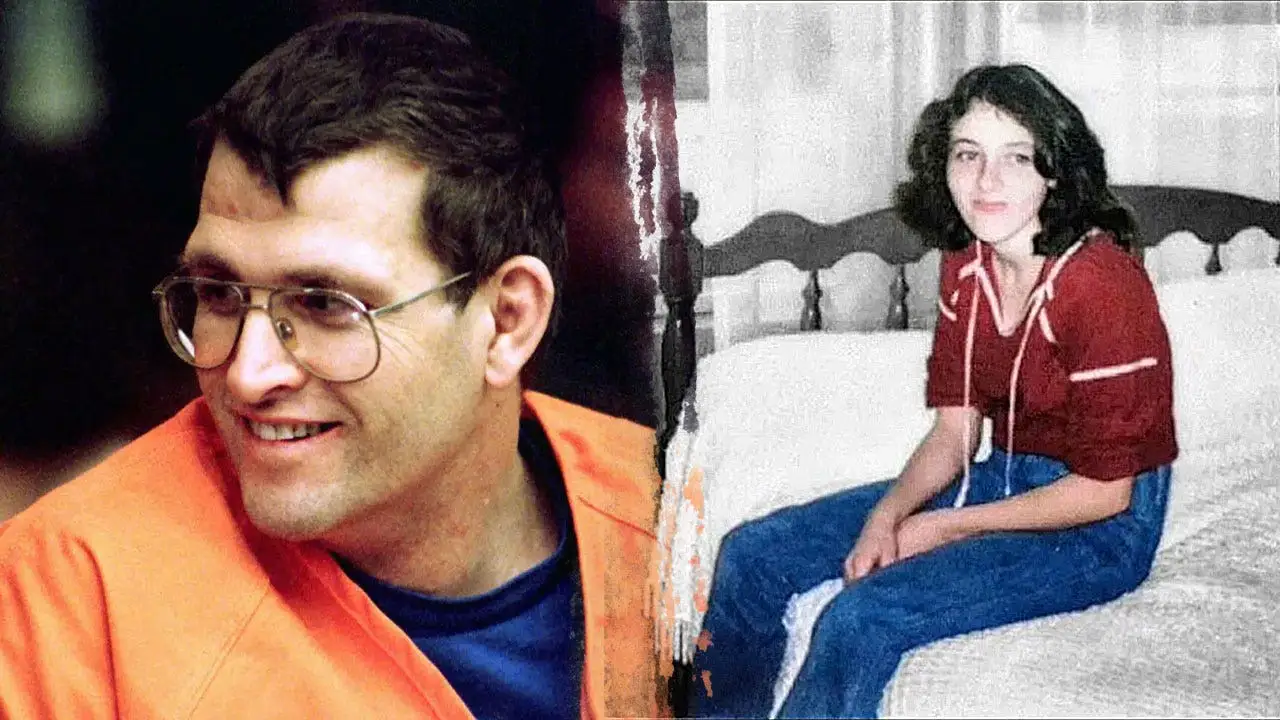
For more than three decades, a woman’s body found on a desolate stretch of California highway was a case number, a mystery, a photograph on a cold-case board. She was discovered on the morning of August 30, 1992, lying not far from Highway 95 about seven miles north of Blythe, a small desert town near the Arizona border. The landscape there is unforgiving—open sky, dry brush, and long stretches of road where the heat shimmers above the asphalt. It was a place that offered few clues and even fewer witnesses. Detectives could not identify her. They could not confirm her name, her home, or the circumstances that led her to that remote roadside. What they had was a confession from a monster. Keith Hunter Jesperson, a long-haul truck driver who later became notorious as the “Happy Face Killer,” admitted that he had killed her. He said he knew the woman as “Claudia,” but that name could never be verified. It might have been real; it might have been a mask. For thirty-three years, she was “Claudia” to investigators, “Jane Doe” in spirit, and a symbol of everything that haunts unsolved cases. Then, on Thursday, the Riverside County District Attorney’s Office announced that the final unidentified victim of Jesperson’s confirmed murders had been identified. She was Lydia Jane Wade McWhorter of Texas. DNA testing had confirmed a connection to a member of her maternal family. A woman who had been missing from the world had, at last, been given her true name. The announcement was quiet and factual, but for those who had worked on the case, it was the end of a very long journey—and the beginning of a different kind of healing.
The road to that announcement did not follow a straight line. In the years after Jesperson’s confession, investigators tried to piece together who “Claudia” was, but leads dried up. The victim’s connection to Jesperson seemed random—a man who drove across state lines, who met women on the road, who saw them as objects rather than people. Without a name, the case could not move forward in any meaningful sense. Jesperson gave them details about the encounter, but not enough to unravel the woman’s identity. For a long time, that was where the story stalled. But cold cases are never truly abandoned by the people who care about them. In 2024, Riverside County investigators made a public push to identify the woman. This time they had a powerful new tool: genetic genealogy. By building a family tree from DNA taken from the victim’s remains, they were able to identify a paternal half-sister, Summer Gonzales. For Gonzales, the discovery was both staggering and delicate. She had not grown up with her sister; she may not have even known she existed. Yet she stepped forward to help investigators and publicly expressed hope that her sister’s real name would be found and that she could be laid to rest with family. It was a poignant twist in the case: a woman connected by blood but not by history, asking for nothing more than the dignity of a proper burial. Investigators had made progress, but they were not finished. The paternal connection alone was not enough to positively confirm the victim’s identity. They needed a maternal match, a lead that could close the gap between probability and proof. That lead would not come quickly. It would require old-fashioned police work, patient interviews, and the kind of attention to detail that does not show up in press conferences.
The breakthrough eventually arrived from an unexpected corner: an investigative lead that directed the cold case team to one of McWhorter’s direct maternal relatives. According to the district attorney’s office, investigators then identified a possible genetic connection to another member of her maternal family. A DNA sample was collected, and earlier this week, it confirmed what the files had long suggested but could not prove. Lydia Jane Wade McWhorter was the woman Jesperson had killed. Nearly thirty-four years after her body was discovered, she had a name that was truly hers. The news brought a sense of resolution to a case that had been open for the better part of three decades. But it also brought a deep, complicated sadness. McWhorter’s sisters, who grew up with her, had spent decades wondering what had happened to her after she disappeared from Texas. They had gone through the ordinary rituals of life—birthdays, holidays, weddings, losses—while carrying an extraordinary weight of uncertainty. Was she alive somewhere? Had she started a new life? Had she been taken? Those questions, unanswerable for so many years, now had a painful answer. Billy Hester, the supervising investigator of the Cold Case Unit, expressed gratitude to the public and reminded people that even a small piece of information can make a difference. “You may not know where a piece of information will lead, but our investigators will follow it,” Hester said. “Most importantly, I hope this will finally bring closure to Lydia’s family.” Now, the district attorney’s Division of Victim Services is working with McWhorter’s family as they decide how to honor her and lay her to rest. That simple act—burying someone under the name they were given at birth—carries enormous weight. It transforms a body into a life and a case file into a eulogy.
The man responsible for Lydia’s death has been in prison for decades. Jesperson was arrested in 1995 and quickly became one of the most chilling figures in American true crime. A truck driver by trade, he had the ability to move across the country without drawing attention, and he used that mobility to horrific effect. He eventually confessed to killing eight women between 1990 and 1995 in California, Washington, Oregon, Florida, Nebraska, and Wyoming. His notoriety deepened when he began sending letters to the media about his crimes, letters he signed with a smiley face. That darkly cheerful signature gave him the nickname “Happy Face Killer” and turned him into a kind of grim celebrity. For the families of his victims, though, there was nothing entertaining about it. Each revelation brought more pain. In Riverside County, authorities wanted to make sure Jesperson was held accountable for Lydia’s death. On January 8, 2010, he pleaded guilty to her murder, still known then only as “Claudia.” He was sentenced to 25 years to life in prison, a sentence that would run alongside the multiple life sentences he is serving in Oregon. The guilty plea was a legal victory but not a complete one. Jesperson could admit to killing a woman, but he could not restore her identity. She remained the unidentified victim, tied to his crimes but not to a family, not to a history, not to a life. That changed only this week. With the positive identification of McWhorter, Riverside County’s cold case team has now closed the final unidentified-victim case tied to the murders for which Jesperson was convicted. It is a milestone in the annals of law enforcement—but it is also something more. It is a commitment fulfilled to a woman who could not speak for herself.
To understand why this identification matters so deeply, you have to set aside the statistics and think about what a name means. Names are how we are remembered, how we are mourned, how we are called back to the people who love us. For thirty-three years, Lydia was known by a name that a killer gave her. “Claudia” might have been a nickname, an alias, or simply a lie. Either way, it was not hers. It did not belong to the family who missed her. It did not carry the memory of a girl growing up in Texas, of sisters who shared a childhood, of all the small moments that make a person real. When authorities call her Lydia Jane Wade McWhorter, they are not just correcting a record. They are giving her back the life story that had been stolen from her. They are acknowledging that she was not born to be a victim. She was born into a family, and she belonged to them. Summer Gonzales, the paternal half-sister who came forward in 2024, never had the chance to know Lydia. But she wanted to learn her sister’s real name and eventually lay her to rest with family. That desire is a reminder that love can reach across time, across distance, and across the silence of years. It is also a reminder that the work of identifying victims is not just about closure for investigators. It is about giving the living a place to grieve. For too long, Lydia’s family had no grave to visit—not because they did not want to, but because they did not know where she was or who she had become. Now they have a path forward. They can plan a funeral, choose a headstone, and write her name in permanent letters. That is not a small thing. In many ways, it is the most human thing any of us can do: to honor a life by remembering it.
The story of Lydia Jane Wade McWhorter is a story about the persistence of justice, but it is also a story about the limits of justice. Jesperson may have confessed, may have pleaded guilty, may be serving life sentences—but nothing he has done can bring Lydia back or undo the pain he caused. What the identification does do is shift the focus from the killer to the person he killed. For decades, newspaper articles and true-crime shows framed the story through Jesperson’s grotesque signature smiley face. He wanted attention; he craved notoriety. And for a long time, he unwittingly got it, because the woman whose life he took was reduced to a supporting role in his story. But now, in the end, the final word belongs to Lydia. Her name has been spoken in an official announcement. Her sisters know what happened to her. A family that waited thirty years can begin to mourn. The Riverside County District Attorney’s Office has closed its last unidentified-victim case connected to Jesperson’s known murders, and that closure is a tribute to the work of detectives, genetic genealogists, and ordinary people who cared enough to share information or pay attention. As Billy Hester said, no one knows where a piece of information will lead—but investigators will follow it. They did. And because they did, a woman who was found on the side of a road in August 1992 will no longer be remembered as a nameless mystery. She will be remembered as Lydia, a sister, a daughter, a human being whose life mattered. Her resting place, when it is chosen, will bear her true name. And when the desert wind blows across the highway, that name will remain.