


Paragraph 1: The Digital Shockwave of a “Cancelled” Life
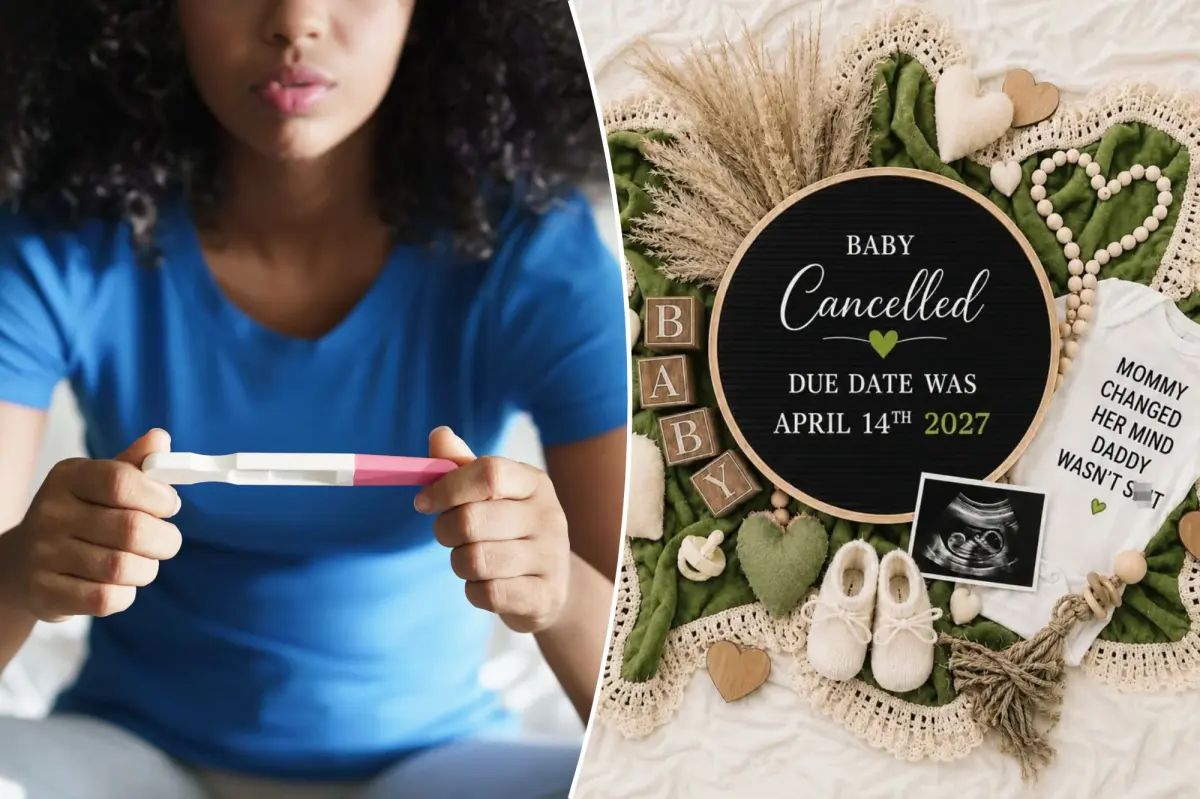
In the vast, scrolling spectrum of social media, where curated perfection often masks messy reality, a single Instagram post sliced through the noise with the surgical precision of a scalpel, leaving millions of users in a state of collective cognitive whiplash. The post, crafted by a woman operating under the moniker “Moraa,” featured an eerily clean, AI-generated graphic that mimicked the saccharine aesthetics of a formal birth announcement—a promise of new life wrapped in pastel tones and soft typography. Yet, stamped across this digital greeting card were the jarring, brutal words: “Baby Cancelled.” Beneath this headline stood a mock due date of April 14, 2027, and a devastatingly blunt parenthetical: “Mommy changed her mind. Daddy wasn’t s–t.” The visual accompaniment was a grotesque hybrid of infant iconography—tiny shoes, alphabet blocks spelling out “B-A-B-Y,” and a suspiciously glossy, fake-looking ultrasound snapshot that seemed pulled from a low-budget stock photo. The sheer audacity of treating the most profound biological and existential human event like a subscription cancelation sent a visceral ripple across the platform. The image became a Rorschach test for a fractured society, instantly dividing viewers into two warring tribes: those who saw it as a beacon of liberation and those who viewed it as a moral abomination. The post didn’t just get attention; it demanded it, accumulating over 121,000 likes and over 8,400 comments within days, transforming a private Instagram feed into a global battleground for the very soul of reproductive ethics.
Paragraph 2: The Loud Cheers of a Generation on the Brink
To the casual observer, the overwhelming tide of likes might seem shocking, but to those entrenched in the modern anxieties of child-rearing, the support made a grim, rational sense. The comment sections lit up with a choir of virtual high-fives, with one supporter proclaiming, “It ain’t never been smart to bring kids into a world of chaos. Good for you lol.” Another echoed a disturbing yet deeply felt sentiment: “Wish more women were like this. It’s called intelligence.” The chorus for “normalizing this” was loud and unapologetic. To humanize this perspective is to understand the crushing weight of the contemporary human condition. We are living through a climate crisis that threatens to render the planet inhospitable, an economic landscape where the middle class is evaporating, and a political environment so fractured that civil discourse has become a relic. For many women, the decision to bring a child into this “world of chaos” feels less like a miracle and more like a malicious inheritance. The phrase “Daddy wasn’t s–t” is not just a crude insult; it is a war cry for the millions of women who have faced the thankless, solitary burden of parenthood, abandoned by partners who promised to stay. These supporters aren’t necessarily pro-abortion absolutists; they are exhausted realists who view the termination of a potential life as a grim, necessary act of self-preservation against a future that seems to offer only struggle. They saw in Moraa’s fictitious post a cathartic release of their own suppressed fears—a validation that choosing oneself, even at the cost of an unborn child, might be the ultimate act of intelligence in a society that offers women nothing but impossible standards and unforgiving judgments.
Paragraph 3: The Vicious Rebellion of the Disgusted and the Devastated
But as quickly as the cheers erupted, a counter-movement of visceral rage and moral outrage crashed against the digital shore. Protestors did not merely disagree; they were physically sickened, calling the content “Sick AF” and “disturbingly vile.” One particularly poignant criticism cut through the noise, arguing, “A baby isn’t a dinner reservation you cancel because you changed your mind. If you KNOW you don’t want a child, condoms and birth control exist,” adding, “Turning an ultrasound and a due date into a cute little cancelled photoshoot for Instagram is disturbing as hell.” To humanize this camp is to understand the profound sanctity they attach to the image of the ultrasound. That grainy, black-and-white blob is not an abstract concept; it is a child with a heartbeat, a recognizable human form with fingers and toes. For those who have struggled with infertility, who have suffered through heart-wrenching miscarriages, or who have made the agonizing, tear-stained decision to terminate a pregnancy for medical or tragic reasons, Moraa’s flippant, meme-ified reduction of this experience is a slap in the face. It cheapens the gravity of their trauma and turns their most profound pain into a punchline for internet clout. The critics fear that this normalization of treating pregnancy like an on-demand service erodes the ethical weight of the choice itself, reducing the very concept of life to a disposable consumer product. Their fury is not merely about abortion; it is about the dehumanization of the process, the stripping away of nuance, and the grotesque transformation of a sacred, complex, and deeply personal journey into a hollow, viral gimmick.
Paragraph 4: The Hollow Heart of a Paid Provocateur
Just as the internet’s engine threatened to overheat from the friction of these clashing ideologies, the narrative took a sudden, cynical turn that left everyone involved feeling slightly duped. When confronted about the gravity of her post, Moraa did not offer a tearful apology or a nuanced defense of her pro-choice stance. Instead, she shrugged off the entire controversy with a cold, transactional confession: it was a “joke,” and, even more damning, she admitted, “I get paid to troll.” She even cheekily predicted her impending television fame, hinting that her attention-seeking maneuver was merely a stepping stone to a larger platform. This revelation pulled back the curtain on the ugly machinery of the modern attention economy. It was never about a genuine debate over reproductive rights for Moraa; it was about the almighty algorithm. As one anonymous rage-baiter told The Post recently, a single Instagram story designed to provoke outrage can pull in over $17,000 in a single month, even when it is completely fabricated. Moraa is a product of an environment where nuance is the enemy of virality, and where the only sin is being ignored. By weaponizing the deepest societal fissures—the war over female bodily autonomy—she successfully monetized the collective anxiety of millions. Her “joke” was a psychological exploit, a social experiment gone viral that calculated the exact amount of emotional trauma required to generate a return on investment. The human tragedy here is that she traded genuine human empathy for algorithmic engagement, and in doing so, hijacked the very real, heartbreaking stories of women everywhere to line her pockets.
Paragraph 5: The Real-Life Battlefield Behind the Fiction
The firestorm of Moraa’s fabricated post did not occur in a vacuum; it was merely the explosive detonation over a powder keg that had been primed by weeks of intensely real, high-stakes conflicts over reproductive rights. Mere weeks before her post, YouTuber Jesse Ridgway and his wife had publicly shared their deeply personal choice to terminate a previous pregnancy after discovering the fetus would have Down Syndrome—a disclosure that shattered their relationship with segments of their fanbase and opened them up to a torrent of personal attacks, highlighting the brutal reality that actual choices carry tangible consequences. Simultaneously, the news cycle was dominated by a Texas surrogate fighting for her bodily autonomy, refusing to abort her clients’ fetus, igniting debates about contract law versus biological rights. Massachusetts had just passed a groundbreaking law expanding termination rights throughout an entire pregnancy, while a garden at SUNY Purchase featuring plants historically used as birth control sparked its own academic controversy. The clash of these stories reveals a society at war with itself, unable to find common ground on when life begins, when choice ends, and who holds the authority to decide. Moraa’s AI-generated fake was so potent because it served as a cynical parody of these very real tragedies. Each like represented a person projecting their own anxieties about the Texas surrogate onto a digital avatar; each angry comment was a displaced cry of grief for the Ridgway family; each debate in the comment section was a proxy war for the legislative battles happening in state capitols. The pixels on the screen were fake, but the blood, sweat, and tears of the real human experiences they referenced were as real as the air we breathe.
Paragraph 6: The Lingering Ghost of a Ghost Child
In the end, the “Baby Cancelled” post will be archived into the endless scroll of internet lore, its creator moving on to her next provocative stunt, likely enjoying the fruits of her digital labor—we are told she won’t be spending her earned cash on a bassinet. But the echo of that empty announcement lingers long after the notifications stop piling up. The debate it sparked refuses to die because it speaks to a fundamental, terrifying truth about the human experience: the decision to bring a child into existence is the most profound, irreversible, and terrifying choice a soul can make. We are living in an era where we have replaced meaningful conversations about these choices with shallow, performative outrage. The fake ultrasound, the mocked-up due date, and the AI-generated infant shoes are a manifestation of our collective inability to handle ambiguity. Instead of acknowledging the genuine pain, fear, and economic desperation that drives women to consider termination, we reduce it to a binary shouting match, allowing cynics to exploit our divisions for clicks and cash. As we scroll past the remnants of this digital storm, we are left with a haunting feeling of emptiness. Behind the veil of irony and trolling lies a hollow celebration of a life that never was—a life that was traded for engagement metrics and fleeting fame. The “baby” was cancelled, but so too was any hope of civil, compassionate discourse. In the sterile, artificial glow of the internet, we have lost the ability to distinguish between the profound tragedy of a real termination and the cheap, cynical theater of a paid provocation, leaving us all slightly poorer in our shared humanity.