


Paragraph 1: The Cruel Whistle of August
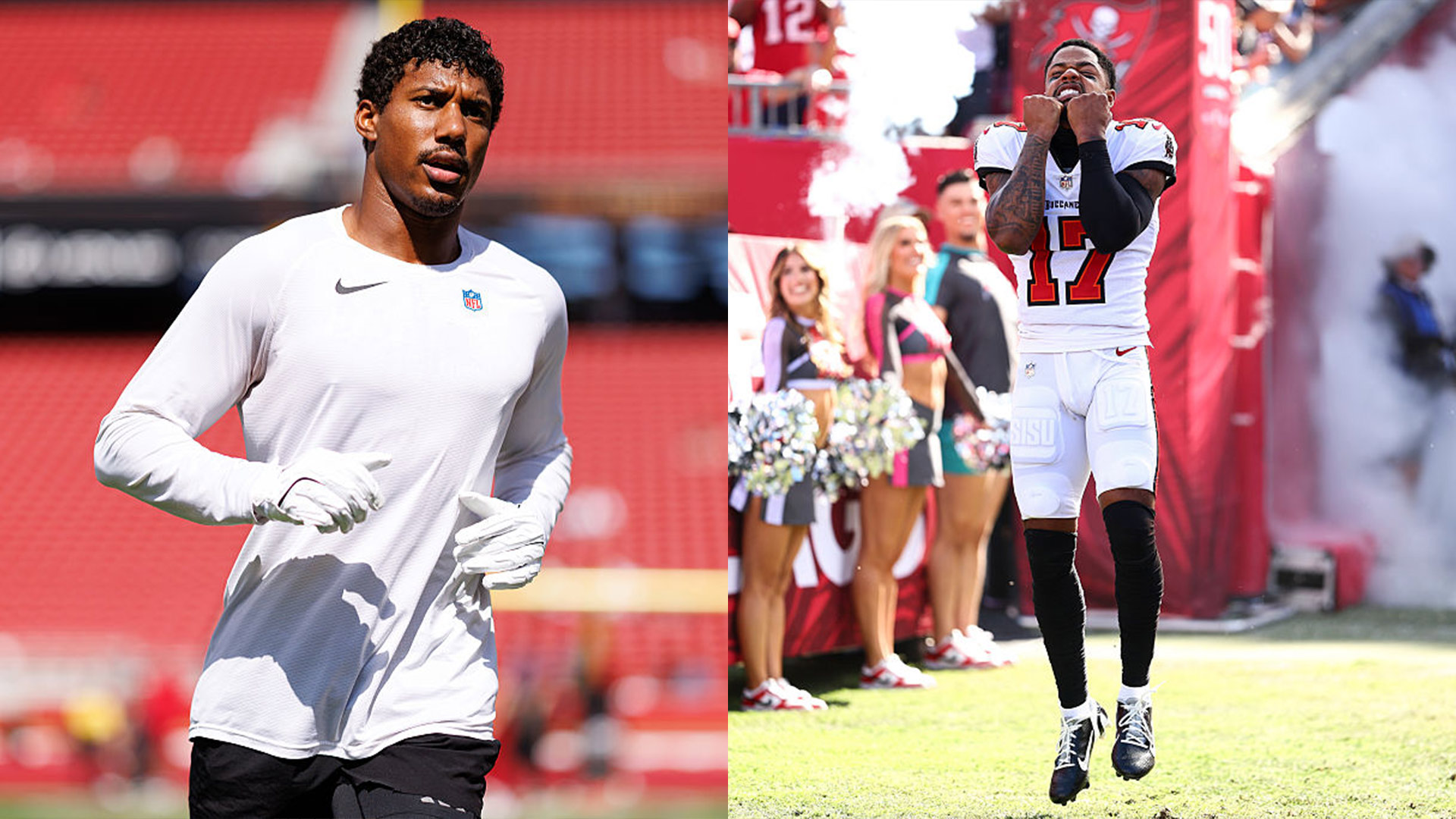
In the unforgiving ecosystem of an NFL training camp, the line between a season of promise and a season of ruin is often measured in a single, silent moment—a misstep on the turf, a phantom defender, and a pop that no one wants to hear. That moment arrived for the Houston Texans this past Tuesday, striking down second-year wide receiver Jayden Higgins during what should have been a routine practice. The diagnosis, a torn ACL, was as brutal as it was definitive, instantly transforming a player poised for a breakout into a spectator condemned to a year of grueling rehabilitation. The Texans organization, however, does not have the luxury of mourning. The NFL is a merciless machine that demands immediate solutions, and by Friday, the front office had executed a swift, pragmatic response. In a move that underscored the cold calculus of the sport, Houston announced the signing of two battle-tested veterans: Sterling Shepard and Zay Jones. On the surface, these are simple transactions—additions to a depth chart—but beneath the surface, they represent a profound shift in the team’s emotional trajectory. They are the difference between relying on uncertain youth and trusting in the weathered grit of men who have seen the highest highs and the lowest lows of professional football. For Shepard and Jones, it is a lifeline; for the Texans, it is a security blanket woven from the threads of experience, a desperate attempt to patch a hole that was never supposed to exist.
Paragraph 2: The Enduring Spirit of Sterling Shepard
Sterling Shepard arrives in Houston not as the explosive playmaker he was a decade ago, but as something arguably more valuable to a contending team: a survivor. Entering his tenth NFL season, Shepard has become a testament to durability and adaptability in a league that discards aging players without hesitation. His journey has been a nomadic one, marked by the storied blue of the New York Giants, where he spent eight formative years, and a recent two-year sojourn with the Tampa Bay Buccaneers. To look at Shepard’s raw statistics is to see a player who once hovered on the cusp of stardom—his third season in the league saw him reel in 66 catches for 872 yards and four touchdowns, numbers that hinted at a future as a primary target. But the NFL is rarely a straight line, and injuries and quarterback instability often conspired against him. Yet, Shepard’s value has never been purely statistical. In Tampa, he earned the trust of a coaching staff that relied on his precise route-running and his ability to move the chains on third down. Now, at 32 years old, he brings a veteran’s savvy to a Texans locker room that is suddenly searching for stability. He is not the same athlete who once torched secondaries with the Giants, but he possesses a cerebral understanding of coverages that cannot be taught. For rookie quarterbacks and young receivers alike, Shepard is a living playbook, a whisperer who knows exactly where the soft spots in a zone defense are and how to sit down in them. His presence is a statement that the Texans value reliability over flash, wisdom over potential, and that in the absence of a rising star, they are willing to ride the steady, knowing hands of a man who has caught passes in the pressure cooker of New York and earned the respect of every sideline he has graced.
Paragraph 3: The Grit and Redemption of Zay Jones
If Shepard’s story is one of steady persistence, Zay Jones’s narrative is a more chaotic and turbulent epic. The ninth-year wide receiver is a journeyman in the purest sense, a gun for hire now joining his fifth franchise. His career has been a collision of immense physical talent and the unpredictable whims of team-building and personal challenges. After being drafted by Buffalo, he bounced through Las Vegas before finding a fleeting renaissance in Jacksonville, where he achieved the zenith of his production in 2022, hauling in 82 catches for 823 yards and five touchdowns. That season proved that when utilized correctly, Jones possesses a rare blend of size, route-running, and contested-catch ability that can dismantle a secondary. However, consistency has been his elusive ghost, and his subsequent stints in Arizona saw his role diminish amid franchise rebuilds. For Jones, Houston represents a fifth stop in nine years—a place where the pressure to perform is palpable but the opportunity is equally real. He is not just signing a contract; he is signing a declaration of intent that he still belongs. By bringing him into the fold alongside Shepard, the Texans are betting that their combined wisdom can compensate for the transcendent potential they just lost. They are not asking for miracles, merely for professionalism, reliable hands, and the kind of quiet leadership that steadies a wide receiver room suddenly rattled by tragedy.
Paragraph 3: The Redemption Arc of Zay Jones
If Shepard represents steady tenure, Zay Jones represents chaotic redemption. His career has been a turbulent voyage across the league—five teams in nine seasons, bouncing from Buffalo to Las Vegas to Jacksonville and most recently to the arid deserts of Arizona. Yet, within that instability lies a profound resilience that makes him an ideal candidate for a team in need. Jones’s peak performance came in 2022 as a member of the Texans’ AFC South rivals, the Jacksonville Jaguars, where he finally harnessed his raw athleticism into consistent production, snagging 82 receptions for 823 yards and five touchdowns. That season proved that when given a defined role and a quarterback who trusts him, Jones can be a legitimate weapon. However, football is a fickle mistress, and subsequent stints have been less fruitful, leading to his release and this latest opportunity. For Jones, Houston is not merely a new city; it is a chance to rewrite the final chapters of his career narrative. He is a deep threat, a long-strider who can stretch defenses vertically, a skill set that Houston desperately needs to protect the middle of the field. He joins a receiver room that will ask him to be a mentor, a route-runner, and a safety valve, justifying his presence through sheer professionalism.
Paragraph 3: The Nomadic Resilience of Zay Jones
Similarly, Zay Jones arrives in Houston carrying the weight of a career defined by peripatetic persistence. Nine seasons, five different franchises—from Buffalo to Oakland to Jacksonville to Arizona—and now to Texas. If Shepard is the steadying old soul, Jones is the hungry journeyman whose best football may still be ahead of him, even as he enters his ninth year at 30 years old. It was in 2022, wearing the teal of the Jacksonville Jaguars, that Jones finally delivered on his immense promise. That season, he erupted as a devastating complementary weapon, hauling in 82 receptions for 823 yards and five touchdowns, serving as the perfect counterpunch to the explosiveness of Christian Kirk and the precision of Trevor Lawrence. That year felt like a breakout, a moment when the former second-round pick from East Carolina silenced his doubters. But the NFL is fickle, and his subsequent stint in Arizona was marred by scheme mismatches and diminished targets. Now, as he lands in Houston, Jones carries a chip on his shoulder and an intimate understanding of his own mortality as a player. He knows that this opportunity could be his last significant role. He is not coming to be a savior; rather, he is coming to be a professional. He will block in the run game, run the deep routes that open up the middle for his teammates, and use his 6-foot-2 frame to create mismatches against smaller defensive backs. For the Texans, his arrival adds a layer of physicality and veteran savvy that no rookie can replicate.
Paragraph 4: The Broken Promise of Jayden Higgins
To truly understand the weight of these signings, one must pause to acknowledge the devastating loss of Jayden Higgins. The second-year receiver out of the second round of the draft was not just a depth piece; he was the team’s projected catalyst for offensive evolution. His rookie campaign—525 yards and six touchdowns—was merely a teaser of what the coaching staff believed was coming. Offensive coordinator Nick Caley had spent the off-season beaming about Higgins’s progress, noting the young man’s newfound comfort within the system. “He’s playing clean,” Caley said recently, a phrase that encompasses a player who no longer has to think but can simply react, a player who has internalized the offense to the point where it becomes instinctual. That praise painted a picture of a receiver shedding the rookie jitters, mastering the nuances of releases, and building a telepathic connection with his quarterback. The promise of a second-year leap, so common among wideouts who take a year to acclimate to the pro game, was palpable within the building. Higgins had logged 525 yards and six touchdowns as a rookie, and the coaching staff had publicly salivated over his progression. Now, all of that is a ghost. The ACL tear does not just take away a body; it robs a young man of a year of prime development, of the chance to prove his worth on a national stage, and of the simple joy of playing the game at its highest level. The emotional toll on the locker room cannot be overstated. Players grieve for their brother, but they do not have time to stop. The game rolls on, and the Texans had to look outward to find replacements who could shoulder the load, a fact that makes the signings of Shepard and Jones as much about morale as they are about football acumen.
Paragraph 5: Forging the New Receiver Corps
The addition of Shepard and Jones immediately reshapes the chemistry of the Texans’ offensive huddle. They join a receiving room that includes the explosive All-Pro talent of Nico Collins, the dynamic playmaker Jaylin Noel, and the promising depth of Xavier Hutchinson. The hierarchy is clear: Collins is the unquestioned alpha, the deep threat who draws the attention of every defensive coordinator. Yet, beneath him, the pecking order was left in a state of flux by Higgins’s injury. Into this void step the two veterans. Offensive coordinator Nick Caley had just praised Higgins for his clean technique and his ability to play all over the field, a versatility that is now sorely lacking. Shepard and Jones, however, collectively offer a approximation of that versatility. Shepard, with his crisp intermediate routes, can feast in the slot, providing a reliable check-down option for the quarterback. Jones, with his size and vertical speed, can stretch the field and free up space for Collins underneath. They do not possess the untapped ceiling of a second-year breakout, but they possess something more immediately valuable: trust. They know their assignments, they know how to adjust when a play breaks down, and they understand the subtle art of getting open against zone coverage. Their presence allows the coaching staff to simplify the playbook for the younger players and ensures that the offense does not become one-dimensional. It is a unification of the old guard and the new, a marriage of raw talent and refined experience that could either fizzle into inconsistency or spark a surprisingly efficient passing attack.
Paragraph 6: The Cyclical Nature of the Game
In the end, this is a story that transcends a simple roster move. It is a microcosm of the brutal, cyclical nature of professional sports where one man’s tragedy is another man’s opportunity. For Jayden Higgins, the coming months will be a lonely battle against the clock, fighting to regain a step that has been painfully taken from him. For Sterling Shepard and Zay Jones, it is a sudden, unexpected reprieve—a chance to prove to themselves and the world that their best days are not behind them. They walk into a Texans facility that is eager to turn the page on a heartbreaking training camp, and they bring with them the scars and the grit of a decade of professional service. The Texans still possess a potent offense led by an elite core, but the margin for error has narrowed. In Shepard and Jones, they are not just finding warm bodies; they are finding men who have caught passes in the pouring rain, dropped them on the biggest stages, and learned how to get back up. They are not the future, but they are the present salve. As the season looms, the team will hold its breath, hoping that these two grizzled veterans can bridge the gap until the next star emerges Mend, proving that in the brutal theology of football, resurrection is always a possibility—even for those who have been discarded.
Paragraph 6: The Enduring Cycle of the NFL
In the end, this transaction is a microcosm of the entire NFL season. It is a reflection of the league’s brutal indifference to individual narratives, yet simultaneously, it is a deeply human story of resilience. For Jayden Higgins, the coming months will be filled with the lonely grind of physical therapy, watching his team from the sideline, wondering what could have been. For Shepard and Jones, it is a chance to prove that their best football does not have to be a memory. The Texans are a team with legitimate playoff aspirations, and they cannot afford to tread water. By bringing in two players who have been around the block, who have caught passes in playoff games and suffered through losing seasons, they are betting that experience is the ultimate insurance policy. Shepard will run the precise option routes on third-and-four; Jones will use his big frame to box out defenders in the red zone. They are not replacements for the raw, budding superstar that Higgins was becoming, but they are capable stewards of the offense in his absence. As the season looms, the locker room will lean on these two veterans to bridge the gap. They are a reminder that even in the modern, high-octane NFL, there is still a place for the wily old guard—the players who have felt the sting of injury, the bitterness of being cut, and the ecstasy of a game-winning catch.
Paragraph 6: The Circle of Life in the NFL
Ultimately, this trio of stories—the veteran saviors and the fallen sophomore—paints a poignant picture of the NFL’s eternal cycle of loss and renewal. For Sterling Shepard and Zay Jones, this is not a curtain call but a second act, a chance to author a final, memorable chapter in careers that could have easily ended quietly. They will be tasked with the unglamorous jobs: running precise routes on third and long, providing leadership on the sidelines, and acting as mentors to the young receivers who suddenly find themselves thrust into the spotlight. Their presence offers a sense of calm to quarterback C.J. Stroud, who needs reliable hands more than flashy gestures. Meanwhile, the specter of Higgins looms over the season. His injury is a stark reminder that talent alone doesn’t guarantee health, and that potential can be shattered in a fraction of a second. As he begins the long, solitary journey back from knee surgery, his absence will be felt most acutely in the red zone and on crucial third downs. But the Texans have chosen not to wallow in what they lack. Instead, they have placed their faith in the weathered, reliable souls of two veterans who have weathered personal storms and professional disappointments. It might not be the splashiest move of the offseason, but it carries a profound human truth: when one door closes, another opens, and experience, resilience, and a refusal to quit are often the most powerful weapons a football team can possess.