



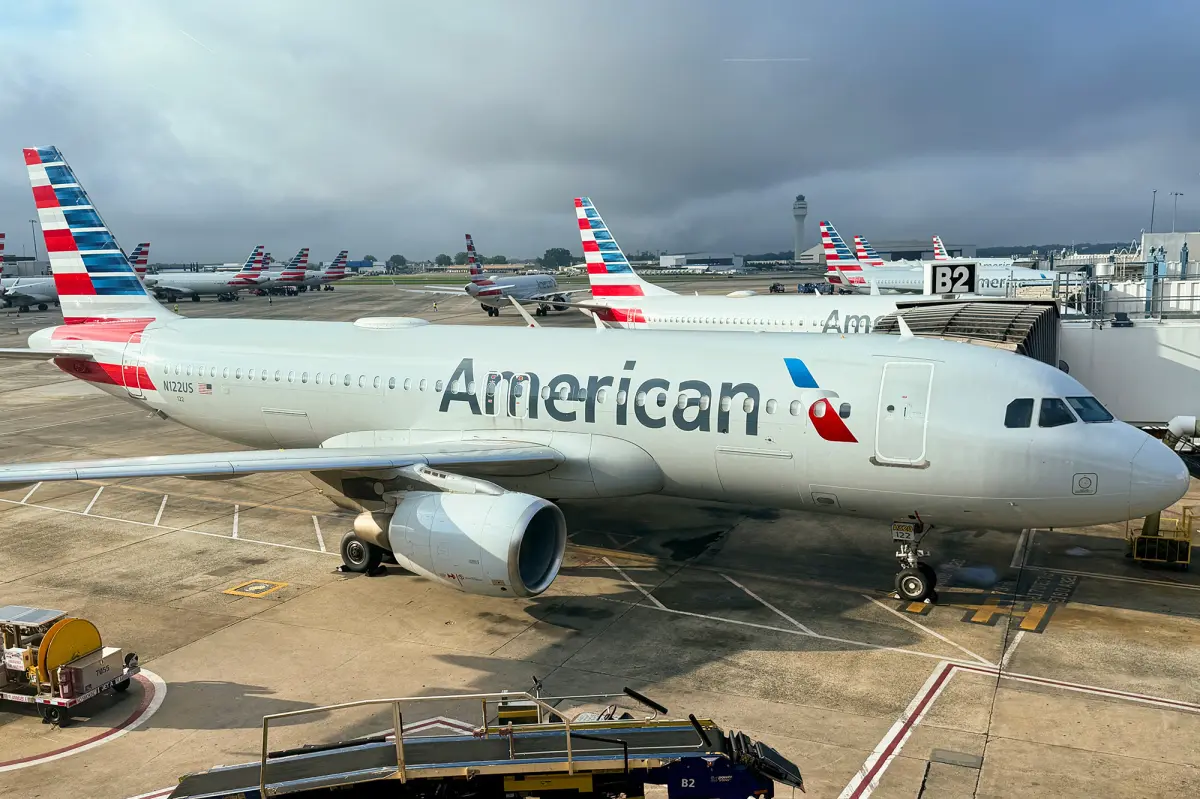
On a crisp Friday afternoon, American Airlines Flight 2398 soared through the skies, a silver arrow of aluminum and ambition carrying more than 130 passengers from the humid bustle of Atlanta to the sprawling concrete maze of Dallas–Fort Worth. The trip was routine—an hour and forty-five minutes of seatbelts, pretzels, and stifted yawns, the standard choreography of modern air travel. But within the cramped cabin, unknown to the wipes and chatty fliers, a tiny but persistent demon was about to awaken. A passenger had pulled out their laptop, not to work or to stream a movie, but to simply check something—or perhaps just to feel the reassuring weight of their digital life on their knees. That innocent act would soon transform the most benign of flight legs into a high-stakes drama, leaving scorched skin and singed trust behind. By the time the flight’s wheels touched the concrete in Texas, a screaming echo of a midair fire would have traveled through airwaves, rattling air traffic controllers and terrifying everyone who had boarded for a simple commute.
It began not with a bang but with a malevolent hiss, a plume of acrid smoke curling from the laptop’s underside, spiraling upward as if to summon the very panic that would follow. Passengers in the rows nearby, initially distracted by the drone of the engines, turned their heads in alarm. The cabin quickly filled with the sharp, metallic scent of burning lithium—a smell so distinct it seems to burn the nostrils even before it touches the soul. Screams erupted. A woman seated near the aisle began to shriek, her voice tearing through the fabric of the plane’s usual calm. The pilot’s voice, tense but measured, crackled over the intercom: “We have a cabin fire in the back of the airplane. The laptop is contained about mid-aircraft.” For the 130 passengers, that sentence was the equivalent of a brick thrown through a stained glass window. Some stifled gasps, while others prayed silently, casting glances toward the exit rows and wondering if this would be their last flight.
Flight attendants, wearing the brave masks of professional calm that they’ve drill into the bone, snapped into action. They raced down the aisle, their shuffling sneakers creating a frantic beat against the carpet. One of them firmly ordered the laptop’s owner to stay still, hissing commands that were almost lost in the panic. Another produced a fire extinguisher, a small red cylinder that looks laughably inadequate against a full-blown blaze but becomes a totem of hope in a pressure-sealed tube. They shoved the device back into the storage compartment, onto the floor, and plunged the extinguisher nozzle into the smoke, dousing the hot mess with foam that tried to suffocate the inferno. The pilots, meanwhile, communicated with air traffic control in that clipped, almost mechanical language of aviation, their voices betraying only the faint quiver that comes when your heart is hammering against the hull. The request for emergency sections—the landing priority, the ambulance call—scrawled across the radio like a scream of feathers in the wind.
The aircraft glided onward, descending from cruising altitude with a controlled shoe air of urgency. The passengers, now strapped into their seats but dangerously shaken, stared at flickering lights and the silent procedure that seemed to stretch for an eternity. Some held hands, some clutched their personal belongings, and a few whispered prayers, not just to their gods but to the very concept of physics. The pilot—whose voice on radar had become a lifeline—made the calmest declaration that he could muster: “The fire is contained, we are landing now.” An overwhelming sense of collective relief washed through the fuselage like a silent tide. And when the wheels finally skidded onto the runway, flares of emergency vehicles awaited, their red and blue lights flickering against the terminal glass like frenzied fireflies. The flight attendant’s professionalism was not just a strategic move but a lifeline: the fire contained, the plane landed, and only four of the 130 passengers sustained burns, with a fifth being taken to receive immediate medical attention—a stark but damaging footnote to an otherwise tragic outcome.
But this incident is not just an isolated hiccup of fate. It serves as a chilling reminder of the hidden risks that lurk in the most mundane of our pocket accessories. The modern lithium-ion battery, the very heart that beats inside laptops, tablets, and phones, is a volatile piece of chemistry, meticulously engineered to be stable but prone to fragile failure when overheated, overcharged, or pierced. Every year, airlines log dozens of such fires—smoldering laptops, burst power banks, or a phone that goes up in smoke mid-flight. The FAA and aviation authorities have long warned about the cargo of portable devices, and now, this is a case study happening at 30,000 feet. The aftermath will trigger a chain of investigations: the airline will inspect the plane’s fire suppression systems, and the manufacturer of the laptop—likely a major brand—will conduct an autopsy of the device, attempting to understand the perfect storm of electrical failure. The question remains: was it the battery? A charging port? A noncompliant charger? The incident is a cautionary tale buried in the annals of passenger safety, a reminder that we are all crew in this metal bird, and a single spark can turn the everyday act of typing an email into a life-or-death crisis.
The airline, still reeling from the event, praised its crew in a succinct statement that read like a page from a training manual: “American Airlines flight 2398 landed safely at DFW after reports of smoke from a customer’s device during landing. We thank our crew for their professionalism and swift response to quickly contain the device.” The string of words hardly conveys the heroism. It doesn’t describe the flight attendants who consumed cost amounts of adrenaline, or the passengers who comforted a stranger in the space of milliseconds, or the woman who whispered to herself as she stood in the aisle that she’d never board again with a laptop. The professionalism of the crew was not just a corporate bullet point; it was the difference between a nuisance and a catastrophe. They served not just as cabin managers but as fire suppression officers, triage nurses, and counselors, all while maintaining the composure that kept panic from turning into full-blown hysteria.
As the flight taxied to the gate, the emergency workers swarmed around the door, gloves and medical kits ready. One passenger was lifted onto a stretcher, hurried away into the fluorescent light of the ramp. The others walked off, dazed, tear-streaked, clinging to carry-ons that still smelled faintly of smoke. The incident was over, but the memory—the sight, the smell, the heart-pounding flight descending—would linger like a haunting note that refuses to fade. In the days to come, the flight’s black box will be analyzed, the laptop sent to a lab to be dissected like a feeble corpse. But for now, the story stands as a testament to the thin margin between safety and.
The incident forces us to reflect on our modern relationship with technology. We carry our lives in sleek devices, walk with headphones, and tap on screens while ignoring the fact that these sacraments are emotional tinctures. The next time we board a plane and the stewardess says, “Please place all large electronic devices in the overhead bin,” we might pause, not just to comply, but to remember the “mid-air fire” on Flight 2398. That flight was a reminder of how fragile our safety is, yet how resilient the human spirit can be. We rely on the crew, the aircraft, and the physics of flight to keep us up there, but sometimes the real miracle is that we land at all. And as the five burned passengers nursed their injuries, the rest of the world would emerge from the cameras of social media with the reassurance that, yes, sometimes danger comes in your lap, but with calm hands and brave hearts, we can contain it—just as long as we land on time.