

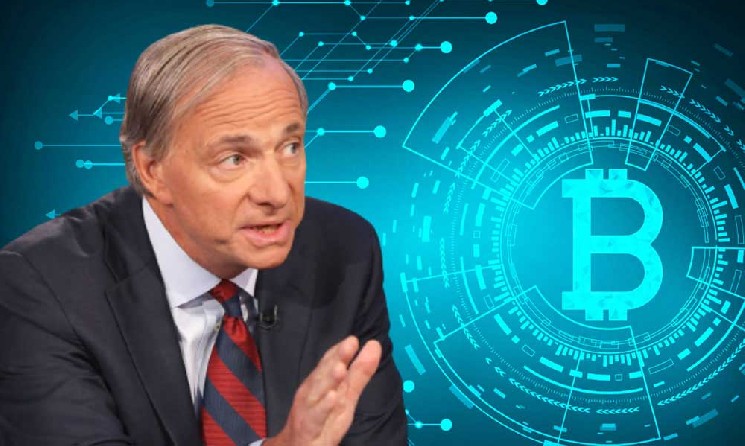
Ray Dalio Warns Global Debt Is Reaching a Dangerous Turning Point — and Says Gold and Bitcoin Belong in the Conversation
A Warning From the Top of the Investment World
Ray Dalio has spent decades studying the rise and fall of economies. The billionaire founder of Bridgewater Associates, one of the most influential investment firms in the world, built his reputation by recognizing patterns that most investors miss. So when Dalio speaks about the fragility of the global financial system, markets tend to listen. His latest message is not comforting. In a recent series of remarks about the state of the global economy, Dalio warned that the rapid expansion of worldwide debt has become a growing risk for investors. The solution, he argues, lies not in the same old bond-heavy portfolio, but in assets that have historically held their value when currencies weaken — gold first, and a small amount of Bitcoin second. His comments come at a time when governments around the world are borrowing at historically unprecedented levels and central banks are struggling to balance inflation, economic growth, and the mounting cost of servicing all that debt. For investors, Dalio’s advice represents a significant departure from conventional thinking. For decades, the standard playbook called for portfolios built around stocks and bonds. Dalio is now suggesting that the bond pillar may no longer be as safe as it once seemed, and that alternative assets need to play a more meaningful role. The implications are significant not only for professional money managers, but also for anyone with a retirement account, a pension, or a long-term savings plan.
The Big Debt Cycle: Entering Its Late Stages
At the heart of Dalio’s warning is a concept he developed over many years: the “Big Debt Cycle.” In Dalio’s framework, economies move through long periods in which debt accumulates until it reaches levels that can no longer be sustained. The signs of that late-stage dynamic, he says, are now visible in the US Treasury bond market, one of the most important financial arenas on earth. The problem is one of supply and demand. As government borrowing increases, the market is flooded with new bonds. In a healthy market, that supply would be absorbed by investors looking for safe returns. But Dalio points out that demand is not keeping pace with the growing supply of government debt. That imbalance puts upward pressure on interest rates, because yields have to rise in order to attract buyers. At the same time, it puts downward pressure on currencies, because a growing pile of debt raises questions about the long-term purchasing power of the money used to repay it. In other words, the mechanics of the bond market are beginning to reveal the kind of strain that has historically preceded major financial shifts. Dalio sees this as a clear indication that the Big Debt Cycle has entered its advanced stages. He is not alone in flagging the issue. Economists and market strategists have increasingly noted the structural problems created by decades of deficit spending. But Dalio’s framing is distinctive because it connects technical movements in the bond market to the broader historical forces that have driven the decline of previous empires and reserve currencies. His warning is not just about next quarter or next year. It is about the direction the world is heading, and the difficult choices that lie ahead.
Governments Are Facing Two Difficult Choices
If debt continues to pile up, Dalio says, governments will eventually face two options — and neither is easy. The first is to keep interest rates high. Higher rates can increase demand for bonds by offering investors better yields. But they also act as a heavy brake on economic growth. Mortgage rates climb, businesses delay expansion, and consumers pull back on spending. In a world already dealing with inflation and slowing growth, a prolonged period of high rates could push major economies into recession. The second option is more subtle but potentially more dangerous. Central banks can intervene and buy government debt by creating new money. This process, often described as debt monetization, allows governments to keep borrowing without relying on private investors. But the side effect is a slow erosion of the currency’s purchasing power. When money is created faster than goods and services are produced, the value of each unit tends to fall. Prices rise, savings lose value, and the cost of living climbs. Dalio has long argued that this is one of the patterns investors need to watch most closely. In his view, the current situation is pushing the world toward a moment when policymakers will have to choose between economic stagnation and currency devaluation. There may be no way to escape without one or the other. That tension is already visible in the bond market. Investors are demanding higher compensation for the risk of holding long-dated government debt. Central banks, meanwhile, are finding it harder to manage inflation without triggering financial instability. This is exactly the kind of dynamic that can lead to sudden shifts in market sentiment. Dalio’s suggestion is that investors who wait for clarity before adjusting their portfolios will likely miss the window.
The Numbers Behind Dalio’s Concern
To understand why Dalio is so concerned, it helps to look at the figures. The United States federal debt has reached approximately $32 trillion. That number, once unthinkable, has become a permanent feature of the economic landscape. Even more striking than the total debt, however, is the cost of carrying it. Dalio notes that annual interest payments on the federal debt now amount to roughly $1 trillion. That is a staggering burden, and one that will only grow as debt levels rise and interest rates remain elevated. Dalio is not focused only on the present. His projections show that if current trends continue without significant policy changes, the US debt could rise to as much as $55 trillion to $60 trillion within the next ten years. To put that in perspective, that would represent an increase of nearly 80 percent from already record-breaking levels. It is a trajectory that Dalio describes in blunt terms. The longer the world waits to address this problem, the harder it becomes to solve. The debt grows, the interest compounds, and the options narrow. At a certain point, the sheer size of the debt can create a self-reinforcing cycle. Investors become less willing to finance the government, yields rise, the interest burden expands, and the problem becomes even more severe. This is not a distant concern. It is an issue that has already begun to reshape the global bond market. It is also one of the reasons Dalio believes traditional portfolio construction needs to be reconsidered. For decades, government bonds were treated as risk-free assets. In a world where governments can print money to repay debt, however, risk-free may be something of an illusion. The danger is not that a country like the United States will default in the traditional sense. The danger is subtler: the value of the currency and the purchasing power of the bondholder may be slowly diluted over time. Dalio’s warning is that this erosion is already underway, and that it has the potential to accelerate.
What Investors Should Do Now
So what should investors actually do? Dalio’s advice is rooted in the principles that have guided his investment philosophy for years: diversification, humility, and an awareness that markets are always changing. But in the current environment, he is increasingly specific about what diversification really means. First, he suggests that investors should spread their holdings across different asset classes and across different countries. The idea is to avoid being overly concentrated in any single economy, especially one with heavy debt burdens and weak finances. He points to economies with strong income structures and robust balance sheets as preferable places to put capital. Second, he argues that investors should reduce the weight of debt instruments like bonds in their portfolios. This is a significant recommendation coming from a man who spent much of his career as a macro investor, not an advocate of speculative assets. The reasoning is simple: if the Big Debt Cycle is entering its late stage, bonds are likely to become a more difficult asset class to hold. They provide income, but that income may be increasingly offset by currency depreciation and inflation. Third, he suggests adding assets that have historically served as hedges against exactly these kinds of risks. Gold is at the top of that list. Dalio has long expressed respect for gold’s role as a stable store of value, particularly when central banks are devaluing their currencies. He has suggested that gold can play a meaningful role in a well-diversified portfolio. In some of his recent remarks, he indicated that roughly 10 to 15 percent of a portfolio could be allocated to gold and, potentially, to other hard assets. That is a notable shift for a mainstream investor, and it reflects how seriously he takes the current debt trajectory. He also acknowledges Bitcoin. In his view, Bitcoin has carved out a niche as a kind of digital gold. It is no longer a fringe experiment; it is an asset class that has captured the attention of institutional investors, and it has a fixed supply, which appeals to those worried about currency dilution. Dalio argues that allocating approximately 10 to 15 percent of a portfolio to Bitcoin could reduce overall risk and positively impact returns, although he has been careful to walk that statement back somewhat in practice. He recommends that most investors keep their Bitcoin exposure to a relatively small portion of their total holdings. That caution is understandable. Bitcoin is highly volatile, its regulatory status remains uncertain, and its long-term role in global finance is still being defined. But Dalio’s willingness to include it in his framework at all is a sign of how far the conversation has moved. A decade ago, very few mainstream investors would have considered crypto a serious part of a portfolio. Today, even some of the most respected names in finance are treating it as an option worth considering.
A Measured Nod to Bitcoin — and a Word of Caution
It is important not to overstate Dalio’s enthusiasm for cryptocurrency. He is not suggesting that everyone should buy Bitcoin and hope for the best. His comments on digital assets are nuanced and, in some ways, deliberately careful. On the one hand, he has floated the idea that adding Bitcoin to a portfolio can improve risk-adjusted returns. He calls it a potential diversifier, one that moves differently from traditional assets and may offer some protection against the erosion of fiat currency. On the other hand, he remains cautious about treating Bitcoin as a core holding. He describes it as a small, speculative allocation, and one that should be managed carefully. That distinction matters. Dalio has never been a crypto evangelist. Unlike some high-profile investors who have made Bitcoin the centerpiece of their strategies, Dalio views it as one piece of a much larger puzzle. His primary recommendation remains rooted in the basics: diversify broadly, avoid excessive debt exposure, and hold assets that are likely to preserve purchasing power through turbulent times. Gold fits that description naturally. Bitcoin fits it imperfectly, but for a growing number of investors, it fits well enough to warrant a small slice of the portfolio. The bigger picture is what counts. Dalio’s message is not a call for panic. It is a call for preparation. The global debt problem is not going to disappear on its own. It will be managed, or it will force its way into the headlines through crisis and market turmoil. Investors who acknowledge that reality now and adjust their portfolios accordingly will be better positioned than those who cling to the assumptions of a previous era. That is the essence of Dalio’s advice. In an environment where debt is rising, currencies are vulnerable, and the old rules no longer apply, the prudent investor is the one who adapts. For nearly half a century, Ray Dalio has made a living by seeing what others miss. His warning about the advanced stages of the Big Debt Cycle is worth taking seriously. The assets he is recommending — gold, a small amount of Bitcoin, strong foreign economies, and less reliance on bonds — reflect a clear-eyed view of the risks ahead. This is not investment advice, and it should not be followed blindly. But it is a signal that even the most renowned investors believe the world is moving into uncertain waters. For those willing to listen, the message is simple: the debt cycle is reaching its final act, and it is time to reconsider what a truly resilient portfolio looks like.