


Portugal just drew a bright line across its public life. President António José Seguro has signed into law a controversial new measure that, with a sensible list of exceptions, makes it largely illegal for people to cover their faces in ways that prevent identification while they move through the country’s streets, squares, parks, and shared public spaces. The decision, relayed by the international news agency AFP, did not arrive quietly. It lands after months of heated parliamentary debate and drops squarely into a worldwide argument about religious freedom, public security, personal privacy, and the small daily miracles of human interaction. To understand why this law exists, you only have to think about what a face actually is. It is not merely skin, muscle, and bone. A face is the most exposed and expressive part of any human being—a living canvas where a raised eyebrow, a reluctant smile, a tear slipping down a cheek, or the sudden widening of the eyes tells a story that words cannot capture. We read faces constantly, often without noticing it. The street vendor scans your expression to see if you are angry or friendly. The parent alone in a busy kitchen studies a child’s eyes before asking a difficult question. The police officer walking through a crowd looks at faces to read distress or calm. In Lisbon’s crowded trams, in the cobblestone alleys of Porto, in the sun-scoured markets of the Algarve, mutual recognition and trust depend on the simple act of seeing one another. And in an uneasy age of security cameras, identity checks, and anxious borders, governments have come to treat the visible face as a public good—something that belongs not only to the individual, but to the whole community. It is a remarkable thing for a modern state to declare, with the force of law, that the human face is a piece of public infrastructure. But Portugal has chosen to do exactly that.
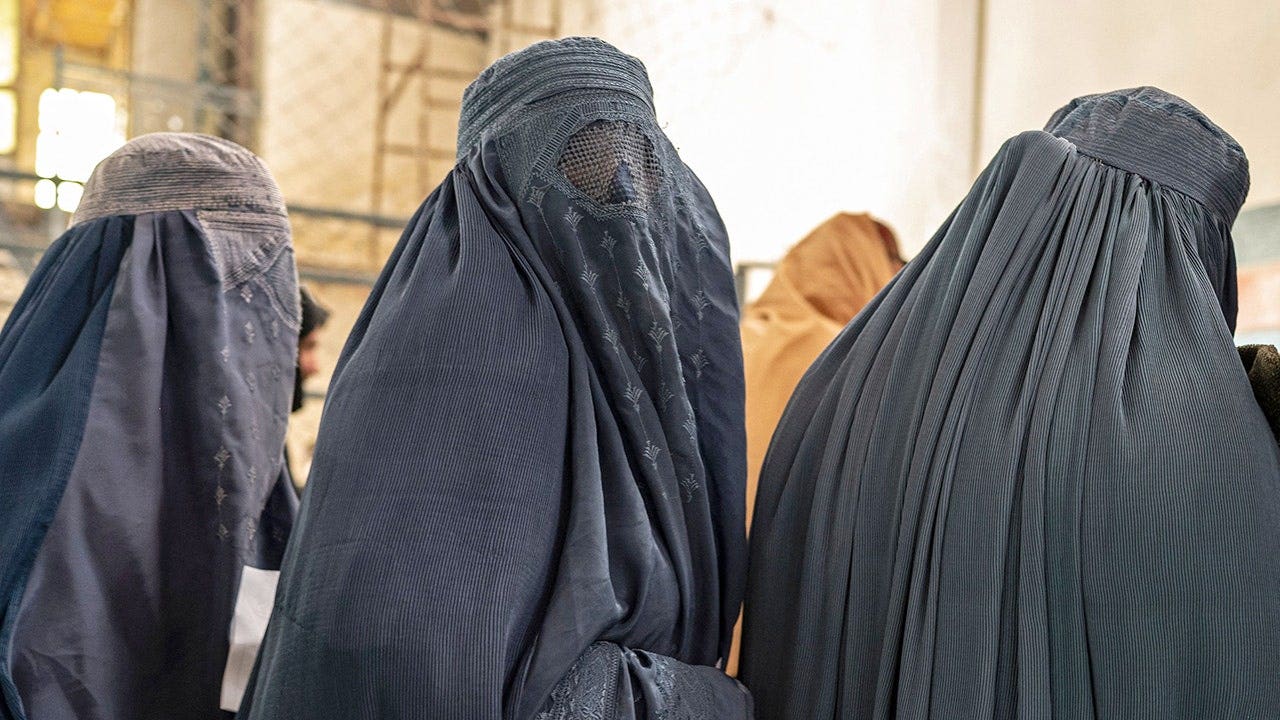
The mechanics of the new law are straightforward, but they reveal careful calibration. What is prohibited is deliberately covering the face in public for the purpose of hiding one’s identity or blocking recognition. In practice, this brings full-face garments such as the burqa and the niqab, worn by some Muslim women, under the ban—along with ski masks, heavy face wrappings, and any mask or cloth meant to make a person unrecognizable. Just as importantly, the law goes beyond what women wear. It also forbids one person from forcing another to conceal the face on the basis of gender, religion, age, or origin. That provision is clearly designed to protect women from coercion. No longer can a family member or community leader, whatever their intention, legally compel a woman to veil herself against her will in a Portuguese public space. The exceptions, however, are generous and carefully considered. Medical professionals engaged in their duty may cover their faces, just as workers in hazardous environments may wear protective masks. Artists performing in costume, actors on stage, and festivalgoers in disguise are still free to hide their features. A person may wrap a scarf around the face against the Atlantic winter wind. Places of worship remain sanctuaries where veils are still permitted, diplomatic missions are untouched, and the rules of the sky apply on board aircraft. For those who violate the law, the price is unmistakable: fines ranging from 150 to 3,000 euros, which converts to roughly $175 to $3,500. The scale of the penalties suggests that legislators intended the measure to be taken seriously, not merely to serve as a cultural statement. Portugal is saying that the face is not an optional accessory in public life.
Local media have christened this measure the “burqa law,” a nickname that captures both its target and its controversy. The text of the ban never names Islam; it speaks only of blocking identification and hiding the face. But the public debate has never pretended otherwise: the law is widely understood to be aimed at a particular style of dress worn by a small number of Muslim women—the long enveloping garment that covers the body and the face. The Portuguese parliament adopted the final edition last month, after a fierce vote in which two visions of society collided. On one side stood those who view the face veil as an affront to dignity, security, and shared values. On the other stood those who view the law as state bullying of a minority, punishing women for faith commitments that deserve respect. For the women at the center of all this, the law is intensely personal. Some wear the full face veil as a joyful act of devotion, and for them the law represents a painful intrusion; they must either pay a fine or change their dress, a choice no woman should have to make. Others, however, have never felt the veil was a choice at all. They have worn it under pressure from family and community, quietly longing for public life without it. For those women, the law may function as a kind of legal rescue raft. Whatever their private feelings, they now live in a country where the default position is openness, where a woman walking down the street can look at the world and let the world look back at her without explanation or apology. There is no single Muslim woman’s experience, no uniform way of understanding what this law means. Instead, there are a thousand individual stories unfolding in apartments, mosques, and marketplaces. The law cannot hear every story, but it will change all of them.
The official reasoning behind the law deserves careful reading. In a statement released from his office, President Seguro argued that the uncovered face is “a structuring dimension of social trust” and “a characteristic of Portuguese society.” Behind that formal language lies a simple, human idea: people who see each other can trust each other more easily. Suspicion takes root in anonymity; familiarity breeds comfort. He also invoked the European Court of Human Rights, noting that the court has long considered the face central to human identity and communication, serving as “a minimum element for mutual recognition among fellow citizens.” Portugal, in his view, was not inventing a new doctrine but translating into national law a principle that European justice already respects. Then came the most striking passage. To allow women, and only women, to hide their entire faces, the president said, “implies an asymmetry incompatible with the values of parity and equal dignity between men and women—values that shape European democracies.” Those words frame the law not as a restriction on religion but as a stand on gender equality. If only women are expected to disappear behind cloth while men move freely, then the society has built inequality into its most intimate habits. The president’s point is deeply human: a face is an identity, but it is also a presence. To hide a woman’s face is to erase her presence from the public square. And Portugal, he said, will not accept a vision in which women, and only women, must be erased. He did not use the language of condemnation. He used the language of dignity. In a world where dignity is so often a battlefield, that choice of words mattered.
The new Portuguese law joins a wider European movement that has become one of the defining social questions of the century. France, with its long tradition of secularism, passed an early ban on concealing the face in public. Belgium, Denmark, Austria, and the Netherlands have followed with their own restrictions, each shaped by local political pressures and legal traditions. The European Court of Human Rights, the same body the president invoked, has repeatedly upheld these kinds of bans, ruling that states are allowed to legislate for security, equality, and social cohesion. Yet the continent remains split between advocates and critics, and every new national law reignites the old argument. Those who support such measures say that integration requires visibility, that a democracy is built on open faces, and that women must be protected from being forced into invisibility. Those who oppose them say the laws stigmatize Muslims, punish women who have done nothing wrong, and erode the religious freedom that Europe claims to treasure. Human rights organizations have filed complaints against many of these statutes, arguing that they disproportionately impact Muslim communities and treat women’s bodies as grounds for public policy. Portugal, however, seems determined to chart a middle course. The generous exemptions for worship, healthcare, and diplomacy suggest a government trying to balance the universal value of openness with the particular claims of faith and professional necessity. Whether that balance can actually be achieved in daily life will be decided in the streets and in the courts, case by case. No law is static. Portugal’s will now be argued about in newspapers, explained by lawyers, tested before judges, and lived by neighbors. It will succeed or fail in the details, in whether Portuguese society feels more open or more divided because of it.
Ultimately, what Portugal has done is to take the oldest and most intimate feature of human identity—the face—and place it at the center of policy. The law is unusual not because it dares to challenge religious practice but because it rests on a philosophical claim about trust: that when we can see each other, we are more likely to treat each other fairly; that a society which hides its faces is a society that will forever be suspicious of itself. For most Portuguese people, the law changes nothing. They will wake up, drink coffee at the corner café, and walk into a world of familiar features and friendly glances. But for the small number of Muslim women who wear full face coverings, daily life will now require a choice that no law can make comfortable: sacrifice the way you have dressed and prayed, or face the consequences of state sanction. There is a deep paradox beneath everything. The law claims to liberate women from inequality, yet it makes them visible against their own wishes. Its critics claim to defend religious freedom, yet they may be defending a custom that many women never chose. Caught between these two stories is the woman herself, who must somehow find her place. What the Portuguese presidential statement said with great conviction is that living together in transparency is a building block of a democratic soul. Perhaps that is true. Perhaps the most radical gesture a society can make is to look one another straight in the eyes and say, with nothing hidden, “I am here, and you are here, and we will find a way to trust each other.” After all, this is a law about people, not just policy. Behind every headline is a woman who wonders what she will wear tomorrow morning. Behind every statistic is a family having a difficult conversation across the dinner table. And behind every legal precedent is the eternal human need to be known, accepted, and seen for exactly who we are. The streets of Portugal will provide the answer, one face at a time.