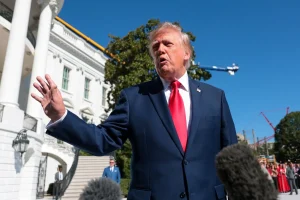


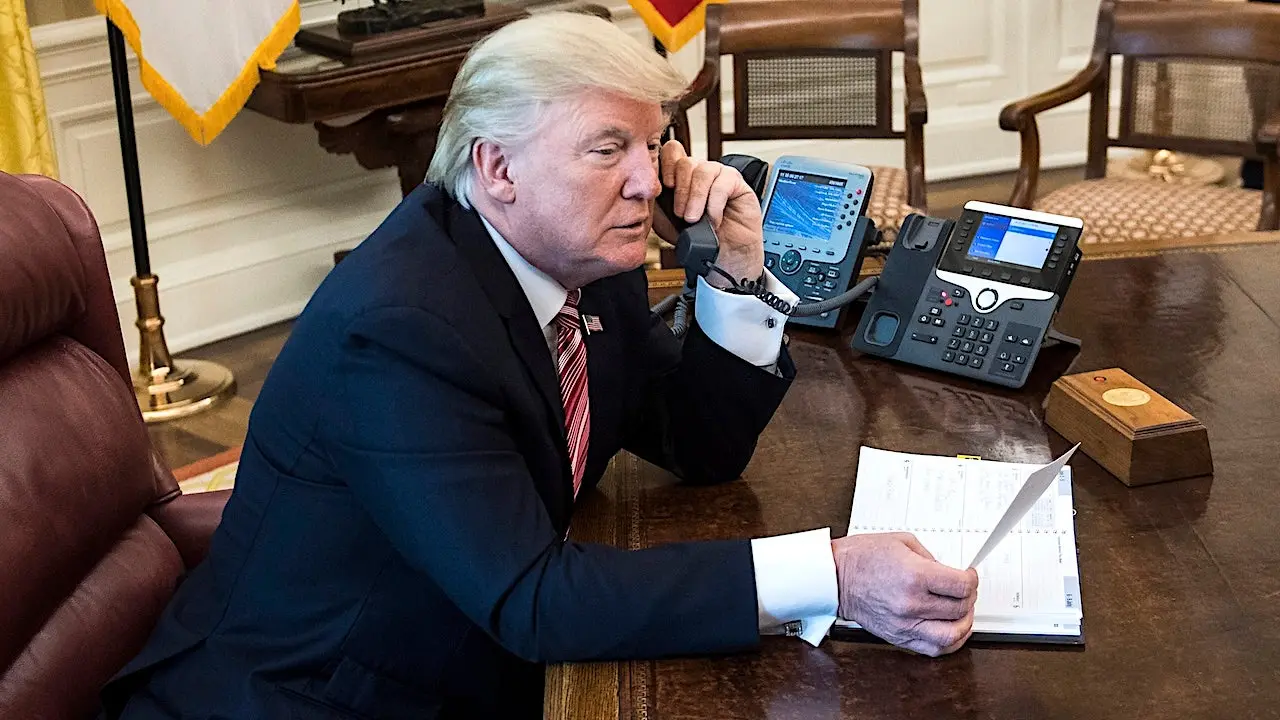
The phone rang early Monday morning, and the man on the other end sounded as if he had just rolled up his sleeves for another round of high-stakes diplomacy. President Donald Trump, speaking with Fox News’ Trey Yingst, was confronting a deadline that had been hanging over the Middle East for two months: the 60-day ceasefire was expiring. But if anyone expected the president to sound anxious, they would have been disappointed. Trump appeared almost serene, even confident, as he laid out what he wanted from Iran and what would happen if he didn’t get it. The news cycle had been dominated by talk of negotiations, mediators, and diplomatic pivots, but Trump cut through all of that with his usual directness. Confirming reports of a backchannel with the Islamic Revolutionary Guard Corps, he made it clear that the usual route of peace talks through intermediaries and Iranian political officials wasn’t the one that mattered. The real conversation, he suggested, was happening directly, and it was happening on his terms. “They should put up the white flag of surrender,” he said, a line that sounded less like a diplomatic overture and more like a battlefield demand. It was vintage Trump: no hedging, no carefully calibrated language, just a blunt insistence that the only acceptable endgame was one in which Iran accepted his conditions. And at the very center of those conditions was a single, unshakable goal that he had repeated so often it had become a kind of mantra. “The number one goal is, and always will be, that Iran cannot have, in any way, shape, or form, a nuclear weapon,” he wrote on Truth Social around the same time. The ceasefire might be ticking down, but for Trump, the real timeline was his own.
That refusal to be bound by external clocks was perhaps the only truly reassuring thing for anyone hoping to avoid another war. Trump told Yingst, “I have no time schedule. I’m not in a hurry.” It’s a strange thing to hear from a president who has never seemed content to simply wait and see. But with Iran, he appears to be playing a longer game, one that involves letting the other side feel the pressure of their own circumstances rather than rushing into a confrontation. The backchannel with the IRGC is a fascinating and somewhat risky move. It bypasses not only the usual mediators but also the Iranian political establishment, going straight to the powerful paramilitary force that has been both a source of strength and a target for decades. Trump was happy to talk about it, even happy to boast about it. He described the IRGC as “good poker players, but they’re dying.” That single sentence captures so much of how he sees the world. On one hand, there’s a grudging respect for their skill, an acknowledgment that they know how to play the game. On the other, there’s a certainty that their position is hopeless, that being a good poker player doesn’t matter when the chips are stacked against you. It’s the kind of psychological framing that Trump has used in business, in politics, and in his dealings with foreign leaders for decades: he wants the other side to know he sees through their bravado, that he’s not impressed by their patience, and that he believes time is on his side, not theirs. The IRGC has lost many of its top commanders over the years to Israeli and American strikes, and Trump seems convinced that the leadership that remains is feeling the weight of those losses.
The nuclear question is the heart of it all, and it’s not just about a grand principle. There’s a concrete, alarming problem sitting on the table: Iran’s uranium stockpile. Negotiators have been weighing what to do with it, whether it should be shipped out of the country, diluted, or placed under some kind of international supervision. Trump is reportedly seeking $672 million in new funding to stop Iran from turning that stockpile into a weapon, a line item that speaks to how far the conversation has moved from the old days of simply containing Iran’s program. The money isn’t for diplomacy in the abstract; it’s for the dirty, expensive work of dismantling a nuclear threat before it becomes impossible to stop. Trump has always approached Iran with a mix of hostility and reluctant admiration, lamenting that peace is hard to reach with a regime that seems fractured and constantly in motion. He has seen Iranian leaders come and go, often abruptly, and he knows that negotiating with a country where different factions may not even share the same goals is a frustrating exercise. But he also seems to thrive on that frustration. Asked whether politics—specifically the looming midterms—was shaping his military thinking, Trump rejected the idea with a wave of his hand. “Midterms have nothing to do with my thinking,” he said. Some might find that hard to believe from a president so attuned to public opinion, but it fits the image he wants to project: a commander in chief who makes decisions based on what he thinks is right, not on what might play well in the next election. Whether that’s true or not, it’s the story he’s telling, and he tells it with total conviction.
Perhaps the most startling moment of the interview came when Trump turned his attention to Oman. The Gulf nation has been playing a role in talks involving Iran, and someone in the room apparently asked about it. Trump did not hesitate. “If Oman gets in the way, we’ll bomb the s— out of them,” he said. It was an extraordinary warning to a country that is often seen as a quiet mediator, a neutral broker in a region full of enemies. For Trump, there is no such thing as a neutral party when the stakes are so high. Everyone is either helping or getting in the way. If Oman’s role was supposed to be a stabilizing influence, Trump’s response made clear that he sees any interference as a threat, not a favor. The bluntness of the language was startling, but it’s also become expected from a president who has never been comfortable with the careful euphemisms of statecraft. He doesn’t want a middleman who might complicate things, especially when he believes he can speak directly to the IRGC and get what he wants. Then there’s Israel, where Trump’s words were a study in calculated ambiguity. He said he thinks it’s “most appropriate for me to stay out of Israeli elections,” which sounds like a commitment to non-interference. But then he added, “I may endorse somebody.” That dangling possibility is classic Trump: he always wants to keep people guessing, to remind them that he has power he can use if he wants to. For Israeli politicians, that means staying on good terms with a president who could swing their fortunes with a single post. It also means that no one, anywhere, ever knows exactly what he’s going to do next.
On Gaza, Trump took another position that is bound to create friction. He said Israel should not be carrying out strikes in the territory, even as efforts continue to advance the next phase of a plan that would include the disarmament of Hamas. This is a tricky line to walk. The Israeli government, led by a prime minister who has been openly skeptical of trusting the militant group, has rejected any plan that involves a ceasefire before Hamas is genuinely disarmed. But Trump is leaning on his own relationship with the group, which he described in surprisingly familiar terms. “We have our own relationship with Hamas,” he said. “They are giving up their guns.” It’s a bold claim, one that suggests he has received some kind of assurance from Hamas that they’re ready to lay down their weapons. Israel clearly doesn’t believe it. Netanyahu’s government has said, in so many words, that any disarmament plan is meaningless unless it can be verified, and that trusting Hamas to keep its word is a fool’s errand. Trump, as always, trusts his own instincts more than anyone else’s analysis. He reiterated that “they fight well with us,” an odd thing to say about a group that has been at war with Israel for decades, but it reveals how he views the situation: through a lens of loyalty and pragmatism rather than ideology or history. He’s not interested in the moral complexities of Gaza; he’s interested in outcomes. If Hamas is willing to give up its guns, then he sees a path to peace. If Israel wants to keep fighting, then he sees a roadblock. And he has never been shy about applying pressure to both sides in any conflict he thinks he can solve.
Finally, Trump addressed a concern that has been growing louder in Washington and among defense analysts: the strain on American weapons stockpiles. There has been talk that the wars in Gaza, Ukraine, and elsewhere have drained the Pentagon’s stores of missiles and other munitions, leaving the United States dangerously thin if a larger conflict breaks out. Trump dismissed all of that with a single phrase. “What we’ve used is peanuts,” he said. “We have a lot of mid-level weapons.” It was a typically colorful way of downplaying a serious issue, and it might be exactly right or exactly wrong, depending on who you ask. The Pentagon has been honest about the need to rebuild its arsenal, and the president’s own requests for supplemental funding suggest that the problem is real. But Trump isn’t in the mood to concede vulnerabilities, especially not while he’s trying to project strength to Iran. The message is clear: the United States is not running out of anything, and if it needs to, it can make the region feel a firepower that has only barely been tapped. As the 60-day ceasefire expires, the world is left waiting to see whether Trump’s confidence is justified or whether it will lead to another war. He has always believed that strength is the best negotiating tactic, that showing uncertainty is a sign of weakness, and that peace is won by convincing the other side they have no good options left. Whether that approach succeeds with the dying poker players in Tehran—or with Oman, Israel, and Hamas—is anyone’s guess. But one thing is certain: Trump is in no hurry to change his game.