


Paragraph 1: The Discovery on the Trift Glacier
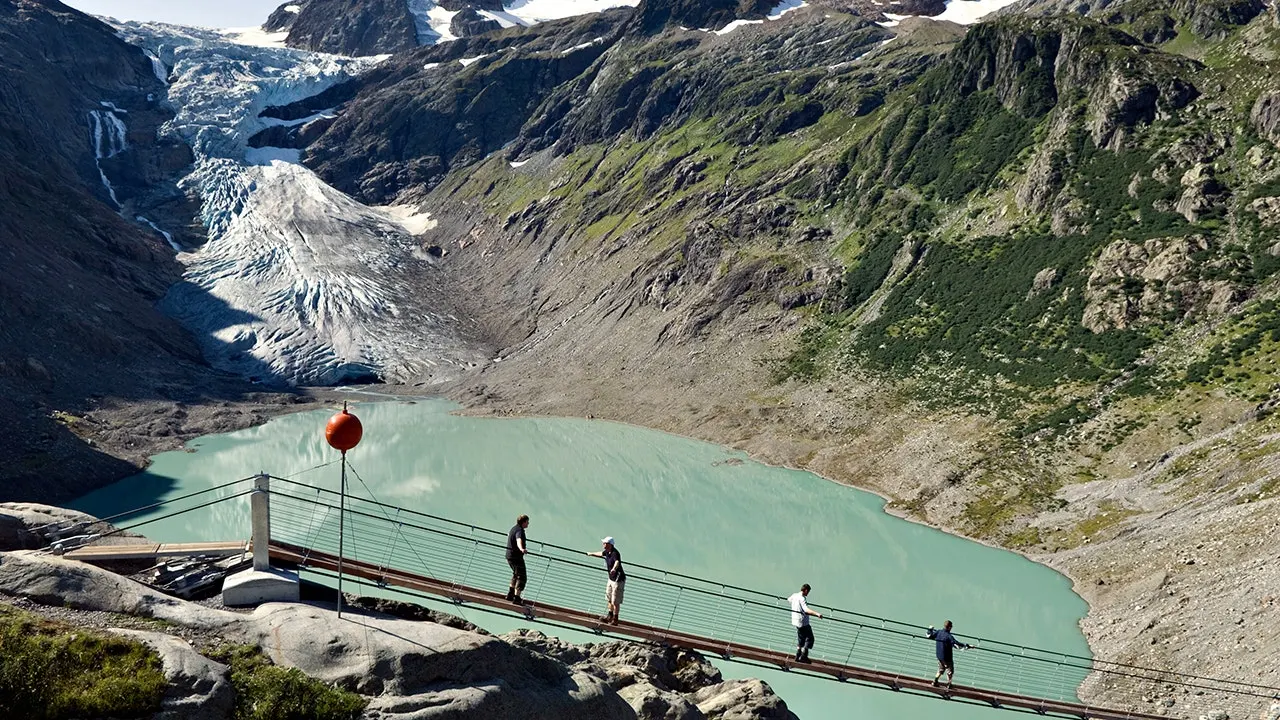
On a sun-drenched afternoon in late July, amidst the deafening silence of the Swiss Alps, a lone hiker traversed the rugged terrain of the Trift Glacier. The summer sun, far stronger than it had been just a few decades prior, was actively working its slow, patient destruction on the ancient ice, carving rivulets that whispered and dripped into the crevasses below. It was a landscape of stark, blinding white and sharp, grey rock—a place where nature’s harsh beauty often overshadows human presence. But on this particular day, the hiker’s gaze was drawn to an object that seemed utterly out of place amidst the pristine snow and ice. At first, it was a mere shape, a discoloration against the crystalline surface, but as the hiker drew closer, the horrifying reality became unmistakable. The melting glacier had relinquished its grip on something it had held for over three decades: the skeletal remains of a human being, exposed to the world for the first time since the early 1990s. The discovery was immediately reported to the authorities, and within hours, the tranquil mountainside transformed into a scene of careful, methodical investigation. The shock of the moment was not just about finding a body, but about the profound narrative it implied—a story of a tragic loss, a desperate search, and a long-forgotten secret frozen in time. The hiker, presumably hoping for a peaceful communion with nature, instead stumbled upon a haunting relic of a distant tragedy, unwittingly becoming the catalyst for a decades-old case coming back to life. The Trift Glacier, once a pristine wilderness, had become the reluctant guardian of a terrible truth, and now, in its slow, mournful melt, it was finally letting that truth go.
Paragraph 2: The Meticulous Investigation and a Decades-Old Puzzle
The Valais canton police, a force accustomed to the unique challenges of the high Alpine environment, responded swiftly to the hiker’s report. Recovering remains from a treacherous glacier is a perilous operation, requiring specialized equipment and a profound respect for the shifting, unstable ice. After a delicate extraction, the remains were carefully transported down the mountain and delivered to the forensic medicine institute at the regional hospital in Sion. Here, in the sterile, bright laboratories of modern science, the silent bones would be coaxed into revealing their secrets. The initial examination would have looked for signs of trauma, fractures, or any evidence that might suggest the cause of death. But the most crucial element was identification. The detectives turned to the meticulous records of the Valais police, who maintain an extensive archive of missing persons dating all the way back to 1925. This digital and physical library of sorrow is a testament to the unforgiving nature of the mountains, cataloging countless individuals who disappeared into fissures, fell from precipices, or were swallowed by avalanches, their stories often left unresolved. The DNA testing was the key that would unlock the mystery. In a scene that has become commonplace in modern forensic science, the degraded genetic material from the bones was extracted and compared against international databases. The results were definitive, linking the remains to a pair of Belgian mountaineers who had vanished in the Weissmies region in 1992. The men, aged just 39 and 41 at the time of their disappearance, had entered the mountains with all the vigor and ambition of experienced climbers, only to be erased from the world without a trace. Now, more than thirty years later, the cold, hard facts of DNA had finally given them their names back, transforming two anonymous sets of remains into real individuals with families, histories, and a tragic fate.
Paragraph 3: The Human Stories Frozen Behind the Ice
Behind the austere language of the police report—”two Belgian men, aged 39 and 41, missing since 1992″—lie the deeply human chords of grief and unresolved ambiguity. One can only imagine the two men on that fateful day in 1992, their backpacks loaded with gear, their faces turned up toward the imposing peak of Weissmies. They were likely full of the ordinary excitement of an adventure, discussing the route, the weather, and their plans for dinner back at the hut. Perhaps they were lifelong friends, business partners, or brothers. They trusted their equipment, their skill, and their judgment, unaware that a sudden shift in the weather, a hidden crevasse, or a single misstep would seal their fate. Their families back in Belgium experienced the peculiar hell of waiting. The initial frantic calls to alpine rescue services, the hopeful vigil, followed by the agonizing, drawn-out despair as days turned into weeks, and weeks into years. The passage of time does not heal all wounds, especially when the body of a loved one is not found. For the parents, spouses, and children of these men, there was no funeral, no grave to visit, no closure. They became statistics in a dusty file, their families left to wonder relentlessly: Did they suffer? Where are they? Will we ever know what happened? Now, in August 2024, that interminable ambiguity has finally been resolved. A phone call was placed to the next of kin, informing them that their loved one had been found. While this news brings a staggering wave of grief renewed, it also offers a strange, bittersweet peace. The mountain that took their lives has finally returned their remains, allowing the families to mourn properly, to lay them to rest, and to end the painful, decades-long search for a conclusion. The ice, which had served as their silent crypt, has given them back to the world, transforming a half-remembered tragedy into a tangible reality.
Paragraph 4: The Melting Ice as a Grim Keeper of Continental History
The Trift Glacier serves as more than just a geological feature; it operates as a colossal, slow-moving archive of human tragedy. When the two Belgian climbers fell in 1992, they were likely swallowed by a crevasse or covered by accumulated snowfall that gradually compacted into dense glacial ice. In the freezer-like conditions of the high altitude, biological materials can be preserved for decades, essentially halting the natural process of decomposition. The low temperatures, the lack of oxygen, and the stable environment create a mummifying effect, ensuring that what goes into the glacier remains incredibly well-preserved, waiting centuries for the right conditions to emerge. However, this fragile preservation is now failing. Switzerland’s glaciers are in a state of rapid, catastrophic retreat, driven by rising global temperatures that scientists link directly to anthropogenic climate change. Over the past decade, Swiss glaciers have lost a significant percentage of their total volume, marking record-breaking melt rates year after year. As the massive tongues of ice recede up the valleys, they are revealing the remnants of the people, animals, and artifacts that were lost in the mountains over the past century. Police and forensic teams across the canton are acutely aware that they are now in a race against time, not just to recover bodies, but to piece together the past before the exposed organic matter begins to decay in the new, warmer climate. There is a macabre irony at play: the very force that claimed these lives—the extreme mountain environment—is now being dismantled by the changing atmosphere, releasing its long-held prisoners in an accelerated, almost haphazard manner. The melting ice is transforming from a pristine wilderness symbol into a grim, unveiling archive, and the case of the two Belgians is just the latest chapter in this unsettling, global phenomenon.
Paragraph 5: A Recent Precedent and the New Age of Glacier Archeology
This most recent discovery is not an isolated incident, but rather a distressing trend that highlights the significant impact of climate change on Alpine regions. Just a year prior, in 2023, a similar story captured headlines when DNA testing identified a body that emerged from a glacier near the legendary Matterhorn. That body belonged to a German mountaineer who had been reported missing back in 1986. For nearly four decades, his family had lived with the torturous uncertainty of his fate, and the retreating ice finally brought them an answer, albeit a painful one. These cases are becoming increasingly common, and they fall under the broader, growing field of “glacier archaeology” or “cryogenics forensics.” While the recovery of Ötzi the Iceman in 1991 stands as the most famous example of a perfectly preserved ancient human being emerging from the ice, the modern era is seeing a deluge of more recent victims emerging from what was once considered permanent ice. In other parts of the world, from the Andes to the Rockies, researchers and mountaineers are making similar discoveries of airplanes, climbing gear, and even entire hikers who were lost decades ago and have now been thawed out. For forensic scientists and law enforcement, this represents a unique and challenging case load. The chemical composition of the bone may have been altered by the ice, making traditional dating difficult, and witnesses from the time of the disappearance may have aged or passed away. The Valais police, who hold records stretching back nearly a century, are reviewing their cold cases against the current state of the glaciers. Each summer, as the zero-degree line climbs higher and higher up the mountains, they brace themselves for the inevitable calls that will come from hikers who stumble upon the human cost of previous generations’ mountain adventures.
Paragraph 6: The Bittersweet Conclusion and The Shifting Mountain
The identification of the two Belgian climbers brings a definitive, albeit melancholy, chapter to a story that has lingered in the periphery for over thirty years. In the Alps, the mountains are not merely a backdrop; they are dynamic, active participants in the lives of those who visit them. They are both a source of sublime beauty and a repository of immense sorrow. The return of this body serves as a stark, silent eulogy for the men and a poignant reminder of the inherent dangers that accompany the pursuit of high altitude. It also forces a re-evaluation of our relationship with the natural world. The glacier, which had cruelly kept its secret for so long, is now being dismantled by a warming planet, and in this destruction, it is offering a macabre sort of closure. There is a profound philosophical shift in this moment. The ice was once seen as immortal, permanent, and beyond human interference. Now, it is fragile, responsive to our global climate, and while it decays, it reveals the forgotten stories of those who came before. For the police, the case is closed. For the families, there is a place to mourn. For the rest of us, it is a haunting reminder that the natural world is constantly in flux, and the line between the past and the present is thinner than we think—sometimes, no deeper than the thickness of a melting layer of ice. As the sun continues to hit the freshly exposed rock and the glaciers of Switzerland recede further into history, we can expect more visitors from the past to emerge, each one a silent testament to a life lived on the edge of the sky, and each one a stark warning that the beauty we cherish is also home to secrets we are only just beginning to uncover. The mountains are giving us back their dead, and with them, a complex, emotional reckoning with both our climate future and our shared human past.