


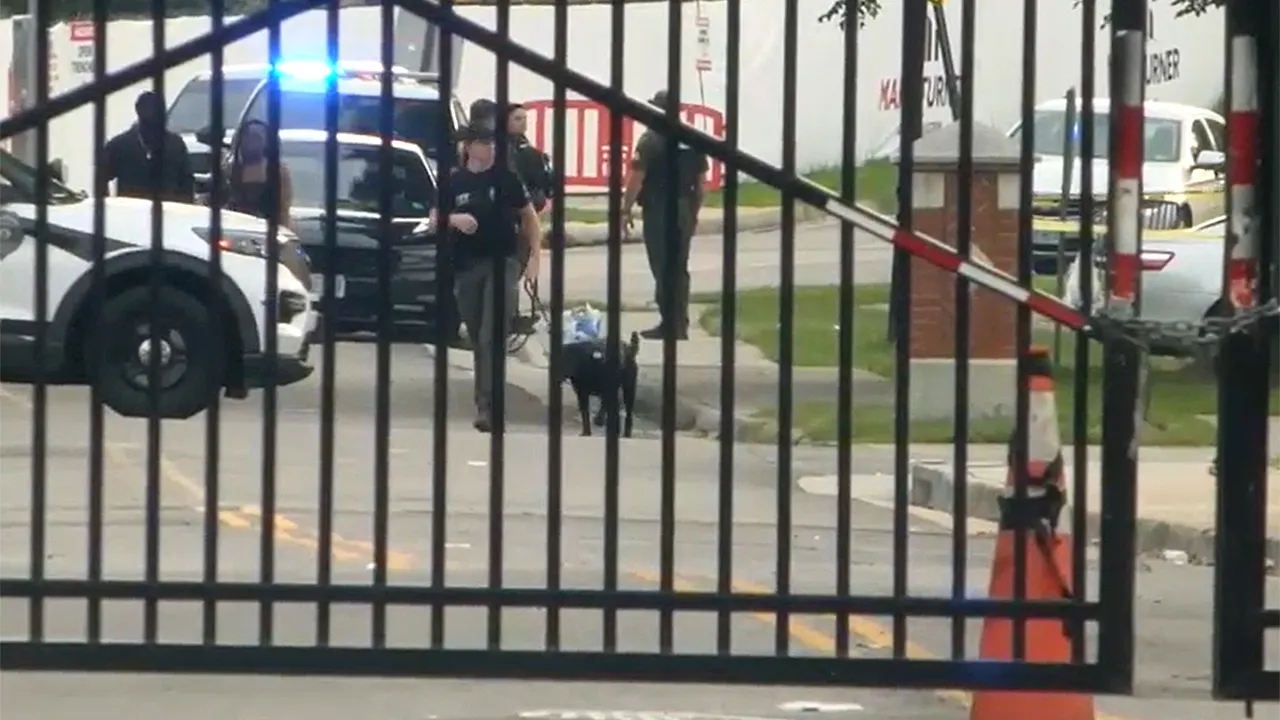
The quiet stillness of a late spring night on the campus of Virginia State University was brutally shattered just after the clock struck 1:28 a.m. on Saturday morning. In the 3300 block of Boisseau Street, an area nestled close to the university’s Quad Annexes residence halls, the deafening crack of gunfire ripped through the pre-dawn air, instantly transforming a place of learning and community into a scene of chaos and fear. University police, who were already on patrol for the start of the summer semester move-in weekend, responded within moments to find a gruesome tableau: five individuals, all bearing gunshot wounds, scattered on the pavement outside the dormitories. The initial lockdown that was immediately enacted sent a palpable wave of terror through the student body, as residents barricaded themselves inside their rooms, texting frantically and listening to the sirens wail into the darkness. The university’s official channels flickered to life, confirming the worst fears: a shooting had occurred involving multiple victims, and the suspects were still at large, prompting a directive to avoid the area entirely and shelter in place.
Behind the stark, clinical numbers released by university officials lies the human cost of this violence, a cost that transcends statistics and touches the very soul of the Virginia State University community. Five young lives, each with their own story, their own families back home, and their own dreams for the future, were caught in a hail of gunfire. As the ambulance lights faded into the distance toward area hospitals, a desperate vigil began. One individual now clings to life in critical condition, their family likely racing to Virginia, their hearts pounding with every update from medical staff, while the other four victims, though physically spared from life-threatening injuries, now carry the invisible scars of trauma, the haunting replay of that terrifying moment when their lives hung in the balance. The news spread like wildfire across group chats and social media platforms, with students not on campus desperately trying to reach their friends, their voices cracking with relief or choking on fear. The “Trojan family,” as VSU is affectionately known, found itself united not in celebration of a new semester but in a collective state of shock and grief, grappling with the brutal reality that a day meant for laughter and reunion had been irrevocably marred by a senseless act of violence.
The institutional response to this tragedy has been swift, coordinated, and marked by a somber professionalism, yet the weight of the task ahead is immense. VSU Police, the first on the scene, immediately established a perimeter around the Quad Annexes complex, treating the area as a major crime scene. Recognizing the complexity of the incident, which involves multiple suspects and a nighttime shooting, the investigation has been spearheaded by the Chesterfield County Police, with crucial assistance from VSU Police, the Bureau of Alcohol, Tobacco, Firearms and Explosives (ATF), and the Hanover County Sheriff’s Office. This multi-jurisdictional task force now faces the arduous task of piecing together the events leading up to that fatal moment, canvassing for witnesses, scouring security footage, and tracking down leads to bring those responsible to justice. While the university announced that the strict lockdown has been lifted and “normal access to campus may resume,” the significant law enforcement presence that remains serves as a stark reminder of the ongoing danger and the gravity of the situation. The investigation is far from over, and the university is actively soliciting information from the public, urging anyone with knowledge to come forward to the authorities, hoping that someone holds the key to solving this case.
For many, the shock of this event is deeply personal, resonating far beyond the immediate geographic boundaries of the Ettrick campus. Virginia Delegate Rozia A. Henson Jr., a proud alumna of VSU, woke up to a nightmare that struck directly at her alma mater, her words echoing the pain and solidarity felt across the state. Her message, delivered through the haze of heartbreak, spoke of prayers for the victims, their families, and the entire “Trojan family,” a poignant reminder that the bonds forged at an HBCU extend long past graduation and into the fabric of one’s identity. This isn’t just a statistic for the Virginia General Assembly; it is a personal blow to a community leader who once walked those same halls, who knew the smell of the Quad Annexes and the rhythm of campus life. Her heartfelt plea, “VSU, we are with you,” captures the emotional outpouring that has flooded in from alumni, students, parents, and strangers alike, all of whom understand that an attack on a Historically Black College and University is an attack on a sanctuary of culture, history, and ambition. The solidarity expressed online is a testament to the strength of this community, but it also carries the weight of a deep, collective pain.
The timing of this shooting adds a layer of poignancy and logistical complexity to an already devastating event. Friday marked the official opening of VSU’s residence halls, welcoming returning students for the Summer 2026 term, with classes slated to begin on Monday. Parents were hugging their children goodbye, moving them into their dorms, and looking forward to a productive summer semester. Instead, barely a day later, those same parents were now scouring the news for updates, frantically calling campus security, and re-evaluating decisions to send their loved ones away to school. The emotional whiplash is immense; the excitement of a new beginning has been shattered by the anxiety of a violent reality. For the students who remain on campus, the Quad Annexes, once a symbol of home and community, now feels like a place touched by tragedy. The comfort of dormitory life is replaced by a heightened sense of vigilance. This incident forces a broader, uncomfortable conversation about the persistent threat of gun violence that looms over educational institutions across the country, and the specific vulnerabilities faced by communities of color. As the university administration prepares for the start of classes, they are now faced with the dual burden of ensuring academic continuity while also providing healing spaces, counseling services, and security measures sufficient to restore a sense of safety to a shaken student body.
As the sun rises on a somber Sunday in Ettrick, Virginia, the investigation remains fluid, classified as a developing story with many unanswered questions. No arrests have been announced, and the description of “multiple suspects” leaves a community on edge, wondering if the danger has truly passed or if it merely lingers in the shadows. The university’s directive includes a clear plea for information, providing specific contact numbers for Chesterfield County Police, Crime Solvers, and VSU Police, underscoring the urgency of finding those responsible and holding them accountable. But beyond the legal pursuit, there is a deeper, more human process of healing and reflection that must begin. The vibrant energy of move-in weekend will never reclaim that particular Friday, but the Trojan family must find a way to move forward, carrying the victims in their hearts. The resilience of VSU, an institution that has weathered historical storms and societal challenges for generations, will be tested in the coming weeks. The focus now shifts to supporting the five individuals and their families, to fostering an environment where students can express their fear and grief, and to rebuilding the fragile sense of security that was so violently disrupted. The road to closure is long, but the community’s determination to not be defined by this tragedy, and to honor the strength of its students, will be their guiding light.