


The air across the Upper Midwest felt thick with anticipation on Tuesday night, a familiar tension that precedes a political earthquake. The primaries unfolding in Minnesota and Wisconsin were not merely routine exercises in democracy; they were a stark reflection of the ideological battle raging within the Democratic Party, a showdown between the measured pragmatism of its establishment wing and the unapologetic fire of its progressive base. As the results trickled in, the early evening offered the kind of narrative clarity that political strategists thrive on: the Left’s momentum was holding steady. In Minnesota, the night was a resounding victory for the progressive movement—a confirmation that the grassroots energy ignited over the past decade has evolved from a fringe protest into a commanding voice within the party’s primary electorate. Yet, the evening’s most consequential drama remained unresolved, suspended in the increasingly charged atmosphere of Wisconsin. Here, in the heart of a battleground state that has essentially decided the last two presidential elections, the progressive wing was seeking an audacious prize: the governorship itself. The wait, as the final ballots were counted, felt less like a formality and more like a referendum on whether the party’s soul truly lies with the firebrands or the centrists, with the very definition of Midwestern governance hanging in the balance.
In Minnesota, the Senate primary encapsulated this ideological clash with devastating clarity. Lieutenant Governor Peggy Flanagan emerged victorious, capturing the nomination to succeed the retiring Senator Tina Smith, and in doing so, delivered a crushing blow to the establishment’s preferred candidate, Representative Angie Craig. For political observers, this race was more than a simple contest of resumes; it was a visceral struggle over the party’s future direction. Craig, representing a district that leans suburban and purple, campaigned on a platform of incrementalism, fiscal restraint, and the kind of compromise-oriented politics that has historically won swing voters. She carried the torch for business-friendly Democrats, holding the quiet endorsement of various party luminaries who believe that winning the Senate requires appealing to the center. Flanagan, however, ran a campaign that was loud, progressive, and historically resonant. As the first Native American woman elected to statewide office in the state’s history, she tapped into a coalition of younger voters, union members, and activists who are tired of half-measures. Her victory speech, punctuated by the energy of a crowd that believed in her campaign’s moral urgency, staked a claim that the Democratic Party must offer more than a gentler version of the opposition—it must offer a fundamental reimagining of economic and social justice. The defeat of Representative Craig, who represents a district that Democrats cannot afford to lose in the general election, sent a clear message that the primary season no longer belongs to the moderates in Minneapolis’ inner-ring suburbs, but to the activists who believe that scorching rhetoric and ambitious policy are the only antidotes to the Republican agenda.
Adding to the night’s progressive triumph in Minnesota was the resounding victory of Representative Ilhan Omar in her bid for renomination in the state’s 5th Congressional District. Omar, a polarizing figure known for her sharp criticism of American foreign policy and her membership in the progressive “Squad,” faced another well-funded and highly publicized effort to unseat her. Yet, once again, she emerged with a comfortable victory, demonstrating an ironclad hold on a district that is among the most liberal in the nation. The repeated attempts to “primary” her, backed by significant financial contributions from pro-Israel groups and establishment donors, have historically poisoned the well of intra-party dynamics in Minnesota, but they have also galvanized her supporters into a fiercely loyal machine. For Omar, Tuesday’s win was neither surprising nor merely symbolic; it was a validation that her brand of unapologetic progressivism, which includes support for defunding ICE, robust social safety nets, and a transactional approach to foreign policy that prioritizes human rights, is precisely what the diverse constituents in her district want. Her victory sends a dire warning to the Democratic leadership in Washington: any strategy that seeks to tamp down the influence of the party’s left flank within these urban strongholds is doomed to fail. As the night wore on, however, the focus shifted west and south, toward the cusp of the Rust Belt, where the ideological experiment was facing its toughest test yet.
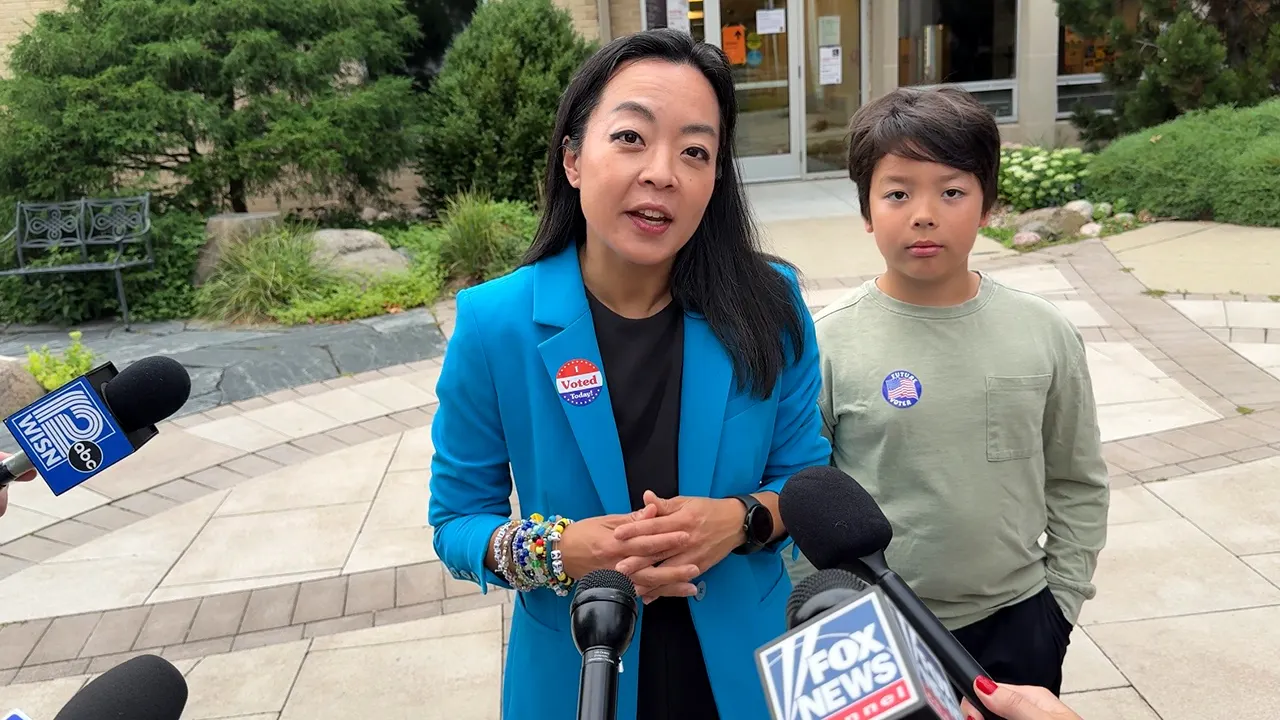
The looming crucible is in Wisconsin, where the primary for the Democratic gubernatorial nomination remained too close to call, hinging on the fate of State Representative Francesca Hong. Hong, a 37-year-old former chef, a single mother, and a self-described democratic socialist, is seeking to lead the party against the Republican nominee in a state that is perpetually purple. The stakes here are staggering: Wisconsin is not just a swing state; it is the epicenter of the American political tug-of-war, a place where a few thousand votes decide the presidency and where union rights, abortion access, and voting rights are perpetually under siege. The current governor, Tony Evers, has waged a constant battle against the Republican-controlled legislature, and his veto pen has been the only obstacle to a deeply conservative agenda. Democrats understand that holding the governor’s mansion is existential, not just for the state’s progressive policies, but for the national party’s viability in the 2026 midterms. Hong’s platform is a direct challenge to the moderate playbook that has historically dominated Wisconsin Democratic politics. She advocates for raising the minimum wage from a shockingly dated $7.25 an hour to $20 an hour, guaranteeing paid family leave, and a moratorium on new AI data centers—policies that are designed to fire up the progressive base. Her candidacy, if successful, would represent a seismic shift in a state where “Blue Dog” Democrats have often held sway, proving that the far-left’s message can penetrate even the most conservative-leaning purple regions.
Francesca Hong’s personal story is central to her appeal, and humanizes the abstract clash of ideologies playing out in the primaries. She is not a career politician who emerged from a law firm or a state senate cloakroom; she spent years working in kitchens, facing the grind of low wages and the struggle of food insecurity. As a single mother, she speaks about the cost of childcare, the price of groceries, and the ever-looming threat of a medical bankruptcy with the visceral clarity of lived experience. Her endorsement from the “Squad” members like Ilhan Omar and Ro Khanna carries weight, but it is her own biography that resonates most deeply with voters who feel left behind by the corporate wing of their own party. However, her path has not been without controversy. Opponents actively mining her social media archives have unearthed old posts where she called for defunding and abolishing the police—positions she has since conspicuously distanced herself from, asserting that her views have evolved as she has come to understand the complexities of public safety. In any other state, this might be a fatal flaw, but in the era of shifting norms, it has become a test of whether the electorate values authenticity and evolution over pristine, rigid ideology. As the hours stretched past midnight, the race remained undecided, leaving supporters on both sides to hold their breath, knowing that the outcome would set the tone for the entire general election cycle.
The implications of the Wisconsin result extend far beyond the man or woman who secures the nomination. If Hong manages to defeat her more moderate opponents and secure the nomination, it would be a monumental victory for the progressive movement, signaling that the “socialist” label is no longer a political death sentence in the Midwest. It would energize activists who believe that the path to win back the White House and the Senate runs through the introduction of bold, structural reforms—not triangulation. Conversely, if she falls short, the establishment will breathe a heavy sigh of relief, arguing that in swing states, the party’s future lies in the center. Yet, even in that scenario, the movement she represents has already forced the party to move leftward; her very presence in the race has shifted the Overton window, making proposals like $20 minimum wage a topic of serious debate rather than a rhetorical talking point. As the first light of dawn touched the Mississippi River, the Democratic Party stood at a crossroads, once more struggling to balance the fiery passions of its coalition with the cold math of electoral necessity. The victories in Minnesota proved that the Left has muscle; the yet-to-be-decided verdict in Wisconsin will prove whether that muscle can flex in the regions that truly determine the balance of power in America, for the future of the party and the nation rests just as much on the result of this single midwestern race as it does on any speech delivered in Washington.