


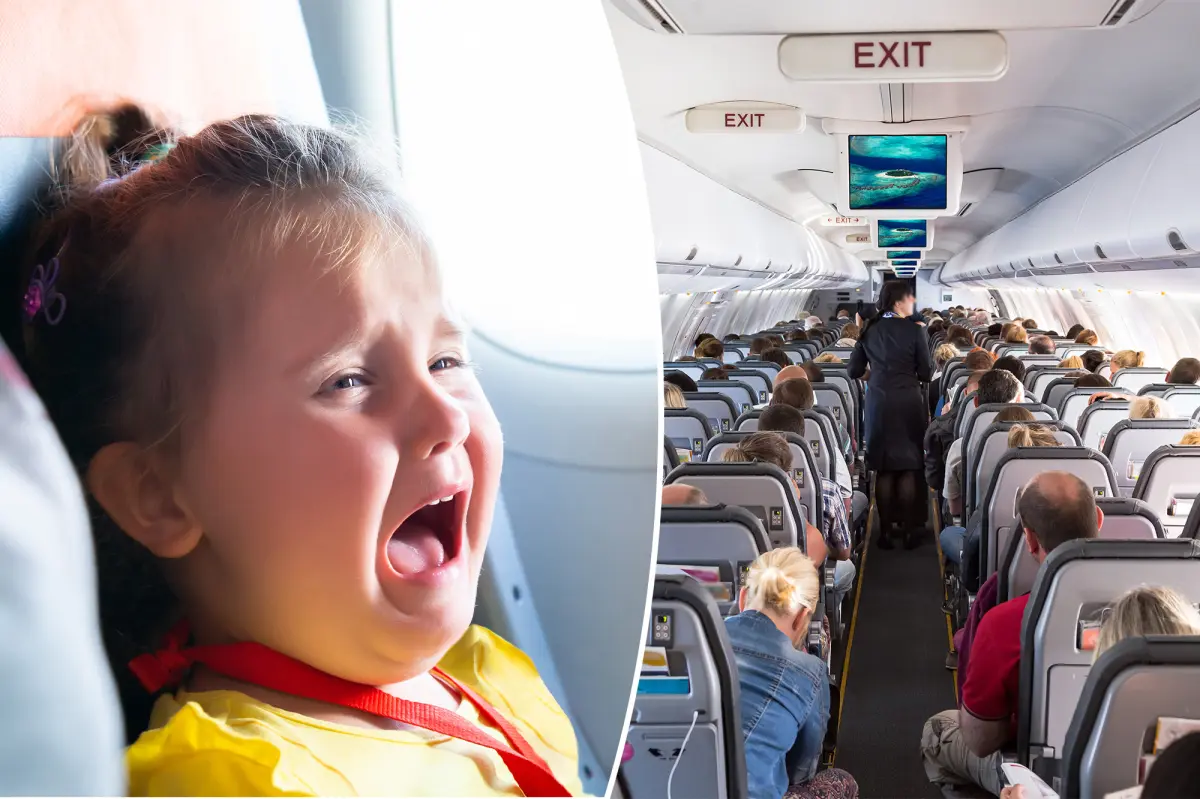
The atmosphere inside a commercial airplane cabin right before takeoff is often a delicate, unspoken cocktail of collective exhaustion, quiet anticipation, and the muffled rustle of passengers settling in for a long journey. On the evening of Thursday, August 6, passengers aboard Porter Airlines flight PD444, sitting on the tarmac at Victoria International Airport in beautiful British Columbia, were looking forward to a routine, albeit long, red-eye journey across the vast expanse of Canada to Toronto. For many, it was the end of a demanding work week or a sentimental family vacation, and the late-night departure meant that most were hoping to catch some much-needed sleep high above the clouds while the engines hummed peacefully. However, the fragile peace of the cabin was abruptly shattered by a scenario that is every traveling parent’s worst nightmare and every passenger’s quiet dread: a toddler experiencing a full-blown emotional meltdown. The tiny passenger, overwhelmed by the unfamiliar environment, the bright overhead cabin lights, or perhaps just the sheer exhaustion of late-night travel, stubbornly refused to sit down or fasten their seatbelt. As the aircraft taxied away from the terminal and prepared for its final pre-flight checks, the young child remained standing defiantly on their seat, setting off a chain of events that would transform a standard cross-country flight into a viral test of human patience and logistical complexity. What began as a minor domestic squabble between parent and child quickly escalated into an insurmountable safety hazard, putting the entire flight on hold as the crew watched the minutes slip away. The atmosphere in the cabin shifted from weary relaxation to palpable tension, with whispers spreading through the rows of seats as people realized that their departure was hanging in the balance, all because of one very small, very determined human being who simply would not cooperate.
In the cramped, highly pressurized confines of an airplane cabin, a toddler’s tantrum can feel incredibly loud, magnified by the enclosed space and the mounting anxiety of everyone trapped inside. The child’s parents, feeling the heavy, judging gaze of dozens of onlookers, desperately tried every parenting trick in their repertoire to soothe their distressed child and coax them into their seat, while the flight attendants offered gentle assistance and looked on with growing concern. Despite their collective, increasingly frantic efforts to secure the unruly child, the little boy or girl absolutely refused to submit to the nylon strap of the seatbelt, arching their back and screaming in a display of raw toddler willpower that defied all adult authority. The flight crew was caught in an incredibly difficult position; while they wanted nothing more than to help the family and get the flight underway, they were bound by strict federal safety regulations that dictate every passenger must be securely buckled in before an aircraft can take off. A standing child during takeoff is a physical impossibility under aviation law, as the immense forces of acceleration could easily throw a small, unsecured body through the cabin, resulting in catastrophic injury or worse. Realizing that the situation had reached an absolute standstill and that they could not safely proceed to the runway under these hazardous conditions, the captain made the difficult, frustrating, but necessary decision to abort the takeoff. With a heavy sigh, the pilot turned the aircraft around and began the slow, demoralizing taxi back to the terminal gate, leaving a cabin full of disappointed travelers to contemplate a disrupted journey and a family of mortified parents dealing with the ultimate public embarrassment. This choice, while deeply unpopular, highlighted the absolute authority of safety protocols over passenger convenience.
The return to the gate was only the beginning of a prolonged logistical nightmare that would ripple through the lives of everyone on board that night. After the plane taxied back and docked at the terminal, the family was asked to deplane, a process that, along with the mandatory paperwork and the physical removal of their checked baggage from the cargo hold, took a significant amount of time. By the time the cabin doors were finally secured once more and the administrative hurdles cleared, the hands of the clock had ticked past 12:30 a.m., plunging the flight into an unexpected and unforgiving trap. Victoria International Airport, like many mid-sized airports located near residential communities, enforces a strict noise curfew that shutters the runway during the late-night hours to prevent sleep disruption for local residents. Because the clock had run out, the pilot was legally prohibited from taking off, meaning that the remaining passengers were officially stranded on the ground until the following morning. For the weary travelers, this meant leaving the cabin, dragging their carry-on bags back through the darkened terminal, and scrambling to secure last-minute hotel accommodations or sleeping on uncomfortable airport benches. The flight was rescheduled for the next morning, eventually departing on Friday at 10:49 a.m. local time and landing in Toronto at 6:16 p.m., turning what should have been a seamless overnight transit into an exhausting, twenty-four-hour ordeal that tested the limits of passenger endurance and sanity. This chain reaction perfectly demonstrated how a single behavioral hiccup can trigger a massive logistical collapse, leaving hundreds of innocent bystanders to pay the price.
In the wake of the incident, Porter Airlines representatives issued a formal public apology to the affected passengers, expressing deep regret for the significant disruption and inconvenience caused by the cancellation, while reaffirming that passenger safety remains their absolute, non-negotiable priority. This incident highlighted the delicate, often precarious nature of air travel, where a single localized disruption can cascade into a massive operational headache affecting crew flight time limits, aircraft availability, and hundreds of personal lives. It also shone a spotlight on the intense psychological pressure experienced by modern parents traveling with young children, who must navigate the unpredictable nature of childhood development under the critical, often unsympathetic gaze of a public that expects perfection. The parents of the toddler on flight PD444 likely experienced a level of stress and shame that is difficult to overstate, having to face the collective anger of an entire plane of stranded passengers while simultaneously managing a child who was clearly in distress. It is easy to judge from afar, but anyone who has ever cared for a toddler knows that there are moments when rational communication completely breaks down, and no amount of pleading, bribery, or sternness can break through a child’s sensory overload or emotional meltdown. This event serves as a stark reminder of our shared vulnerability in public spaces, where our plans, schedules, and comfort are fundamentally intertwined with the behavior and well-being of the strangers sitting right next to us. It underscores the truth that modern travel is not just a simple commercial transaction, but a shared social contract where human empathy must coexist with safety regulations.
This dramatic event in Victoria is far from an isolated occurrence; rather, it is part of a growing trend of highly publicized incidents where a young child’s behavior has severely impacted a flight, sparking fierce debates across social media about parental responsibility and the ethics of public spaces. Just last month, a frustrated traveler took to Reddit to vent their anger after a flight to Sweden was delayed by over an hour because a pair of “incompetent parents” failed to make their three-year-old child sit in his designated seat during pre-flight preparations. According to the original poster, the child was deemed too old to safely travel in a parent’s lap, leading to an hour of screaming, an ultimate deboarding of the family, and the time-consuming process of refueling, weight recalculation, and baggage removal that left the entire cabin fuming. The Reddit post quickly went viral, igniting a passionate debate among commenters, with one faction arguing that parents who cannot control their children should not fly, and some even expressing a willingness to pay extra for “adult-only flights” to guarantee a peaceful journey. Conversely, many experienced parents rushed to the defense of the struggling family, pointing out that even the most seasoned, loving guardians are sometimes entirely powerless against a toddler meltdown, which remains a baffling psychological phenomenon that science has yet to fully solve. This online divide reflects a broader, deeper societal tension between the desire for individual comfort and quiet, and the collective necessity of accommodating families with children in public transit systems. It forces us to ask whether we are losing our tolerance for the messy realities of raising the next generation.
Ultimately, these incidents challenge us to examine the balance between rigid rules, public safety, and human empathy in our increasingly connected yet highly impatient world. While it is easy to sympathize with the stranded passengers who lost valuable time, money, and sleep due to a toddler’s defiance, we must also recognize that children are not miniature adults and cannot always be forced to comply with the demands of modern aviation schedules. The flight crew’s decision to cancel the flight, while incredibly disruptive, was the only responsible course of action, ensuring that no child was subjected to the extreme physical risks of an unbuckled takeoff. As we navigate the crowded skies and shared spaces of our lives, perhaps the best way forward is to cultivate a little more patience, a little more grace, and a deeper understanding of the struggles that others are facing, whether they are tired business travelers, exhausted airline crews, or parents trying their best to comfort a terrified child. After all, the journey of life, much like a flight across Canada, is one that we must take together, and our shared humanity is far more valuable than any on-time arrival. By looking at these situations through a lens of compassion rather than condemnation, we can transform these frustrating moments of delay into opportunities to practice community, recognizing that we were all once crying children, and that we are all just trying to get home safely. We must learn to coexist in the sky, understanding that while safety rules are absolute, human nature will always remain beautifully and maddeningly unpredictable.