


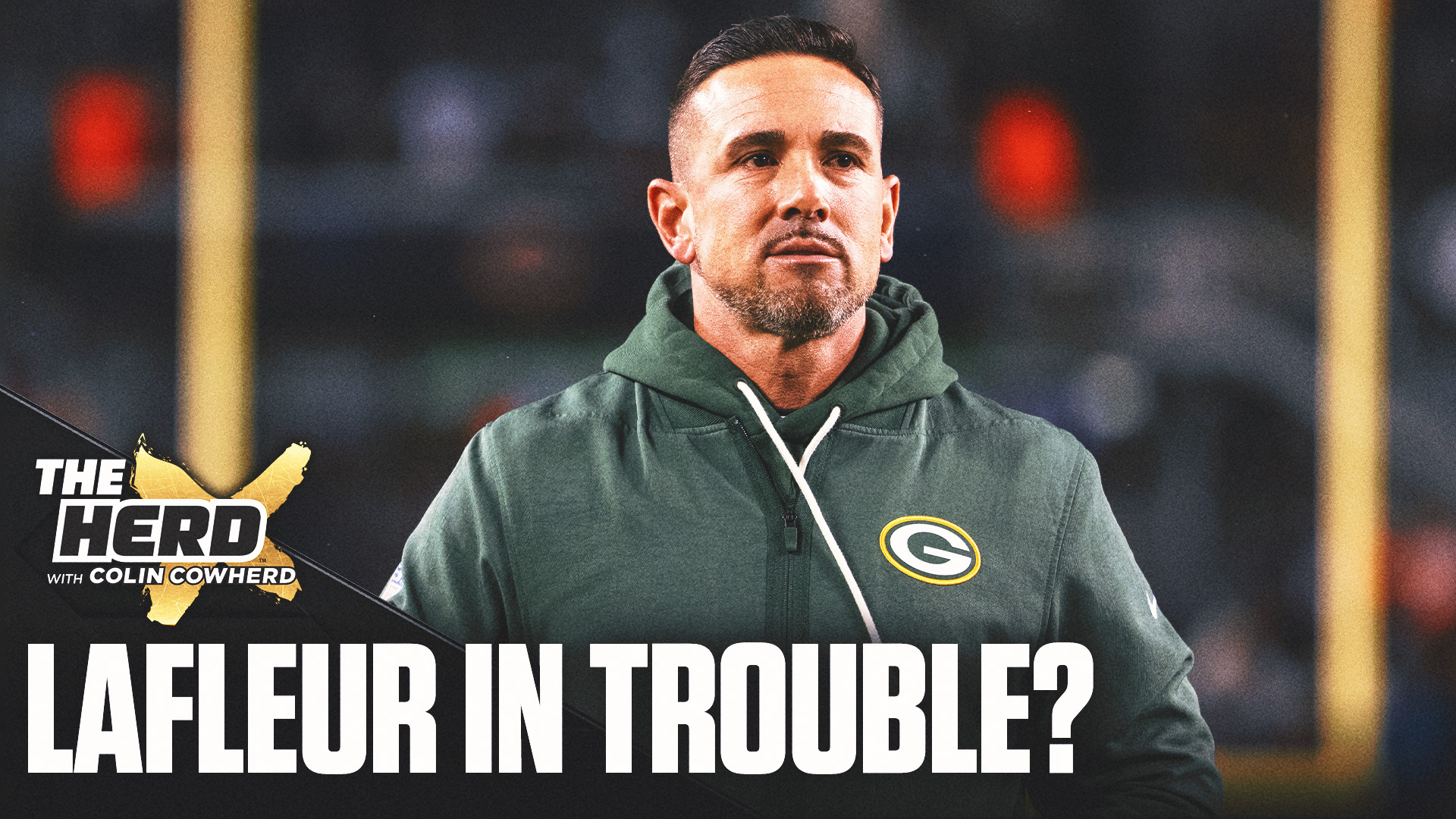
When the Green Bay Packers organization made the bold decision to move on from Mike McCarthy during the turbulent 2018 NFL regular season, they weren’t just looking for a new voice; they were seeking a visionary who could unlock the twilight years of Aaron Rodgers’ legendary career and deliver another Lombardi Trophy to Title Town. Enter Matt LaFleur in 2019, a young, creative offensive mind tasked with bridging the gap between historical greatness and future triumph. In many ways, LaFleur’s early tenure was nothing short of spectacular, reviving a stagnant offense and guiding the Packers to consecutive deep postseason runs. Yet, as the years ticked by, the ultimate prize remained agonizingly out of reach, with Green Bay repeatedly falling short in the NFC Championship Game during the Rodgers era. The transition to the young, promising Jordan Love in 2023 was supposed to signal a patient rebuilding phase, but Love’s rapid development quickly accelerated expectations. Instead of a slow transition, the Packers found themselves back in the high-stakes crucible of January football, only to suffer back-to-back, heart-wrenching exits in the wild-card round of the 2024 and 2025 playoffs. Despite signing a lucrative contract extension recently, the harsh reality of modern professional sports means that past achievements quickly fade under the glare of current disappointments. LaFleur now finds himself entering a crucial campaign where the whisper network of the NFL is starting to ask a previously unthinkable question: is one of the winningest coaches in regular-season history actually coaching for his job?
This intriguing dynamic was recently thrust into the national spotlight by prominent sports media personality Colin Cowherd, who suggested that while LaFleur is not facing the typical, desperate hot seat of a coach on a failing franchise, he is occupying what could be described as the “coolest hot seat” in the entire league. This unique brand of pressure stems from a combination of incredibly high organizational standards and an absolute gauntlet of a division that has rapidly transformed into the most competitive neighborhood in professional football. Over the past two seasons, the NFC North has established itself as an absolute powerhouse, winning more collective games than any other division in the NFL by a substantial margin. This rise to dominance is fueled by an elite class of head coaches who present a weekly masterclass in tactical innovation and team leadership. To LaFleur’s left stands Dan Campbell of the Detroit Lions, the ultimate culture-building alpha dog who has forged a gritty, relentless contender in the Motor City. To his right are Ben Johnson of the Chicago Bears and Kevin O’Connell of the Minnesota Vikings, two of the brightest and most sophisticated offensive minds in the modern game. Navigating this divisional minefield requires absolute perfection, leaving zero margin for error and transforming every single divisional matchup into a high-stakes chess match that tests a head coach’s schematic genius and psychological fortitude.
The core of the criticism surrounding LaFleur’s Packers doesn’t lie in their initial preparation or their ability to draw up beautiful, highly effective opening game plans; rather, it centers on an apparent inability to close the door when the opposition fights back. This narrative was painfully illustrated during the late-season collapse of the previous campaign, where a promising 9-3-1 start evaporated into thin air as the team lost their final four regular-season contests. The climax of this late-season slide occurred in the wild-card round of the playoffs, where the Packers surrendered a massive 21-3 halftime lead to their eternal rivals, the Chicago Bears. This catastrophic loss highlighted a recurring, deeply troubling theme that has caught the attention of both the front office and national analysts alike. Cowherd famously pointed out that while “smart” coaching and sophisticated schemes can easily secure a comfortable lead in the first half of a football game, it takes a raw, uncompromising physical and mental toughness to finish the job when the game gets dirty in the fourth quarter. When a team needs to put together a grinding, twelve-play drive entirely on the ground—putting their heads down, embracing the physical toll, and converting multiple tough third-and-shorts to run out the clock—the Packers have too often looked fragile, raising fundamental questions about the physical identity and mental resilience that LaFleur has instilled in his locker room.
The tragedy of the current skepticism surrounding LaFleur is that, on paper, his coaching resume is nothing short of historic, presenting a fascinating paradox between regular-season dominance and postseason futility. Since taking the reins in 2019, LaFleur has accumulated an incredibly impressive 76-40-1 regular-season record, boasting a 65.4% winning percentage that ranks fourth in the legendary history of the Green Bay franchise—placing him in the company of coaching icons. He successfully guided the team to three consecutive division titles from 2019 to 2021 and proved that his offensive system could thrive regardless of whether a future Hall of Famer or a young rising star was executing the plays. However, the NFL is an unforgiving meritocracy where legacies are forged in the freezing temperatures of January and February, and it is here where LaFleur’s record falters. A lackluster 3-6 postseason record hangs over his accomplishments like a dark cloud, creating a narrative that his teams are built for the sterile, predictable environments of the regular season but lack the rugged, battle-tested edge required to survive the single-elimination tournament of the playoffs. This stark contrast between sustained autumn success and sudden winter heartbreak has created a palpable sense of urgency within the Packers’ front office, who recognize that statistical milestones mean very little without the ultimate validation of a championship ring.
As the Packers look to break through this glass ceiling in the upcoming season, they must do so while navigating a significant period of transition and adversity, particularly on the defensive side of the ball. The offseason brought a major shakeup to the coaching staff, as defensive coordinator Jeff Hafley departed Green Bay to take the head coaching job with the Miami Dolphins. In his stead, the Packers turned to former Arizona Cardinals head coach Jonathan Gannon to revitalize a defensive unit that has frequently struggled to match the efficiency of the offense. Gannon brings a wealth of experience and a reputation for aggressive, adaptable defensive schemes, but his debut season in Green Bay has already been dealt a devastating blow before the first kickoff. The defensive unit will be forced to begin their campaign without the services of their ultimate game-changer, superstar defensive end Micah Parsons, who suffered a catastrophic torn ACL in Week 15 of the previous season. Losing a player of Parsons’ caliber—a generational talent capable of disrupting entire offensive game plans by himself—places an immense burden on Gannon’s shoulders and forces LaFleur to find creative ways to keep his team competitive while their defensive anchor undergoes a grueling rehabilitation process.
Ultimately, the upcoming season represents far more than just another chapter in the storied history of the Green Bay Packers; it is a defining crossroad for Matt LaFleur’s coaching legacy and the cultural identity of the franchise. The challenges ahead are formidable, ranging from a highly competitive and ruthless division to the immediate need to overcome devastating injuries to key defensive personnel. To silence his critics and secure his long-term future in Green Bay, LaFleur must prove that he can evolve beyond being a brilliant offensive strategist and become a coach who can forge a tough, resilient team capable of winning the physical battles in the trenches when the season is on the line. The football world will be watching closely to see if the Packers can internalize the harsh lessons of their recent playoff collapses, trading finesse for fortitude and turning early-game leads into decisive, gritty victories. If LaFleur can successfully instill this missing element of physical and mental toughness, he will not only cool down his seat but also position the Packers to finally reclaim their place at the pinnacle of the NFL; if not, the franchise may decide that a new direction is necessary to finally bring the Lombardi Trophy back home.