


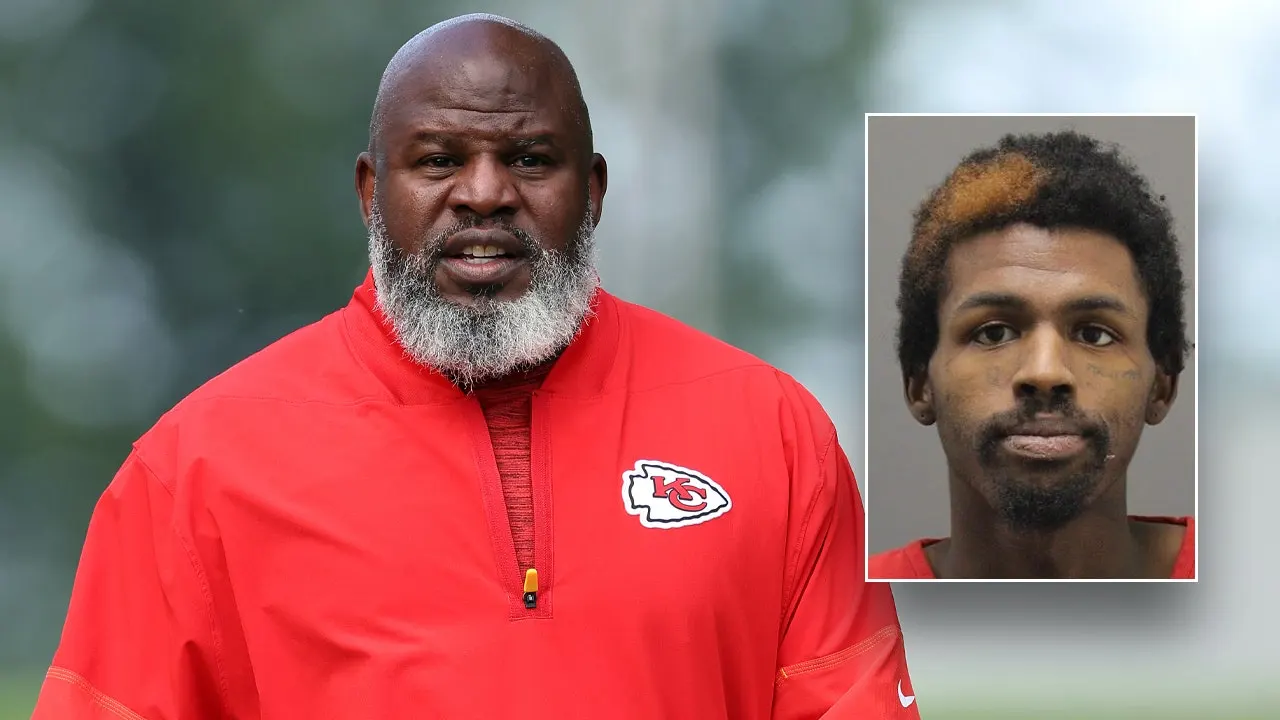
The high-stakes environment of professional sports often operates under a glare of public attention that leaves little room for personal vulnerability. On the football field, victories are celebrated with deafening applause, and losses are analyzed with clinical precision by millions of passionate spectators. Yet, behind the complex playbooks, the roaring stadiums, and the unrelenting pursuit of championship rings lies the fragile, deeply human reality of the coaches and athletes who bring these games to life. For Kansas City Chiefs offensive coordinator Eric Bieniemy, the thin line separating his public duties from his private world was shattered on July 26, when an unimaginable domestic tragedy struck his household. His 27-year-old son, Elijah, allegedly shot his mother, Mia, multiple times inside their suburban home in Ashburn, Virginia, leaving her critically injured and thrusting the family into a terrifying crisis. This shocking incident occurred just as the Chiefs were launching into the high-intensity atmosphere of training camp, a grueling period demanding total concentration from the coaching staff. Instead of being fully immersed in designing plays, evaluating rookie talent, and preparing for the upcoming season, Bieniemy was suddenly forced to confront a deeply personal nightmare that transcended the boundaries of sports. The news sent shockwaves through the NFL community, serving as a jarring reminder that even those who seem most invulnerable on the sidelines must grapple with the same devastating human struggles as everyone else. In the days following this tragedy, a powerful narrative of resilience has emerged, illustrating how a sports organization can transform into a surrogate family and how the familiar structure of football can provide a crucial anchor of normalcy in the face of profound personal trauma.
To understand the profound emotional weight currently resting on Eric Bieniemy’s shoulders, one must look closely at the distressing sequence of events that occurred in Virginia and the heartbreaking intersection of mental illness and family violence. On that late July afternoon, emergency responders arrived at the Bieniemy residence to find 57-year-old Mia Bieniemy suffering from life-threatening gunshot wounds. While she was initially admitted to the intensive care unit in critical condition, her subsequent transfer out of the ICU has offered a vital ray of hope for her recovery, though her journey toward physical and emotional healing will undoubtedly be long and arduous. Meanwhile, Elijah was arrested and charged with malicious wounding, use of a firearm during a felony, and discharging a weapon inside a home. The tragedy is further compounded by the troubling details of Elijah’s mental health history leading up to the shooting, highlighting the agonizing struggles that many families face when dealing with severe psychiatric disorders. Just two days prior to the incident, Elijah reportedly called law enforcement to complain that his parents were withholding his weapons, arguing that because he was a certified UFC fighter, he felt unable to defend himself without them. Court records have since confirmed that Elijah suffers from severe mental health issues, preventing him from immediately entering a plea or making standard court appearances until he undergoes an extensive competency evaluation. For Eric Bieniemy, the agony of this situation is two-fold: he must endure the terror of nearly losing his life partner while simultaneously navigating the painful reality that his own son, in the grip of a severe psychiatric crisis, is the one responsible for this devastating act of violence.
In the immediate aftermath of this crisis, the Kansas City Chiefs organization stepped forward to demonstrate that their commitment to their coaching staff extends far beyond professional performance. Led by General Manager Brett Veach and Head Coach Andy Reid, the franchise made it clear that Bieniemy’s family must take absolute precedence over any football-related responsibilities. However, recognizing that football is not just Bieniemy’s job but a fundamental piece of his identity and a potential source of therapeutic distraction, the team established a sophisticated technological bridge to keep him connected. They set up a live, high-definition video feed of all training camp practices, enabling Bieniemy to watch, analyze, and dissect every drill and play remotely from his location near his family. This thoughtful arrangement allowed the veteran coach to remain mentally engaged with the sport he loves while physically remaining by his wife’s hospital bedside. The depth of Bieniemy’s professional dedication became clear during a recent practice session when, despite the overwhelming stress of his personal life, he called Brett Veach directly to ask to speak with Andy Reid, eager to deliver a specific coaching correction. This seamless integration of modern technology and organizational compassion highlights the true essence of a supportive workplace culture, proving that at its best, a sports franchise can function as a genuine sanctuary of support and understanding when one of its key members is blindsided by a devastating life event.
The specific reason behind Bieniemy’s phone call during that practice session perfectly illustrates the relentless, detail-oriented coaching philosophy that has made him one of the most respected figures in the NFL. From his remote location, Bieniemy noticed a minor mistake made by rookie running back Emmett Johnson and insisted that Andy Reid immediately relay a correction to the young player on the field. This level of uncompromising vigilance is exactly what Brett Veach was referring to when he remarked how refreshing it was to have Bieniemy’s trademark attention to detail back in the building, noting that under his guidance, “there’s never a safe space” for complacency. Following a highly disappointing 6-11 season last year—a massive departure from the championship standards the franchise had established—the Chiefs brought Bieniemy back this offseason with the explicit goal of giving the roster a “kick in the a–,” a phrase Veach used with deep respect and appreciation. Having won two Super Bowl rings with the franchise, Bieniemy knows exactly what it takes to achieve greatness, and he demands that every player on the roster understand their assignments perfectly. His voice, calling out demands for proper “Alignment” or urging players to “Finish” every single play, is a vital component of the team’s identity and directly mirrors Andy Reid’s own high expectations. Even when that voice is delivered through a phone speaker or a video screen from hundreds of miles away, its impact is undiminished, forcing every player to recognize that mediocrity will not be tolerated.
This current chapter in Bieniemy’s life is both a professional homecoming and a poignant reflection of a long, demanding career spent navigating the intense pressures of the football world. Before returning to the Chiefs, the 56-year-old coach built an impressive resume with significant coaching tenures at the Washington Commanders, the Chicago Bears, and the collegiate program at UCLA, continuously refining his offensive strategies and proving his worth at every level of the game. The life of an NFL coach is characterized by grueling hours, constant travel, and immense public scrutiny, which can often place a heavy burden on family dynamics, making the current tragedy all the more devastating for those who understand these sacrifices. Yet, it is a common human experience to find a sense of comfort and stability in one’s work during times of profound personal grief, as the structured, predictable demands of a professional routine can offer a temporary escape from a chaotic reality. By continuing to analyze practice film and mentor players like Emmett Johnson, Bieniemy is not neglecting his family; rather, he is utilizing the focus and discipline of his coaching career to help anchor his mind as he supports his recovering wife and processes the heart-wrenching legal and medical realities facing his son. This delicate balancing act serves as a powerful testament to the resilience of the human spirit, demonstrating how an individual can find the strength to execute their professional duties with excellence even while their personal world has been completely upended by trauma.
As the Kansas City Chiefs push forward into the demanding heat of training camp and look ahead to the challenges of the upcoming NFL season, the path forward for the Bieniemy family remains deeply uncertain, characterized by both a long physical recovery for Mia and a complex legal and psychiatric journey for Elijah. There is currently no definitive timeline for when Eric Bieniemy will be able to return to the team in an in-person capacity, as his primary focus must rightfully remain on the emotional and physical healing of his loved ones. However, the overwhelming wave of support he has received from the Chiefs organization, the broader NFL community, and sports fans across the country serves as a vital source of comfort during this incredibly dark period. This tragedy serves as a poignant reminder that the figures we see on the sidelines are not merely characters in a sports spectacle, but real human beings who face the same devastating family crises, mental health struggles, and personal heartbreaks as the fans who watch them from the stands. By humanizing Eric Bieniemy’s struggle, we gain a deeper appreciation for his strength as both a dedicated husband and a passionate coach who refuses to let adversity completely derail his life’s work. As Mia continues her recovery outside of the intensive care unit and Elijah undergoes the necessary competency evaluations, the football community will continue to stand behind the Bieniemy family, hoping that the same resilience, discipline, and unity that Eric has spent a lifetime teaching on the field will help guide his family through their most difficult challenge off of it.