

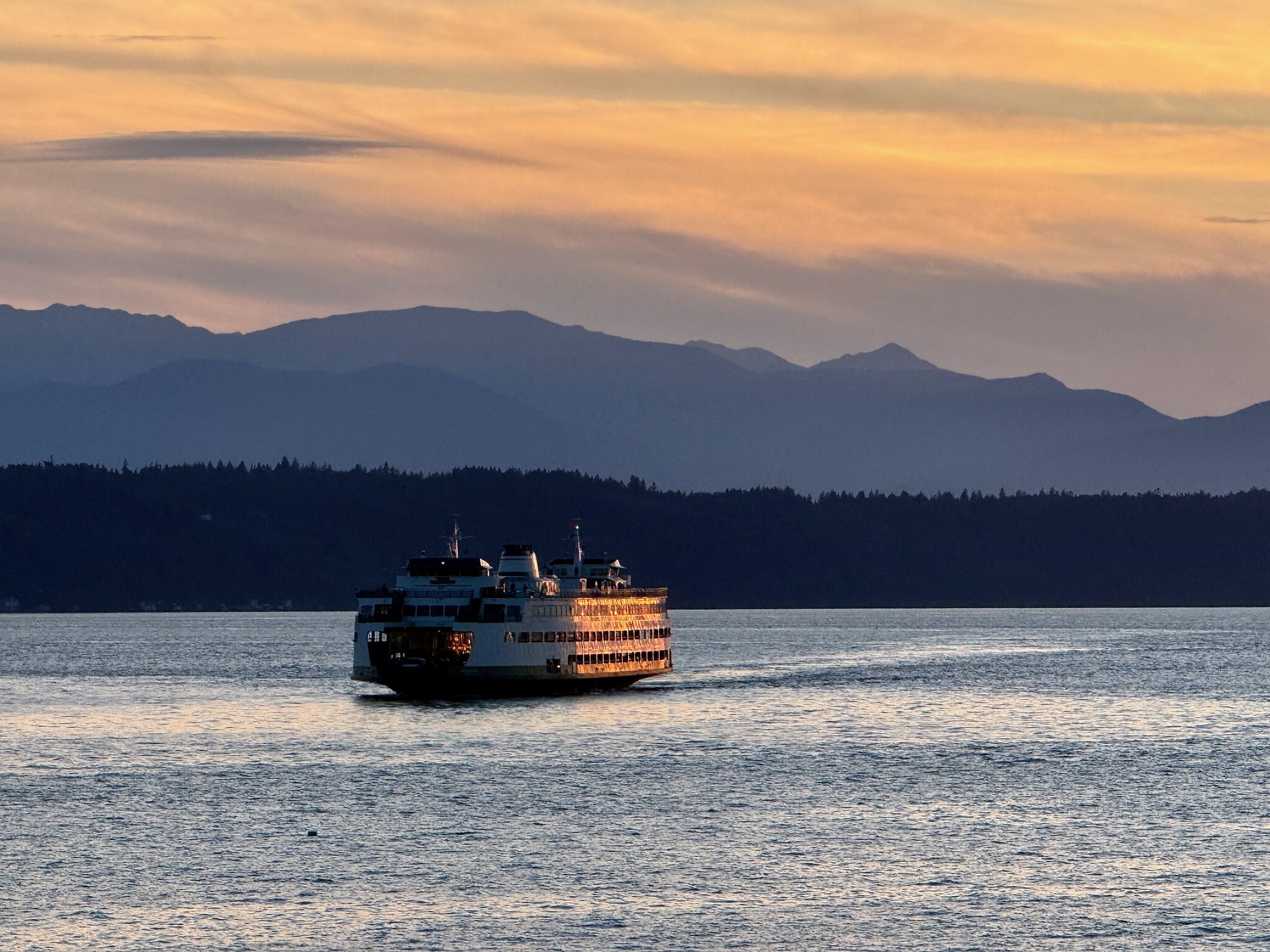
The rhythmic rumble of massive diesel engines has, for generations of Washington State residents, served as the comforting heartbeat of the Puget Sound. As the iconic green-and-white vessels of Washington State Ferries glide across the steel-blue waters, framed by the majestic outlines of the Olympic Mountains and Mount Rainier, they carry more than just cars and commuters; they carry the very identity of the Pacific Northwest. However, as the global climate crisis intensifies, the sun is finally beginning to set on this beloved but aging diesel-powered fleet, paving the way for a quieter, cleaner, and more sustainable maritime future. On August 5, 2026, a monumental step toward this ecological evolution was taken thousands of miles away in the warm coastal waters of Panama City, Florida. There, at the facilities of the Eastern Shipbuilding Group, sparks flew as workers initiated the ceremonial steel-cutting for the state’s first new ferry since the Suquamish was launched back in 2018. This long-awaited milestone marks the physical beginning of a grand transition to hybrid-electric propulsion systems, designed to preserve the pristine beauty of the Salish Sea while restoring much-needed reliability to a transportation network currently pushed to its absolute limits by chronic vessel shortages. By combining advanced high-capacity battery banks with ultra-efficient backup diesel engines, these new vessels promise to drastically cut greenhouse gas emissions and usher in a new era of responsible maritime travel. The first of these state-of-the-art 160-car hybrid-electric ferries is officially scheduled for delivery in 2030, with the second and third vessels slated to join the fleet in 2031 and 2032, respectively. For the millions of passengers who depend on these floating highways, this Florida steel-cutting ceremony is not just an engineering achievement; it is a vital promise of renewal, representing a major leap forward in rebuilding an essential public transit system from the keel up.
The environmental urgency driving this massive technological shift cannot be understated, as Washington State Ferries holds the unfortunate distinction of being the single largest contributor to greenhouse gas emissions among all state agencies. For a region that prides itself on environmental stewardship, progressive climate policies, and a deep connection to nature, the sight of thick, dark exhaust plumes trailing behind vessels traversing pristine marine sanctuaries has long been a jarring and uncomfortable paradox. Recognizing this critical contradiction, then-Governor Jay Inslee stepped forward in 2018 to sign a historic executive order, establishing a bold mandate to begin the systemic electrification of the state’s sprawling maritime transit system. This executive directive set into motion an incredibly ambitious, long-term master plan aimed at completely reshaping how people and vehicles move across the water. Under this comprehensive roadmap, the state has committed to deploying sixteen brand-new hybrid-electric ferries and converting six of its existing diesel-guzzling vessels into state-of-the-art, plug-in hybrid crafts by the year 2040. The transition is about much more than just meeting carbon reduction targets; it is a direct investment in the delicate local ecosystem. The heavy underwater noise generated by traditional diesel engines severely disrupts the echolocation of the region’s endangered southern resident killer whales, while the airborne emissions degrade air quality for coastal communities. By transitioning to hybrid-electric power, Washington is actively working to quiet its waters and clear its skies, demonstrating how heavy public infrastructure can be successfully adapted to coexist harmoniously with the natural world. Achieving this grand vision, however, requires an unprecedented level of political will, financial commitment, and technological innovation, turning every ferry terminal into a high-voltage charging hub and transforming the very nature of marine travel in the Pacific Northwest.
The journey to this week’s historic steel-cutting ceremony in Florida has been a tumultuous saga filled with complex contractual disputes, rising economic pressures, and dramatic political pivots. Back in 2019, the state initially sought to keep the construction of its new green fleet local, striking a highly publicized deal with Seattle’s own Vigor shipyard to build up to five hybrid-electric ferries, with the ambitious expectation that the first vessel would be delivered within just three years. Unfortunately, the economic realities of the post-pandemic world soon intervened, bringing with them soaring labor costs, severe supply chain bottlenecks, and rampant inflation. As negotiations between Washington State Ferries and Vigor dragged on, the two parties found themselves at a bitter impasse over escalating price estimates and rigid contract terms, ultimately leading to a complete breakdown of the agreement. Faced with the reality of an aging fleet that could not wait any longer, state leaders made the difficult and controversial decision to abandon the exclusive local contract and relaunch a highly competitive, nationwide bidding process. This strategic shift ultimately led to the selection of Eastern Shipbuilding Group in Panama City, Florida, a move that drew criticism from local labor advocates but was deemed absolutely necessary to keep the state’s urgent electrification timeline from completely derailing. Under the newly finalized contract, the construction of the three initial 160-car hybrid ferries will cost a base price of $714.5 million. However, when factoring in additional essential expenditures—including owner-furnished high-tech equipment, intensive construction management, specialized crew training programs, and necessary risk contingencies—the grand total for this critical procurement package reaches a staggering $1.15 billion. It is an immense financial commitment for Washington taxpayers, but one that leaders defend as a non-negotiable price to pay for securing the future of the state’s vital marine transit system.
While the construction of brand-new vessels in Florida represents the long-term future of the fleet, Washington has also actively pursued the practical, immediate strategy of retrofitting its existing ships to run on clean energy. A shining beacon of this parallel effort is the Wenatchee, a massive, 202-car Jumbo Mark II-class ferry that underwent an extensive and complex conversion process carried out by Vigor shipyard. When the Wenatchee officially returned to the water and began sailing the heavily trafficked route between Seattle and Bainbridge Island last summer, it made history as the largest battery-powered ferry operating in all of North America. Passengers and crew members alike have marveled at the transformed onboard experience, noting the dramatic reduction in low-frequency engine vibrations and the blissful absence of the heavy, soot-laden diesel exhaust that has long characterized traditional ferry rides. Instead of the loud, rumbling roar of combustion, the Wenatchee glides across the water with a quiet, efficient hum, serving as a living proof of concept for the incredible potential of hybrid marine technology. Despite this resounding operational success, the broader retrofitting campaign has run into frustrating political and financial roadblocks that threaten to slow down its momentum. Two additional Jumbo Mark II-class ferries are currently waiting in line to receive identical hybrid conversions, but their immediate future was thrown into deep uncertainty when Washington’s supplemental transportation budget, adopted in March, failed to secure the necessary funding for their upgrades. This funding gap highlights the intense, ongoing debate in the state legislature over how to prioritize limited public funds, leaving these two massive vessels temporarily stranded in a holding pattern while transit advocates push for the financial resources needed to complete their green transformation.
For the people who live, work, and travel in the Puget Sound region, the health and reliability of the ferry system are not abstract political debates; they are matters of daily survival. As the largest and busiest ferry system in the United States, Washington State Ferries serves as a literal liferaft for coastal and island communities, carrying a staggering 20.1 million passengers and millions of vehicles last year alone. For residents of places like Bainbridge Island, Vashon Island, and the Olympic Peninsula, these vessels are the only practical connection to mainland jobs, specialized medical treatments, educational opportunities, and vital economic supply chains. Yet, this liferaft is currently frayed and taking on water, operating with a severely depleted active roster of just 21 vessels, of which an alarming 11 have been in service for more than forty years. These aging workhorses are increasingly prone to sudden mechanical failures, structural fatigue, and emergency maintenance layups, leading to a constant cycle of delayed sailings, sudden cancellations, and agonizing multi-hour wait times at the terminals. Maritime experts and state leaders openly acknowledge that the system requires a baseline of at least 26 fully operational ferries to consistently meet its scheduled obligations and absorb the inevitable disruptions of daily operations. The human cost of this vessel shortage is immense, felt by the working mother stranded at a terminal past midnight, the patient who misses a critical chemotherapy appointment in Seattle, and the local business owner facing delayed freight deliveries. Rebuilding the fleet with the three new hybrid-electric vessels currently under construction in Florida is therefore not just an environmental triumph, but an absolute humanitarian necessity, designed to restore stability, dignity, and predictability to the lives of tens of thousands of daily commuters.
The spark of hope that ignited with the ceremonial steel-cutting in Florida on Wednesday represents a critical turning point, bridging a challenging present with a cleaner, more resilient tomorrow. Though the milestone was of monumental importance to Washington’s future, the state’s newly elected Governor, Bob Ferguson, was conspicuously absent from the festivities in Panama City, forced to remain at home to coordinate the emergency response to devastating, climate-driven wildfires tearing through Washington’s forests. This poignant juxtaposition—a governor fighting active climate disasters at home while a shipyard thousands of miles away builds the tools to mitigate future environmental harm—served as a powerful reminder of why this green transition is so desperately urgent. In a statement released to mark the occasion, Governor Ferguson reflected deeply on the state’s recent transportation struggles, noting with somber honesty that the state had lost four dependable ferries to permanent retirement over the last decade alone without any immediate replacements. He emphasized that the steel-cutting ceremony signifies a monumental and decisive step toward finally rebuilding the state’s maritime backbone with modern, reliable, and environmentally friendly vessels that will allow the system to provide the consistent service that Washingtonians expect and deserve. As the heavy steel plates are shaped and assembled in Florida over the coming years, they carry with them the collective hopes of a region weary of delays and deeply committed to protecting its natural heritage. When these three new hybrid-electric vessels finally make their long journey home to the Puget Sound starting in 2030, they will do more than just transport passengers across the water; they will stand as proud, floating testaments to what can be achieved when a community unites behind a vision of ecological responsibility and infrastructure renewal.