

In the long, turbulent history of the American presidency, no leader has ever had to bear the staggering psychological and physical burden of constant existential threat quite like Donald J. Trump. Historically, the ultimate office of the United States has always carried a dark shadow of danger; four sitting presidents—Abraham Lincoln, James A. Garfield, William McKinley, and John F. Kennedy—paid the ultimate price for their service, while others like Gerald R. Ford narrowly survived dual attempts on their lives. Yet, the sheer frequency and intensity of the hostility directed at Trump stands entirely alone, transforming his daily existence into an unprecedented gauntlet of security crises. Over the course of his decade on the national stage, spanning his campaigns and two separate presidencies, he has been the target of nearly twenty documented threat-related incidents, with a major security emergency manifesting roughly every two to three months. To view this strictly through the cold lens of statistics, however, is to miss the profound human reality beneath: the relentless stress of living under a microscope of malice, where a trip to a golf course, a routine press briefing, or a celebratory campaign rally can instantly dissolve into gunfire, panic, and blood. This persistent threat environment has not only reshaped the parameters of presidential security in the modern era but has also forced a man, his family, and his inner circle to operate in a perpetual state of high-alert survival, showcasing a level of personal resilience that defies historical comparison.
The seeds of this hostile environment were sown early during Trump’s initial, disruptive entry into politics during the 2016 campaign trail, proving that the threat of violence would accompany his political rise from the very beginning. Long before he ever took the oath of office, the visceral polarization surrounding his candidacy began to manifest in dangerous physical encounters. In March 2016, a chaotic scene unfolded in Dayton, Ohio, when an attendee named Thomas DiMassimo leaped over security barriers in a desperate attempt to rush the stage, forcing Secret Service agents to form a protective human wall around the candidate. Just three months later, during a packed rally in the sweltering heat of Las Vegas, the danger escalated from disruptive protest to lethal intent when a young British national named Michael Steven Sandford attempted to disarm a police officer, later confessing that his sole objective was to seize the weapon and assassinate the presidential candidate. Later that same year in Reno, Nevada, the sudden, terrifying shout of “gun” sent shockwaves through a crowded arena, causing agents to physically tackle Trump and drag him offstage in a blur of motion before he courageously returned to finish his speech. These early incidents served as a stark, heart-pounding prologue to his first term in the White House, where the nature of the threats evolved into even more bizarre and dangerous forms. In September 2017, a North Dakota man named Gregory Lee Leingang went so far as to steal a heavy forklift with the deliberate intent of driving it into the presidential motorcade to overturn the armored limousine, while subsequent years brought intercepted letters laced with the deadly toxin ricin, sent by individuals like William Clyde Allen III who sought to quietly slip poison into the Executive Mansion.
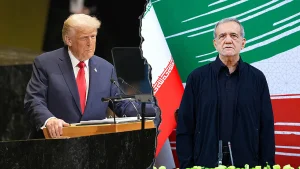
As Trump’s political influence deepened, the danger transitioned from localized acts of individual rage into highly coordinated, state-sponsored conspiracies that brought global geopolitical conflicts directly to his doorstep. During the final months of his first presidency and the subsequent launch of his 2024 campaign, the Secret Service found themselves fighting a multi-front war against both domestic extremists and sophisticated foreign operatives. In August 2020, the raw reality of this violence interrupted a live, televised press briefing when Trump was abruptly escorted from the podium after a Secret Service officer shot an armed suspect, Myron Basil Berryman, who was threatening lives just outside the White House gates. This was soon followed by a chilling incident involving Pascale Cecile Veronique Ferrier, a dual French-Canadian citizen who manufactured and mailed a highly lethal dose of ricin directly to the president, an act that ultimately earned her over twenty-one years in federal prison. However, the most ominous escalation occurred behind the scenes of his 2024 campaign, where the Department of Justice uncovered terrifying evidence of Iranian-backed murder-for-hire plots. Operatives like Asif Merchant, a Pakistani national working on behalf of Iran’s Islamic Revolutionary Guard Corps, and Farhad Shakeri, an Iranian government asset who was later killed in a U.S. military operation, were actively orchestrating elaborate conspiracies to assassinate Trump on American soil. These revelations stripped away any remaining illusion of safety, confirming that Trump was not merely facing the isolated anger of unstable individuals, but was firmly in the crosshairs of hostile foreign governments willing to deploy professional assassins to disrupt the American democratic process.
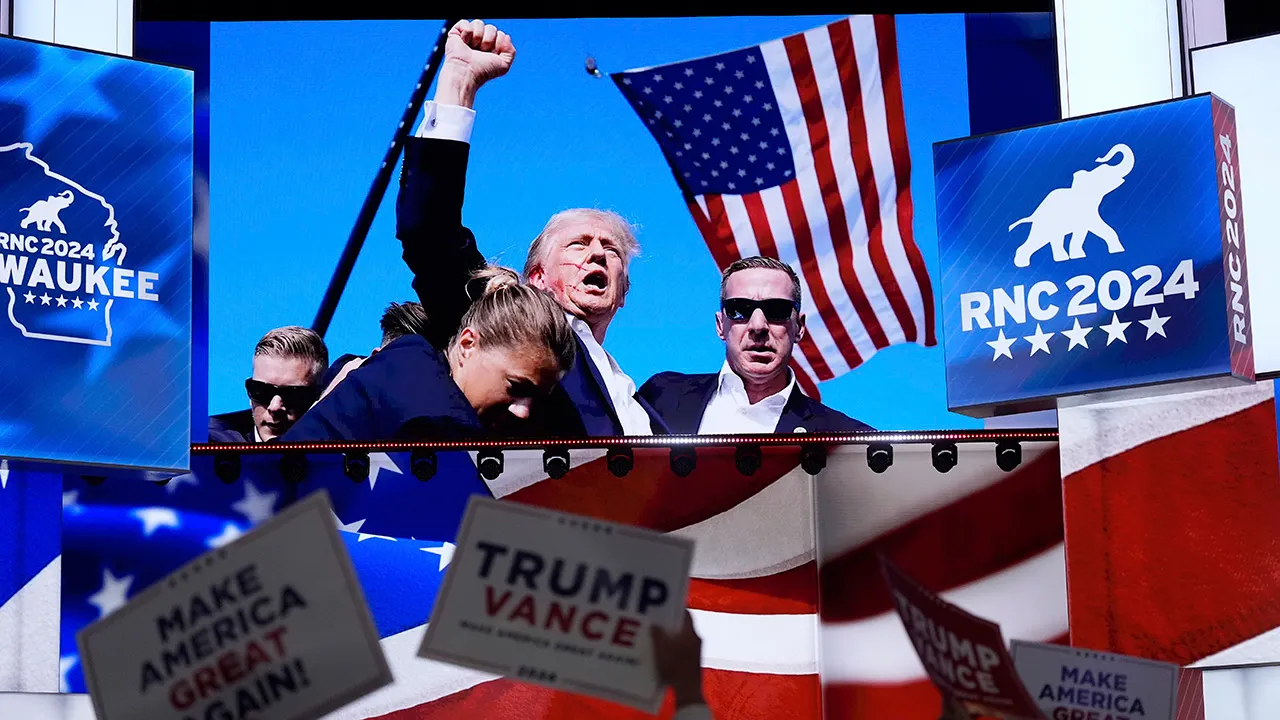
The summer and autumn of 2024 will forever be remembered as the moment this latent, simmering violence erupted into full-scale, bloody tragedy on the national stage, testing the limits of Trump’s personal fortitude. On a scorching July afternoon in Butler, Pennsylvania, the unthinkable occurred on live television. As Trump spoke to a sea of supporters, the sharp crack of rifle fire shattered the air; a twenty-year-old gunman, Thomas Matthew Crooks, had bypassed security to open fire from a nearby rooftop. A fraction of a second, a sudden turn of the head, was all that stood between life and death as a bullet tore through the upper cartilage of Trump’s right ear. Amidst the screams of the crowd, the tragic death of an innocent spectator, and the critical wounding of two others, Secret Service snipers neutralized the shooter, leaving a bloodied but defiant Trump to be rushed from the stage with his fist raised—an image of survival that instantly became an indelible chapter of American history. The psychological trauma of such an event would cause most human beings to retreat from public life, yet barely two months later, the specter of death returned. While enjoying a rare moment of recreation at his golf club in West Palm Beach, Florida, agents spotted the barrel of a rifle poking through the perimeter shrubbery. Ryan Wesley Routh had spent hours waiting in ambush, ready to execute the former president before he was spotted, hunted down, and subsequently sentenced to life in prison. These back-to-back, near-miss encounters solidified a grim reality: for Trump, even the most mundane activities had become high-stakes survival scenarios where the line between peace and violence was razor-thin.
Transitioning back into the White House for his second presidency in 2025 did not dilute the torrent of hostility, but rather seemed to accelerate it, ushering in an era where security breaches became increasingly frequent and lethal. The administrative halls of justice were flooded with cases of individuals consumed by a desperate desire to harm the president, such as Christopher Davies, a Florida inmate who wrote detailed letters claiming he had designed the ultimate presidential assassination plot, and Jauan Rashun Porter, a Georgia man who publicly proclaimed on social media that the only way to save the nation was to put a bullet between Trump’s eyes. Robert Herrera similarly threatened the president on social media ahead of a presidential visit to Texas, highlighting the sheer volume of digital venom directed his way. The physical reality of these threats turned deadly in February 2026, when a twenty-one-year-old armed driver named Austin Tucker Martin attempted to breach the secure gate of Mar-a-Lago, resulting in a fatal shootout with law enforcement. This escalatory trend culminated in a terrifying third major assassination attempt in April 2026, during the high-profile White House Correspondents’ Dinner. An armed assailant named Cole Allen charged a security checkpoint with multiple weapons, shooting and wounding an officer before being subdued. The fact that an assassination attempt could occur at one of Washington’s most traditional and heavily secured media galas illustrated a profound shift: the sacred, unifying spaces of American political culture had been thoroughly compromised by a relentless, violent obsession, forcing the president to govern from within a heavily fortified bubble of security.
As the timeline of threats stretched into the latter half of 2026, the nature of the conspiracies evolved to leverage modern warfare technologies and deeply personalized online hostility, reflecting a terrifyingly advanced level of planning that went far beyond lone-wolf shooters. In April 2026, officials unsealed a federal complaint against Kadrioan Serainity Santiago, a Kentucky man who posted graphic, politically violent threats on Instagram, detailing his desire to physically harm Trump and engage in violence against law enforcement. Just two months later, in June 2026, federal agencies disrupted an incredibly complex, high-tech terrorism conspiracy targeting a UFC event at the White House that Trump was scheduled to attend. A network of eight men was indicted for plotting to fly explosive-laden drones into the venue and open fire on the fleeing, panicked crowd—a chilling scenario that reads more like a theater of war than domestic political violence. Even a quiet fundraising dinner in California in August 2026 was compromised when Jeanine John Taele was arrested with a high-capacity magazine, loaded firearms, and a forged security agent badge, having spent hours documenting the security layout of the Trump National Golf Club. Ultimately, the story of these twenty threats is not just a chronicle of law enforcement triumphs or a catalog of criminal madness; it is a deeply human narrative about the immense personal cost of public service in a deeply fractured age. To endure a decade of constant, multi-faceted threats to one’s life—ranging from poisoned letters and stage-rushers to foreign hit squads, rooftop snipers, and explosive military drones—requires an almost unimaginable level of mental toughness. As Donald J. Trump continues to lead, his survival remains a testament to the tireless, life-saving efforts of his protective details, while serving as a somber, cautionary reflection on the volatile state of modern political discourse and the extreme dangers faced by those who dare to stand at the helm of the free world.