

The pre-dawn sky over Kyiv on August 4 was shattered by a violence that has become tragically familiar, yet no less terrifying, to the millions of Ukrainians who call the city home. In a relentless overnight barrage, Russian forces unleashed a devastating cocktail of twenty-four ballistic missiles, four cruise missiles, and more than a hundred drones, transforming quiet residential neighborhoods into cauldrons of fire and twisted metal. When the smoke finally cleared, at least seventeen lives had been extinguished—ordinary people who hours earlier had been asleep in their beds, hoping for a peaceful morning. For Ukrainian President Volodymyr Zelenskyy, this latest tragedy was not just a grim statistic; it was a painful and avoidable catastrophe. He made an urgent, emotional plea to his Western allies, pointing out that many of those lost lives could have been spared if Ukraine’s depleted stockpiles of advanced air defense interceptors had been replenished in time to shield his people from the falling sky.
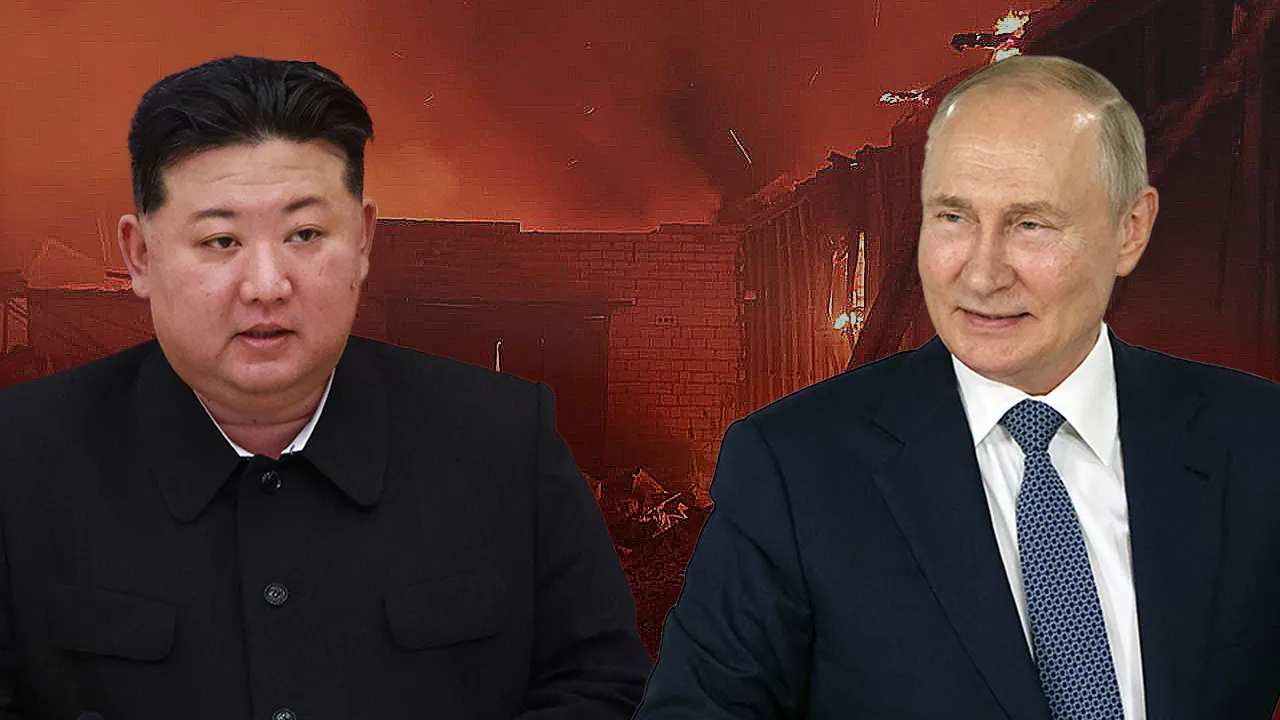
Yet, behind this immediate human tragedy lies a chilling geopolitical shift that threatens to plunge the region into an even darker phase of conflict. According to Andrii Cherniak, an official with Ukraine’s Main Directorate of Intelligence (HUR), Russia has begun deploying a specialized North Korean missile unit to its western Voronezh region—a direct escalation that signals a profound deepening of the military alliance between Moscow and Pyongyang. This newly established unit is reportedly equipped with up to 120 ballistic missiles and six specialized mobile launchers, all designed to rain destruction down on Ukrainian cities. To ensure these foreign weapons are utilized with maximum lethality, approximately ninety North Korean military personnel are expected to be stationed deep within Russian territory to facilitate the operations, signaling a level of direct military cooperation that was once unthinkable.
The weapons at the center of this burgeoning alliance are the KN-23 and KN-24 short-range ballistic missiles, a pair of highly maneuversome, solid-fueled projectiles designed by North Korea to evade traditional air defenses. Ukrainian intelligence reports that Pyongyang has recently delivered a fresh batch of forty of these missiles to Russian forces, adding to an estimated 150 missiles received since late 2023. Unlike slower cruise missiles or easily detectable suicide drones, ballistic missiles rocket high into the atmosphere before plunging down toward their targets at hypersonic speeds. Military analysts emphasize that intercepting such weapons requires highly advanced, expensive defense systems, such as the American-made Patriot system. By deliberately integrating these high-velocity North Korean missiles into their massive aerial assault packages, Russian commanders are attempting to overwhelm and exhaust Ukraine’s limited air defense grid, forcing local defenders to make agonizing split-second decisions about which incoming threats to engage and which to let fall.
For North Korea’s isolated regime, this war is not merely a diplomatic opportunity, but a live-fire laboratory of unprecedented value. By sending its hardware to the front lines of a European war, Pyongyang is gathering critical, real-world battlefield data on how its missile systems perform against state-of-the-art Western defense networks. Every intercepted missile, and every one that successfully strikes a Ukrainian apartment building or power plant, provides invaluable feedback that North Korean engineers can use to refine their guidance systems, payload capacities, and evasion techniques. This symbiotic relationship goes far beyond hardware; it is a transaction written in human lives. In addition to millions of artillery shells sent to sustain Russia’s grinding war of attrition, Pyongyang previously dispatched 14,000 of its own soldiers to Russia’s Kursk region to help counter Ukraine’s surprising cross-border incursion. While roughly 9,500 of those North Korean troops remain stationed in Kursk, currently held back from active combat, their very presence on European soil marks a historic and alarming escalation.
This unprecedented cross-continental partnership has sent shockwaves through international defense circles, with policy experts warning of a fundamental shift in the global balance of power. The Washington-based Foundation for Defense of Democracies (FDD) has characterized the relationship between Russia and North Korea as one of the most consequential alliances among modern authoritarian regimes, pointing out that it is currently the only partnership where one nation has actively deployed its own troops to assist another in an ongoing invasion. By stepping in to bolster Russia’s strained military machine, North Korea is not only securing vital economic aid, food, and potential space-launch technology from Moscow, but is also positioning itself as an indispensable global player capable of projecting power far beyond the Korean Peninsula. This alliance effectively links the security of Eastern Europe with that of East Asia, raising the stakes for global policymakers who must now counter a unified front of heavily armed adversaries.
As diplomats and military commanders from Moscow and Pyongyang prepare to meet next month to finalize the operational details of this new missile unit, the people of Ukraine are left to face the immediate consequences of these high-level negotiations. For the average citizen in Kyiv, Kharkiv, or Dnipro, the geopolitical maneuvering translates directly to the nightly terror of air raid sirens, the desperate rush to crowded basement shelters, and the constant, gnawing anxiety over whether the next explosion will claim their home. The deployment of North Korean troops and high-tech weaponry to the Voronezh region serves as a stark reminder that the war in Ukraine is no longer a localized conflict, but a globalized struggle where the hesitation of Western allies directly enables the cooperation of hostile regimes. Without a swift and decisive increase in air defense support from the international community, the skies over Ukraine will only grow more dangerous, and the human cost of this tragic alliance will continue to rise.