


The sudden and shocking news of Tony Romo’s arrest on suspicion of operating a vehicle under the influence (OWI) has sent massive shockwaves through the sports media landscape, fundamentally altering the trajectory of one of the most high-profile broadcasting careers in modern television history. For years, Romo lived a charmed public life, transitioning seamlessly from his polarizing, high-pressure, yet highly successful tenure as the starting quarterback for the Dallas Cowboys straight into the prestigious lead analyst chair at CBS Sports in 2017. Upon his high-profile debut, he was immediately hailed as a revolutionary breath of fresh air, captivating millions of viewers with his uncanny, almost supernatural ability to predict plays before they happened, a phenomenon that quickly earned him the affectionate nickname “Romo-stradamus.” His infectious enthusiasm, childlike wonder, and casual, conversational tone transformed the traditionally stuffy and predictable atmosphere of the NFL broadcast booth, making him an overnight darling of both casual fans and demanding television critics alike. However, the initial magic of Romo’s broadcasting style had begun to noticeably fade over the subsequent seasons, with a growing segment of the football-watching public expressing vocal frustration over what they perceived as a sharp decline in his weekly game preparation, a tendency to rely on repetitive vocal tics, and an increasingly chaotic, less informative presentation style during high-stakes matchups. This brewing undercurrent of viewer dissatisfaction created a fragile foundation for his career, and his recent off-field legal trouble appears to have shattered it entirely. In the highly competitive, image-conscious world of corporate network television, a personal crisis of this magnitude rarely exists in a vacuum; instead, it frequently serves as a catalyst for network executives who have already been privately weighing their options. Rather than rallying behind their once-untouchable star during a difficult personal moment, reports strongly suggest that CBS executives are actively viewing this unfortunate incident as a convenient, definitive turning point to permanently phase Romo out of their top broadcast crew, signaling a cold but highly calculated shift in their long-term programming strategy.
At the absolute core of this unfolding media drama lies a staggering amount of money, illustrating the high-stakes financial realities that govern modern sports television and corporate decision-making. Back in 2020, riding high on Romo’s immense popularity and the looming threat of rival networks poaching him, CBS signed the former quarterback to a historic, paradigm-shifting ten-year contract worth an astonishing $180 million, paying him a jaw-dropping $18 million annually. At the time, the record-breaking deal was celebrated as a milestone that completely reset the market for sports broadcasters, but behind the scenes, it also planted the seeds of long-term executive resentment within the network. As Romo’s on-air performance began to draw heavier criticism from media analysts and fans, CBS executives reportedly grew increasingly frustrated with the exorbitant return on their massive investment, feeling trapped by an astronomical salary that no longer aligned with the public’s perception of his on-air value or work ethic. This internal tension has now reached a critical boiling point, as CBS is currently on the hook for another $72 million over the next four years of Romo’s contract—a massive financial commitment that any major corporation would be incredibly eager to alleviate if given the opportunity. The legal mechanics of high-profile talent contracts often include strict personal conduct and “morals” clauses, which grant networks the right to terminate an agreement “with cause” if an employee engages in behavior that brings public disrepute, legal trouble, or embarrassment to the company. By leveraging the legal fallout of Romo’s OWI arrest, CBS’s corporate legal teams may have found the ultimate financial escape hatch, allowing them to void the remaining tens of millions of dollars on his contract, wipe their ledger clean, and gracefully exit a relationship that had transformed from a crown jewel into a highly expensive corporate liability.
In the immediate wake of Romo’s sudden sideline, CBS moved swiftly to stabilize its flagship broadcast by naming legendary defensive end and current studio analyst J.J. Watt as his interim replacement alongside play-by-play veteran Jim Nantz. Watt, a beloved national icon who built a first-ballot Hall of Fame career with the Houston Texans while winning three Defensive Player of the Year awards, represents an incredibly safe, universally respected, and highly energetic alternative for a network desperately trying to navigate a public relations storm. Since retiring from the active NFL roster and joining CBS’s highly rated pregame show, The NFL Today, Watt has proven himself to be an absolute natural in front of the camera, disarming audiences with his genuine charisma, self-deprecating humor, and deep, analytical understanding of modern football schemes. Stepping into the prestigious No. 1 booth is an entirely different beast than analyzing highlights from a studio desk, but Watt’s immense popularity, philanthropic history, and unblemished public reputation provide CBS with an instant shield against negative publicity. His presence in the booth injects a fresh, physical perspective into the broadcast, offering viewers a rare look at the game through the eyes of a dominant modern defender rather than the traditional quarterback-centric viewpoint that dominates the industry. However, while Watt is the perfect high-caliber band-aid to keep the broadcast running smoothly during this chaotic transition, the grueling travel schedule, intensive weekly film study, and production demands of a full-time lead color commentator are notoriously taxing for someone who highly values family time. Consequently, industry insiders believe that while Watt will handle his interim duties with his trademark professionalism and passion, CBS is looking beyond this temporary arrangement toward a permanent, blockbuster solution that can anchor their coverage for the next decade.
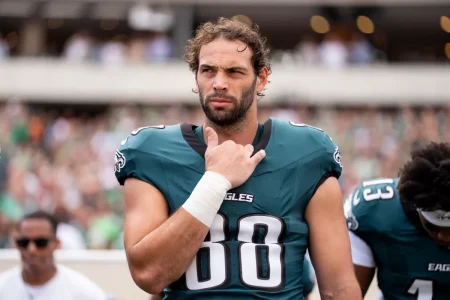
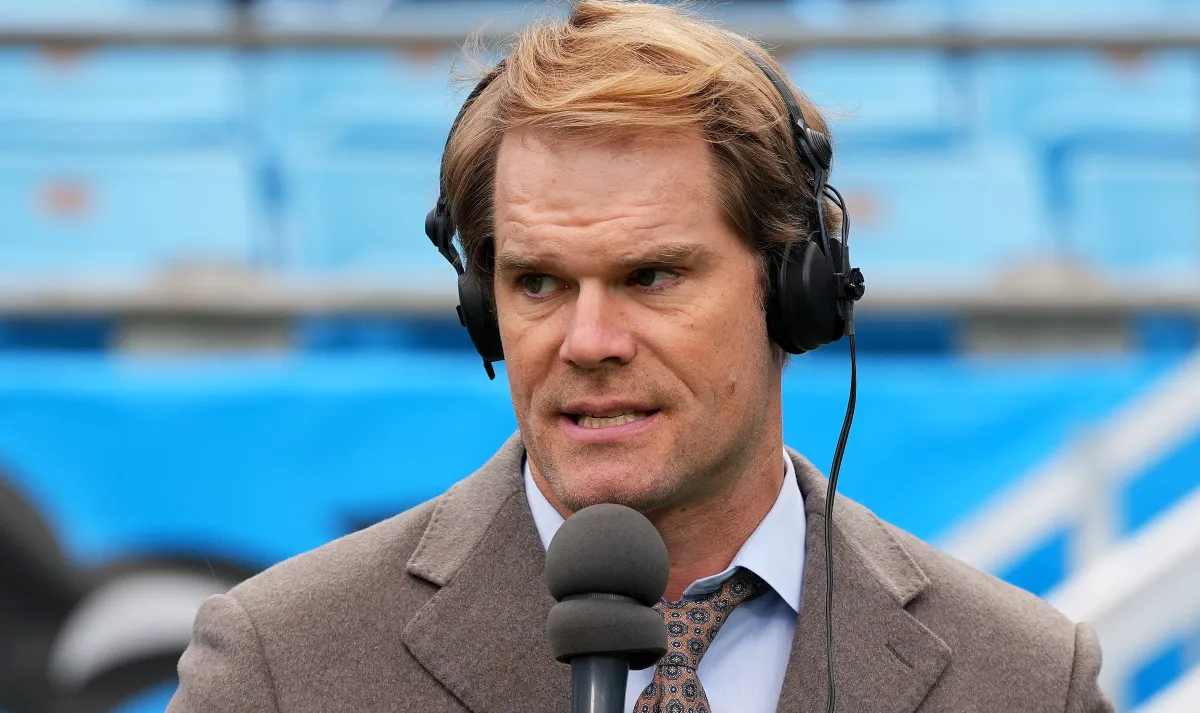
This search for a permanent successor has led CBS to aggressively eye one of the most talented and respected color commentators in the entire industry: former Pro Bowl tight end Greg Olsen. Olsen’s recent broadcasting journey is a compelling, highly human narrative of professional excellence overshadowed by corporate star-chasing, making him an incredibly sympathetic figure to football fans across the country who value substance over flash. After retiring from his stellar playing career with the Carolina Panthers, Olsen quickly established himself as a premier analytical mind, eventually earning the coveted No. 1 analyst role at Fox Sports alongside play-by-play announcer Kevin Burkhardt. The duo received rave reviews for their exceptional on-air chemistry, culminating in their flawless, widely praised coverage of Super Bowl LVII, where Olsen was lauded for his articulate, highly educational, and deeply engaging breakdown of complex modern football strategies. Despite his undeniable success, immense viewer popularity, and a reported salary of roughly $10 million per year, Olsen’s tenure at the top was cut short due to a massive corporate maneuver that had been years in the making. Fox had previously signed legendary quarterback Tom Brady to an unprecedented, eye-popping ten-year, $375 million contract, and the moment Brady officially retired and decided to enter the booth, Olsen was inevitably demoted to the network’s No. 2 broadcast crew, resulting in a staggering salary reduction down to $3 million per year. Olsen handled this incredibly public and professionally painful demotion with immense grace, continuing to deliver world-class broadcasts alongside Joe Davis, which only increased his standing as a highly overqualified and undercompensated asset sitting just beneath the surface at Fox, waiting for his next major opportunity.
The prospect of CBS poaching Greg Olsen from Fox represents a fascinating, high-stakes chess move in the ongoing, hyper-competitive war for sports television supremacy and viewer loyalty. For Olsen, a move to CBS would not only represent a triumphant, well-deserved return to a premier No. 1 broadcasting booth, but it would also serve as a profound professional vindication, allowing him to reclaim the elite status and national platform that he earned through sheer talent and hard work. However, luring Olsen away from his current home will not be a cheap endeavor for CBS; to secure his services and buy out his current contract, they will almost certainly have to offer a financial package that rivals or exceeds the $10 million annual salary he commanded during his peak at Fox. Yet, from a strategic standpoint, paying Olsen a premium salary is an incredibly logical and highly defensible move for CBS, especially if they successfully use the legal leverage of Romo’s troubles to void the remaining $72 million on his contract. By replacing Romo’s $18 million salary with Olsen’s projected contract, CBS could actually save millions of dollars annually while simultaneously upgrading the analytical quality and credibility of their top broadcast. Olsen offers a starkly different, highly structured approach to game commentary that contrasts sharply with Romo’s erratic, stream-of-consciousness style. Rather than relying on theatrical predictions and emotional outbursts, Olsen excels at breaking down the subtle nuances of offensive and defensive schemes in real-time, educating the viewer without ever talking down to them, a refined approach that is highly coveted by modern sports audiences who have grown weary of broadcasting gimmicks and crave genuine, high-level football analysis.
Ultimately, this dramatic upheaval within the CBS broadcast booth underscores the highly volatile, deeply unsentimental nature of the multi-billion-dollar sports entertainment industry, where personal fortunes can shift dramatically in the span of a single weekend. For Tony Romo, the situation is a deeply sobering reminder of how quickly a legacy can be tarnished, as a stellar athletic and media career is now overshadowed by a serious off-field mistake and a sudden corporate abandonment. For Greg Olsen, the unfolding situation offers a rare, poetic opportunity for redemption and justice, proving that true professional excellence cannot be permanently suppressed by corporate politics, massive contracts, or celebrity star-power. Meanwhile, J.J. Watt’s willing step into the spotlight further cements his status as one of the most versatile, reliable, and beloved figures in modern sports culture, capable of commanding any room or stadium he enters with ease. As the legal proceedings surrounding Romo play out and the high-stakes negotiations between CBS and potential replacements intensify behind closed doors, football fans are left to contemplate the fleeting nature of success in the NFL, both on the field and inside the television booth. The voices that guide us through the triumphs and tragedies of our favorite teams on autumn afternoons are, in the end, subject to the same relentless pressures and corporate calculations as the players wearing the helmets, proving that in the high-stakes game of network television, the show must always go on, regardless of who is left standing when the cameras turn off.