


For years, being a fan of the Washington Wizards felt like an exercise in beautiful, tragic endurance. It was an endless cycle of dark winter nights at the Capital One Arena, defined not by the thrill of victory, but by the slow, numbing ache of a rebuild that never seemed to find its footing. Last season’s abysmal 17-win campaign was the absolute rock bottom of this grueling process—a painful stretch of basketball where losses piled up like dry leaves in autumn and the future felt as dim as a fading streetlamp. Fans watched with a mix of apathy and despair as the team struggled to establish any semblance of identity, their competitive spirit swallowed by the sheer gravity of a league that ruthlessly punishes mediocrity and lack of direction. Yet, in professional sports, there is a delicate, unspoken poetry to suffering; the deeper the valley, the more spectacular the peak feels when you finally begin to climb back toward relevance. The draft lottery, so often a source of heartbreak and missed connections for the DMV faithful, finally smiled upon Washington, delivering a stroke of pure, unadulterated luck that has instantly injected life back into a dormant fanbase. This lucky break did not just bring a new player; it brought a collective exhale from a community that had starved for basketball relevance. It is a poignant reminder of why we watch, why we endure the cold, bleak stretches of rebuilding, and how quickly the winds of fortune can shift in the NBA when fate decides to intervene. This isn’t just about escaping the cellar of the Eastern Conference; it is about reclaiming a sense of civic pride and hope that had been lost in transition for far too long, proving that even the longest nights eventually give way to dawn.
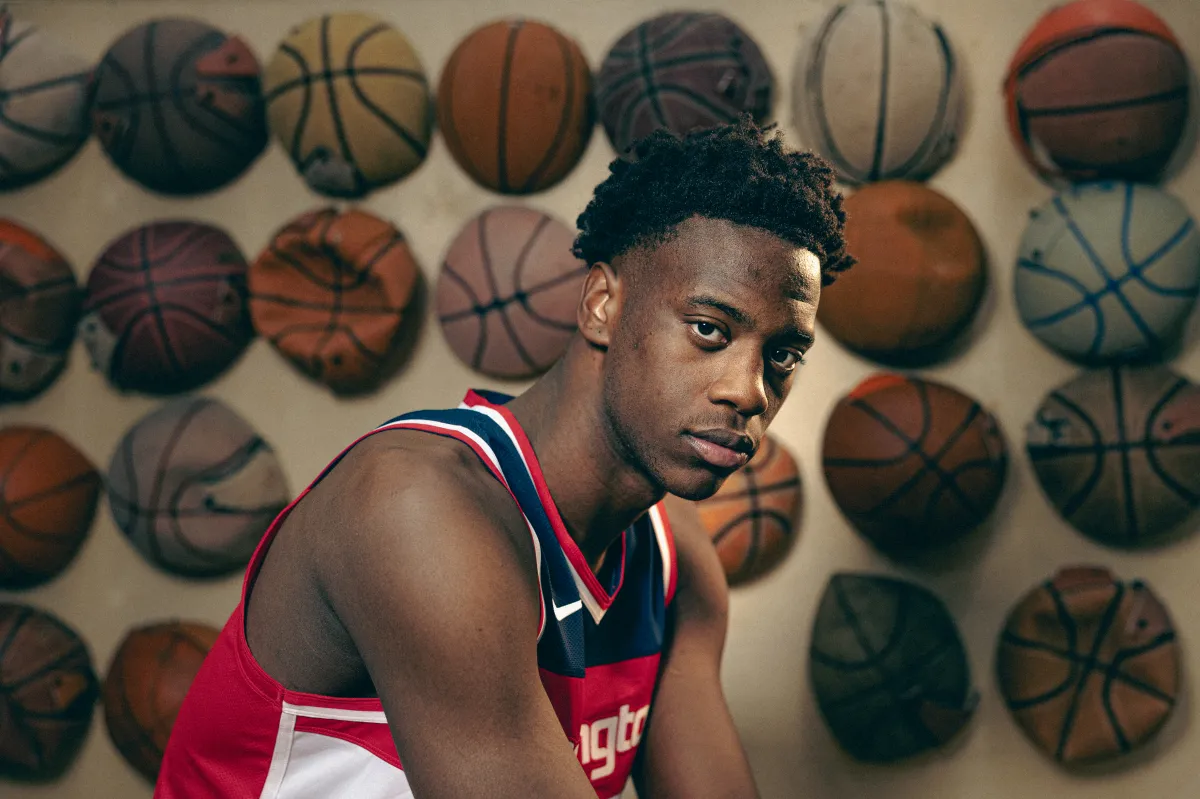
At the heart of this sudden, dizzying wave of optimism is A.J. Dybantsa, the prize of the draft and the newly crowned savior of Washington basketball. Landing the number one overall pick is more than just a transaction on a draft board or a lucky bounce of a ping-pong ball; it is a spiritual reset button for a franchise that has spent years searching for a true north star to guide its destiny. Dybantsa arrives in the nation’s capital not merely as a highly touted rookie with impressive high school mixtapes, but as the living embodiment of everything the Wizards have lacked: raw, unfiltered, game-changing potential that demands your undivided attention from the moment his sneakers squeak on the hardwood. His combination of imposing physical size, fluid athleticism, and effortless shot-creation represents the modern NBA ideal—a wing player capable of bending opposing defenses to his will, hitting contested step-backs, and generating electric excitement with every single possession. For the loyal fans who sat through the lean years, Dybantsa is a beacon of hope, a physical manifestation of the reward that comes from surviving the leanest of times. The sheer anticipation of seeing him don the red, white, and blue jersey has transformed the atmosphere around the team from one of quiet resignation to one of vibrant, impatient curiosity. He is the cornerstone upon which the next decade of Wizards basketball will be built, a young man carrying the immense, thrilling weight of an entire city’s basketball dreams on his shoulders, ready to turn potential into reality. He represents the bridge between the franchise’s historical struggles and a future where they can finally go toe-to-toe with the league’s elite. Every dribble he takes will be dissected, every jumper analyzed, but the underlying feeling is one of profound joy that Washington finally has a blue-chip prospect of this magnitude.
But the Wizards’ front office was smart enough to realize that placing the entire burden of a franchise’s salvation on the shoulders of a teenager is a recipe for developmental burnout and unfair pressure. To ensure Dybantsa has the room to breathe, make mistakes, and grow at his own pace, Washington has constructed a fascinating, high-octane veteran ecosystem around him, headlined by the blockbusting acquisitions of Anthony Davis and Trae Young. Bringing in two players of this pedigree is a dramatic, unmistakable statement of intent, signaling to the league that the era of passive tanking is officially over and the pursuit of competitive excellence has begun in earnest. Trae Young brings a level of elite playmaking, court vision, and long-range gravity that will instantly simplify the game for the young roster, acting as an offensive engine who can orchestrate complex possessions with surgical precision and find open shooters in their preferred spots. On the defensive end of the court, Anthony Davis provides the Wizards with something they have desperately craved for a generation: an elite, game-altering defensive anchor who can erase mistakes at the rim, secure crucial rebounds, and command absolute respect in the paint. This star-studded duo offers a masterclass in basketball excellence, giving the rookies a daily, front-row blueprint of what it takes to perform at an All-NBA level while shielding them from the intense media scrutiny that usually plagues high-profile draft picks. By sharing the floor with these established champions, the young core doesn’t just get better teammates; they get invaluable mentors who can teach them the nuances of professional basketball preparation, recovery, and execution. This blend of youth and experience creates a fascinating dynamic where the veterans provide the immediate competitive floor, while the rookies represent the limitless ceiling of what this team could eventually become when everything clicks.
Yet, as brilliant as this blueprint looks on paper, it is a high-wire act fraught with immense financial and physical risks that are bound to keep the front office awake at night. Trae Young’s massive new maximum contract extension is a staggering financial commitment that binds the franchise’s long-term salary cap flexibility to his ability to lead a championship-caliber offense without compromising team defense. At the same time, the haunting specter of Anthony Davis’s injury history looms over every single game, a fragile variable that could easily derail the team’s grand ambitions with a single misstep. The NBA is a brutal, unforgiving league where a single turned ankle, strained muscle, or microtear can instantly turn a promising, playoff-bound season into a cautionary tale of what might have been. Washington’s front office has essentially pushed all their chips to the middle of the table, gambling that Davis’s body can withstand the grueling rigors of an eighty-two game schedule and that Young can elevate his game to justify his astronomical paycheck under the bright lights of the capital. It is a calculated, terrifying risk that leaves very little room for error, as an injury to either star would expose the team’s depth and force the rookies into roles they are not yet ready to handle. But in a professional sports landscape where mediocrity is a slow death sentence, it is precisely the kind of bold, aggressive maneuver that separates passive observers from true competitors who are willing to risk failure for a shot at greatness. This high-stakes gamble adds an undeniable element of tension to the upcoming season, making every game a dramatic narrative of survival and performance. Fans will hold their breath every time Davis drives to the basket or falls to the floor, knowing that the thin line between a successful season and a catastrophic disappointment rests entirely on the health of these two superstars.
Beyond the immediate allure of the marquee stars, the true beauty and complexity of this roster lies in how the pieces will actually fit together on the hardwood. Alongside the big names sits an incredibly intriguing young core featuring Alex Sarr, Kyshawn George, Tre Johnson, and Will Riley—a group of versatile, hungry young talents who represent the team’s depth and future sustainability. The immediate challenge for the coaching staff is solving a complex human and tactical puzzle: how to share a single basketball among so many players who thrive when they are allowed to dominate possession. Trae Young is a ball-dominant virtuoso who commands the offense through high pick-and-rolls, while Dybantsa is at his best when he is allowed to isolate, create, and attack, meaning both must learn the delicate art of sacrifice, off-ball movement, and mutual trust to coexist effectively. This transition from individual potential to collective harmony is never easy, requiring young players to suppress their statistical egos and established stars to adapt their playing styles for the greater good of the team. If they can find that elusive chemistry, the Wizards will possess a dynamic, multi-layered attack that can torture opponents in transition and break them down in the half-court with various offensive options. It requires a psychological shift from everyone involved, transforming a collection of highly talented individuals into a cohesive unit that celebrates each other’s success. The development of this chemistry will be a gradual process, likely marked by early-season growing pains, miscommunicated passes, and defensive breakdowns. However, watching these young prospects interact with seasoned veterans, learning when to defer and when to assert themselves, will be one of the most intellectually satisfying aspects of the season for basketball purists who appreciate the art of team building.
Ultimately, it would be foolish and unrealistic to expect this newly assembled squad to instantly morph into a seasoned championship contender overnight, as genuine chemistry takes time to brew and mistakes will inevitably be made. There will be nights of sublime, breathtaking basketball where everything clicks, the ball flies around the perimeter, and the crowd is whipped into a frenzy, juxtaposed with frustrating evenings of sluggish play, high turnovers, and defensive lapses as they find their collective rhythm. But for the first time in what feels like an eternity, Washington basketball is pressure-tested, relevant, and undeniably, thrillingly alive, offering its long-suffering fans a product that is genuinely worthy of their emotional investment, hard-earned money, and passion. The realistic goal for this upcoming season is not necessarily hoisting a Larry O’Brien trophy, but rather the visible, tangible progress of a young team learning how to win close games together under the steady guidance of elite veterans. It is about laying the cultural foundation of a winner, transforming the Capital One Arena back into a feared fortress where opposing teams dread to play, and showing the rest of the league that the Wizards are no longer a rebuilding punching bag. The long, agonizing wait in the dark is finally over; a new, captivating era of Washington basketball has officially arrived, and it promises to be one of the most fascinating journeys in modern sports history. As the season tips off, the air in D.C. is thick with anticipation, not of perfection, but of possibilities. Fans can finally look at the roster and see a clear path forward, a vision of what basketball can and should be in the nation’s capital. The journey will be long and filled with obstacles, but the foundation is set, and the Wizards are ready to fly.