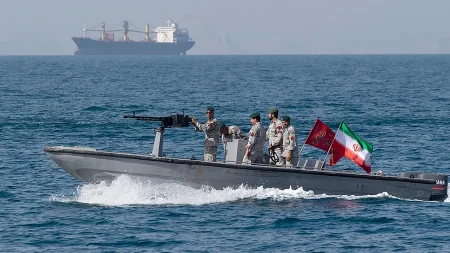



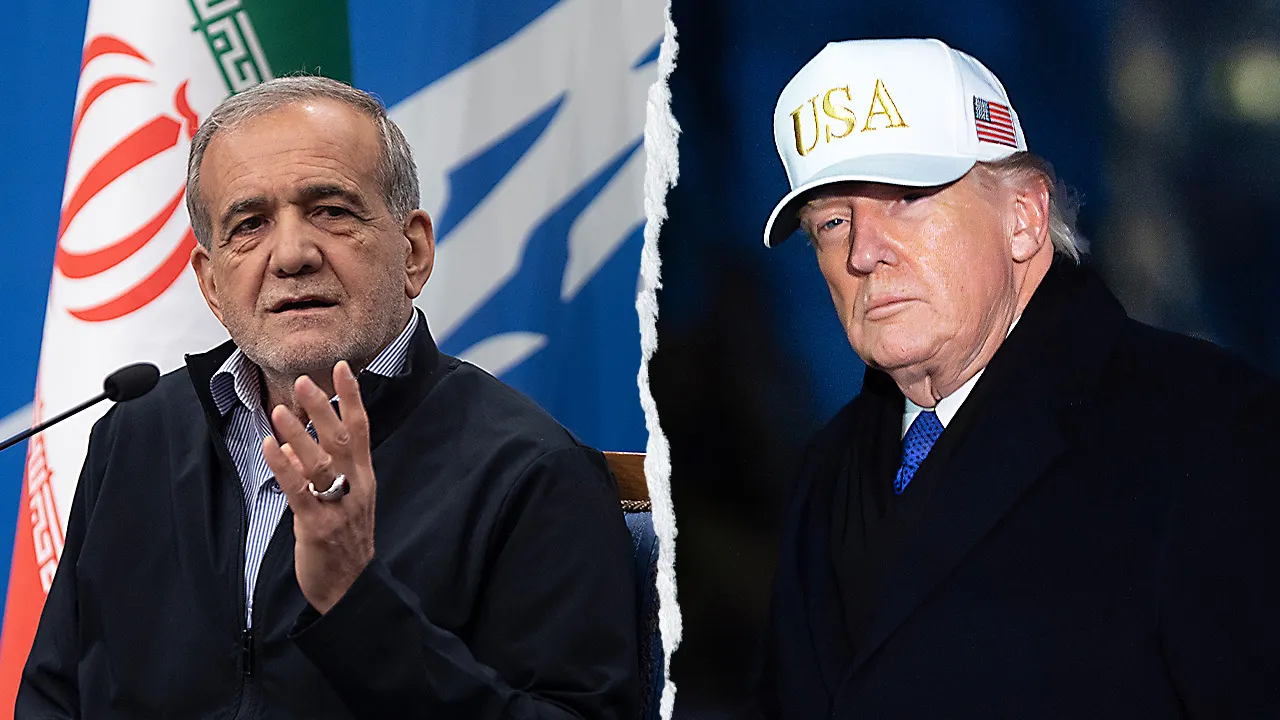
The delicate and often volatile tapestry of Middle Eastern diplomacy was thrown into sharp relief this week as a single phone call exposed the massive chasm between Washington’s high-stakes peace initiatives and the gritty geopolitical realities on the ground. Iranian President Masoud Pezeshkian reached out directly to Khalil al-Hayya, the newly minted head of Hamas’s political bureau, to offer his heartfelt congratulations and, more importantly, to reaffirm Tehran’s unwavering financial, military, and ideological backing. This calculated show of solidarity arrived at a highly inconvenient moment for the White House, coming on the heels of President Donald Trump’s triumphant announcement of a “historic agreement” designed to systematically disarm Hamas and strip the militant organization of its governing power in the war-torn Gaza Strip. According to an official Hamas statement released in Arabic, Pezeshkian assured al-Hayya that Iran would stand resolutely by the group’s side, offering support for “every action” they take despite the intense external pressures and military actions currently directed at the Islamic Republic itself. This direct communication underscores the central contradiction plaguing the American peace effort: while U.S. diplomats paint a picture of a breakthrough roadmap that will neutralize Hamas as a military threat, the group’s primary regional patron is publicly doubling down on its commitment to keep the organization armed and active. For foreign policy observers, this dynamic raises immediate and pressing questions about the viability of any disarmament initiative. Can a militant group deeply embedded in its territory be persuaded—or forced—to surrender its vast arsenal of weapons when its wealthiest and most powerful backer continues to promise unlimited support, effectively signaling that the fight is far from over?
At the heart of the U.S. administration’s ambitious postwar strategy is the newly established “Board of Peace,” a high-powered, handpicked body chaired by President Trump himself and designed to serve as the primary engine for implementing Washington’s vision in Gaza and beyond. This elite panel features an influential roster of political heavyweights, including Secretary of State Marco Rubio, special envoy Steve Witkoff, senior advisor Jared Kushner, and former British Prime Minister Tony Blair—a lineup clearly intended to project a mixture of corporate dealmaking acumen, historical diplomatic experience from the Abraham Accords, and seasoned international diplomacy. The board’s central guiding document is a complex 15-point roadmap that envisions a complete overhaul of Gaza’s governance and security infrastructure. Under this plan, civilian administrative duties would be transferred to a newly formed, technocratic Palestinian body known as the National Committee for the Administration of Gaza, while Hamas-run police forces would be required to immediately hand over their light weapons to this transition team. The far more contentious elements of the deal, such as the dismantling of heavy weapons stockpiles, the destruction of underground tunnel networks, and the decommissioning of military production sites, are scheduled to take place in later, conditional phases linked directly to the gradual withdrawal of Israeli forces. However, this elaborate framework remains plagued by structural ambiguities and massive financial hurdles; while the total cost of rebuilding the shattered enclave is estimated at a staggering $70 billion, the Board of Peace has so far secured only about $7 billion in international pledges, leaving a massive funding deficit that threatens to halt the entire reconstruction process before it even begins.
For the ordinary families and war-weary civilians surviving amidst the rubble of the Gaza Strip, these high-level diplomatic maneuvers are viewed with a mixture of desperate hope and profound skepticism. Moumen al-Natour, a prominent Palestinian lawyer and a co-founder of the grassroots, anti-Hamas activist movement “We Want to Live,” provides a crucial, humanizing perspective on what the U.S.-backed peace agreement actually means to the people on the ground. Having previously been imprisoned and tortured by Hamas security forces for daring to protest their authoritarian rule, al-Natour speaks with the authority of someone who understands the group’s brutal internal enforcement mechanisms firsthand. He emphasizes that while the vast majority of Gazans are utterly exhausted by the relentless violence and yearn for a new, peaceful government that can restore basic human dignity, they have absolutely no faith that Hamas will voluntarily relinquish its grip on power. Al-Natour warns that the militant group is highly skilled at exploiting bureaucratic delays, ceasefire negotiations, and diplomatic gray areas to buy time, regroup, and quietly intimidate any local dissenting voices. He argues that a small, symbolic international monitoring force of a few hundred personnel would be laughably inadequate to protect the civilian population or prevent Hamas from re-establishing its shadow governance. Instead, al-Natour and his grassroots network advocate for a much larger, robust international security presence and the creation of heavily protected civilian safe zones near the “yellow line”—the strategic boundary separating Israeli-controlled sectors from the rest of Gaza—where residents could safely transition to life under a new, moderate Palestinian administration.
This deep-seated skepticism is shared by seasoned military intelligence analysts who argue that Hamas’s apparent willingness to engage with the transition plan is a calculated tactical maneuver rather than a genuine shift toward peaceful coexistence. Michael Milstein, the former head of the Palestinian Studies department within Israeli military intelligence and currently a senior researcher at Tel Aviv University, points out that the compromise currently on the table has been quietly brokered over several months through intense diplomatic pressure from regional mediators like Qatar, Turkey, and Egypt. According to Milstein, Hamas’s leadership is highly unlikely to accept complete, unconditional disarmament, as doing so would mean the political and physical suicide of their movement. Instead, the group is actively trying to steer the peace process toward what he terms the “Hezbollah model,” an arrangement similar to the political landscape in Lebanon. In this scenario, Hamas would gladly hand over the mundane, highly expensive responsibilities of civilian administration, municipal services, and rubble clearance to an international technocratic body, thereby relieving itself of the burden of governing a devastated population. Meanwhile, beneath this veneer of civilian reform, the group would preserve its core military cadre, its underground networks, and its ideological influence, allowing it to maintain a powerful, armed veto over any future Palestinian government. By exploiting the strategic ambiguities in the Board of Peace’s roadmap—specifically the unresolved question of who must disarm first and how that compliance will be verified—Hamas hopes to emerge from the ruins of this war as a permanent, armed shadow state.
The diplomatic tightrope is made even more precarious by the fierce political resistance and internal division mounting within Israel’s own governing coalition. This domestic friction reached a boiling point during a tense, closed-door meeting between Prime Minister Benjamin Netanyahu and senior Board of Peace representatives, including director-general Nickolay Mladenov and advisor Aryeh Lightstone, who traveled to Israel to urge a temporary halt to military operations and advocate for a phased withdrawal. Almost immediately following the conclusion of these discussions, Israeli officials publicly rejected the board’s key demands, declaring in no uncertain terms that Israel would not withdraw from its current strategic lines in Gaza nor cease its targeted operations against suspected terrorist threats. This defiance was further amplified by influential far-right members of Netanyahu’s cabinet, such as Finance Minister Bezalel Smotrich and Settlements Minister Orit Strock, who penned an urgent and highly critical letter warning that the U.S. roadmap poses an existential danger to Israel’s national security. These ministers argued that the proposed plan contradicts Israel’s core wartime objective of total demilitarization by allowing weapons to be transferred to a new, unproven Palestinian authority rather than being completely destroyed or handed over to Israeli control. They also fiercely objected to the sequence of the transition, pointing out that initiating an Israeli military withdrawal while the disarmament process is still in its infancy would leave Israeli communities highly vulnerable to a sudden, coordinated resurgence of militant violence, thereby exposing the deep ideological rifts that threaten to tear Netanyahu’s coalition apart from within.
As the dust begins to settle on these initial diplomatic skirmishes, the grand vision of Trump’s Board of Peace finds itself precariously balanced on the edge of a familiar, historic precipice. The fundamental question that has derailed every previous attempt at resolving the Israeli-Palestinian conflict remains entirely unanswered: can a deeply ideological, heavily armed non-state actor like Hamas ever be truly integrated into a peaceful, demilitarized civil society, or is the promise of disarmament merely a dangerous illusion? While the White House continues to champion its 15-point roadmap as a groundbreaking, pragmatic path toward a transformed Middle East, the harsh realities of the region—manifested in Iran’s defiant pledges of military support, Hamas’s strategic calculations, and the domestic political constraints of the Israeli leadership—suggest that the road ahead will be defined by friction rather than consensus. The tragic irony is that while diplomats, politicians, and military strategists debate the semantic nuances of compliance, withdrawal lines, and technocratic administration, the fate of millions of innocent lives continues to hang in the balance. Ultimately, the success of this ambitious initiative will not be measured by the signing of historic agreements or the gathering of billions of dollars in international aid pledges, but by whether the international community can build a secure, trustworthy framework that protects ordinary civilians from the threat of violence. Without a clear, enforceable mechanism to ensure that weapons are permanently removed from the equation, there is a very real danger that this latest peace effort will simply go down in history as another well-intentioned chapter in a tragic, seemingly endless cycle of conflict.