


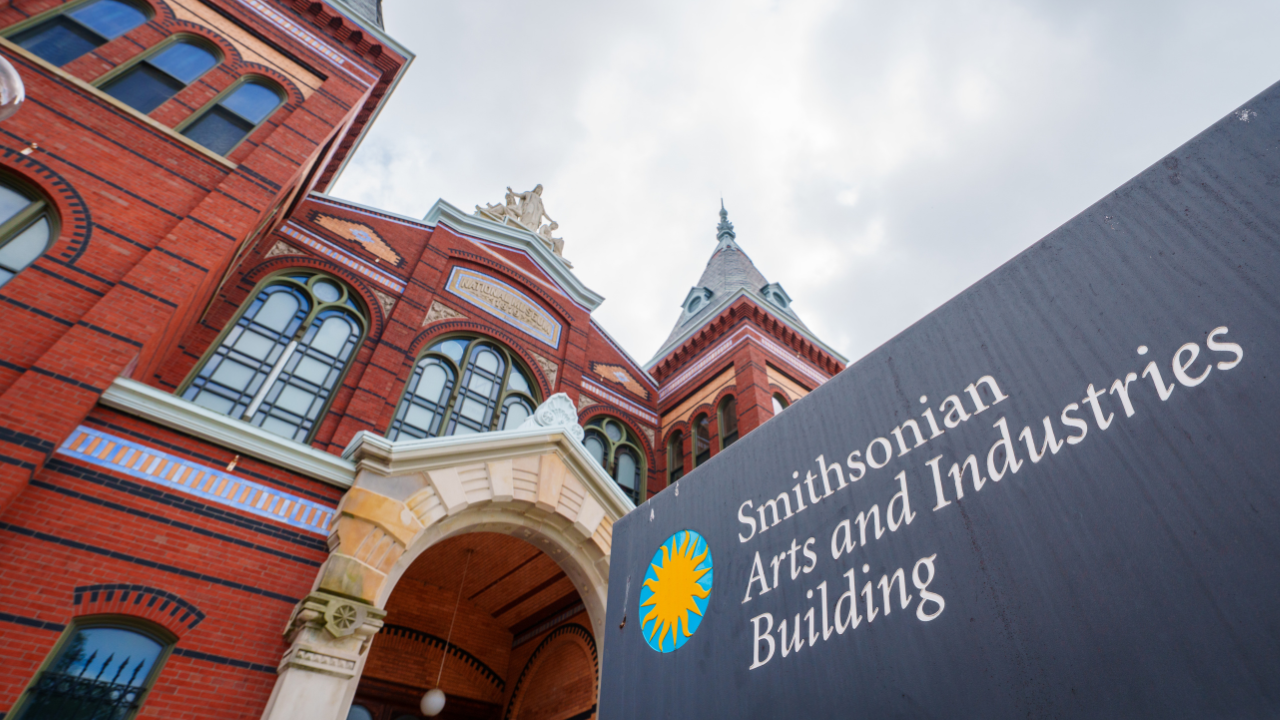
To walk through the grand, vaulted halls of the Smithsonian Institution on any given afternoon is to witness a living tapestry of the American experiment. Families from every corner of the globe stroll past the towering African bush elephant in the Natural History Museum, gaze in quiet reverence at the fragile, battle-torn threads of the Star-Spangled Banner, and look up in awe at the historic aircraft suspended in the silence of the Air and Space Museum. For generations, this sprawling network of museums—affectionately dubbed “the nation’s attic”—has served as a sacred, neutral ground where the triumphs, tragedies, and complexities of human history are preserved for all of humanity to contemplate free of charge. Yet, behind the stone facades and glass display cases, a quiet but profound transformation is underway. The Trump administration has embarked on an ambitious, highly coordinated effort to fundamentally reshape the identity of the federally funded institution, targeting both its physical purse strings and its philosophical soul. By proposing the smallest federal budget request the Smithsonian has seen in years, the administration is attempting to dismantle what it describes as “woke” ideological capture within our national museums, signaling a dramatic shift in how the story of America will be curated, preserved, and presented to future generations of visitors.
This ideological tug-of-war is directly reflected in the cold, hard mathematics of federal budget proposals, though the human consequences of these figures stretch far beyond the ledger books. Throughout the Biden administration, funding requests for the Smithsonian climbed steadily each year, reflecting an era focused on expanding inclusivity, digitizing archives, and building new spaces like the National Museum of the American Latino and the Smithsonian American Women’s History Museum. These annual budget requests rose from $1.11 billion in fiscal year 2021 to a historic high of $1.24 billion in fiscal year 2024, representing a concerted effort to broaden the institutional footprint and diversify the narratives told on the National Mall. However, the newly proposed budgets for fiscal years 2026 and 2027 aim to aggressively reverse this upward trajectory, slashing the Smithsonian’s annual funding request back below the $1 billion threshold for the first time since fiscal year 2020. For the everyday visitor and the dedicated museum staff, a funding cut of this magnitude is not merely a bureaucratic adjustment; it threatens the very operational heartbeat of the institution. It translates directly to difficult conversations about deferred maintenance on historic structures, potentially shorter visiting hours for families traveling from afar, reduced security presence, and a scaling back of public educational programs that inspire millions of school children who walk through these doors every year.
The fiscal retrenchment is the financial teeth of a much larger, highly intensive 16-month investigation conducted by the White House into the inner workings of the museum complex. This extensive review represents one of the most intrusive and thorough examinations of a federally funded cultural institution in modern history, shaking the daily routine of curators, historians, and educators who have long operated under the assumption of academic independence. For over a year, administration officials conducted exhaustive walkthroughs of galleries, combed through internal administrative records, analyzed public leadership statements, and interviewed the museum curators who design the exhibits. This exhaustive process culminated in a massive 162-page White House report that critiques the current state of the Smithsonian, alleging that the institution has drifted from its core mission by promoting modern sociological theories at the expense of traditional historical narratives. To the historians and curators on the ground, many of whom have spent their entire lives studying specific, nuanced chapters of human history, this review has introduced an atmosphere of intense scrutiny and anxiety, forcing them to balance their professional commitment to objective, comprehensive historical research with the shifting political mandates of the federal government that funds their livelihoods.
At the absolute heart of this conflict lies a deeply human, emotional debate over what it truly means to present an “accurate” portrayal of American history in a deeply divided country. On one side of this cultural divide, the Trump administration and its supporters argue that taxpayer-funded institutions have a fundamental duty to foster national unity, patriotism, and a shared appreciation for the foundational principles and heroic figures that built the United States. From this perspective, exhibits that place an excessive emphasis on systemic injustices, racial grievances, or modern progressive social theories serve to divide the public rather than unite them, distorting the American story into one of perpetual conflict. Conversely, many civil rights advocates, historians, and diverse communities argue that the truest form of patriotism lies in confronting the past with unflinching honesty, including both its shining achievements and its darkest failures. For these groups, seeing the struggles of marginalized communities, the pain of segregation, and the long fight for equality represented in our national museums is not “woke” posturing, but a vital and overdue validation of their place in the American story, proving that the nation is a continuous work in progress striving toward a more perfect union.
Beyond the ideological battles and political rhetoric, the physical reality of maintaining the Smithsonian is an astonishingly massive, quiet labor of love carried out by thousands of unseen hands. The Smithsonian is a breathtakingly vast network, encompassing 21 world-class museums, the National Zoo, and a staggering collection of nearly 157 million objects, specimens, and historical artifacts. Behind the scenes, away from the bustling crowds of tourists, are the dedicated caretakers of our collective heritage: the zoologists feeding endangered pandas at dawn, the conservators meticulously cleaning centuries-old oil paintings with microscopic precision, the archivists preserving fragile slave diaries, and the scientists analyzing ancient fossils to help us understand the future of our planet. When federal funding is sharply curtailed, it is these quiet, essential endeavors that are placed at risk. The struggle to preserve 157 million items of human achievement requires constant, climate-controlled vigilance, specialized security, and expensive scientific technology, making the debate over federal funding a matter of literal preservation for artifacts that, once lost to decay or neglect, can never be replaced.
As this dramatic policy shift unfolds, the ultimate fate of the Smithsonian’s budget and its educational programming remains hanging in the balance, awaiting the final decisions of a divided Congress that holds the ultimate power of the purse. While executive orders, rigorous administrative reviews, and sweeping White House reports can set a powerful ideological agenda and direct internal policy, the actual dollars and cents must still be negotiated and approved by lawmakers on Capitol Hill. This ongoing struggle serves as a powerful reminder that our national museums are not merely static, dusty tombs of the dead, but are dynamic, living mirrors of our active democracy, reflecting the ongoing debates, values, and identity crises of the society that builds them. Whether the Smithsonian emerges from this period of intense political scrutiny as a more traditional bastion of national pride or continues its evolution toward presenting a highly diverse, complex, and sometimes painful mosaic of the American experience, the current debate underscores a fundamental truth: how we choose to fund, curate, and tell our collective history is a direct reflection of who we are today, and who we hope to become tomorrow.