

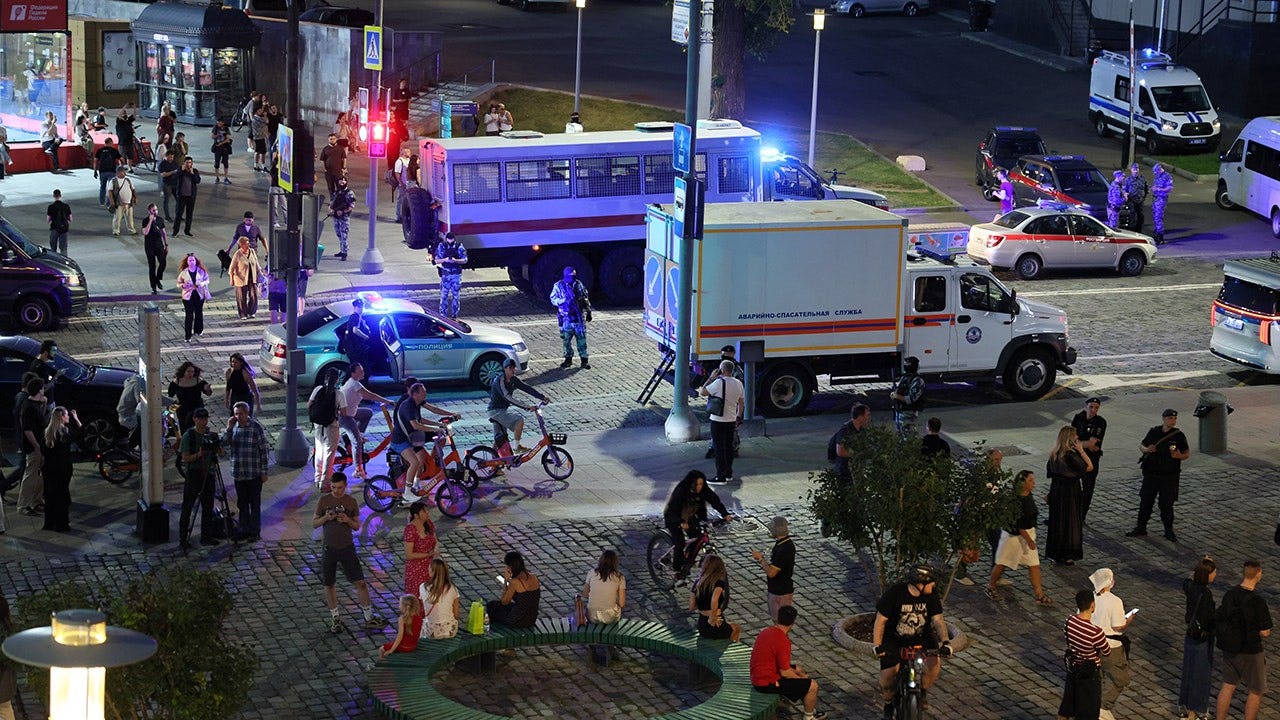
On what should have been a peaceful Saturday evening, the majestic silhouette of Kudrinskaya Square—home to one of the iconic “Seven Sisters” skyscrapers built during the height of the Stalinist regime—stood as a towering symbol of Moscow’s architectural grandeur and historical endurance. Its imposing, Gothic-revival facades were bathed in the soft glow of city lights, casting a deceptive aura of tranquility over the bustling Russian capital. Nestled on the ground floor of this historic monolith was Balzi Rossi, an opulent, high-end Italian restaurant famed for its exquisite culinary offerings, lavish interior design, and an elite clientele seeking a brief, luxurious respite from the stress of daily life. On this particular night, the restaurant’s grand terrace was closed to the general public for a private event—a gathering of friends, colleagues, or families looking forward to an evening of warm conversation, laughter, and celebration. Yet, around 8:00 p.m., this sanctuary of luxury was violently shattered in a single, catastrophic instant. A massive explosion, triggered by a crude but devastatingly powerful homemade explosive device, ripped through the ground-floor terrace with an earsplitting roar. The shockwave shattered the towering glass windows, tore through the elegant outdoor seating, and sent plumes of thick, black smoke billowing into the evening sky. Within seconds, an atmosphere of joy and sophistication was replaced by a chaotic nightmare of twisted metal, burning debris, and the desperate screams of survivors, marking a sudden and terrifying intrusion of violence into the very heart of Moscow.
Behind the stark statistics of this tragedy lies a deeply human story of courage, sacrifice, and the heartbreaking randomness of human fate. At the center of this sudden confrontation was a dedicated security guard whose split-second decision likely prevented an even more unimaginable catastrophe. Stationed at the entrance of the private event, this guard stood as the final line of defense when a woman approached the terrace carrying a concealed, highly volatile homemade bomb, with the clear and malicious intention of infiltrating the crowded gathering. Recognizing that something was deeply amiss, the guard refused her entry, bravely standing his ground to protect the unsuspecting patrons laughing and dining just yards away. In that tense, final moment of refusal, the device detonated. The blast claimed the lives of three individuals instantly: the female assailant, the heroic security guard who made the ultimate sacrifice in the line of duty, and an innocent restaurant patron whose evening of relaxation was tragically cut short by the explosion. The loss of these lives sends a ripple of profound grief through their families, turning a routine Saturday night shift into a final act of heroism, and a simple dinner reservation into a sudden, devastating tragedy that will forever leave empty chairs at three family tables.
The physical and psychological aftermath of the explosion on Kudrinskaya Square was immediate, overwhelming, and deeply painful, painting a grim picture of human vulnerability in the face of terror. At least twenty-one other people suffered various degrees of injuries, ranging from severe shrapnel wounds and burns to profound psychological shock. Emergency medical vehicles, fire trucks, and heavily armed law enforcement officers flooded the scene within minutes, their flashing red and blue lights reflecting off the cracked pavement and the shattered glass of the restaurant’s ruined facade. Paramedics worked frantically under the shadow of the Stalinist skyscraper, administering first aid on the pavement, comforting blood-stained and dazed survivors, and rushing the critically wounded to nearby hospitals. The Moscow Investigative Committee, alongside specialized forensics teams, quickly cordoned off the area to begin an active, painstaking investigation into the debris. For the survivors, the physical wounds may eventually heal, but the mental trauma of being caught in a sudden, violent blast while doing something as ordinary as dining with friends will linger for a lifetime, serving as a constant reminder of how quickly safety can vanish in the modern age.
This devastating attack does not exist in a vacuum; it occurs against a backdrop of escalating domestic tension and a prolonged, bloody conflict that has increasingly breached the borders of everyday Russian life. As the war in Ukraine drags on with no end in sight, the shadow of conflict has crept steadily closer to the Russian capital, shifting from a distant geopolitical event on state television to a terrifying, localized reality on the streets. Earlier this year, Russia’s Federal Security Service (FSB) openly acknowledged the rising threat level within the country, announcing plans to significantly bolster security measures for high-level officials following a series of targeted assassinations and high-profile sabotage operations. The blast at Balzi Rossi, located just miles from the Kremlin, underscores the vulnerability of even the most heavily monitored urban centers in the country. It highlights the growing challenges faced by domestic security agencies trying to maintain a facade of normalcy and safety in a country increasingly on edge, where the front lines of a geopolitical struggle seem to be manifesting on civilian streets through acts of sudden, unpredictable violence.
For the everyday residents of Moscow, the explosion at a beloved local establishment is a sobering reminder of the fragile peace in which they now live. Going out to a restaurant, walking through a historic square, or gathering with loved ones are basic human pleasures that have now been tinged with a quiet, underlying anxiety. The humanization of this tragedy lies in the shared collective fear of a population realizing that no space, no matter how affluent, exclusive, or heavily guarded, is entirely safe from the reach of political violence. The luxury of Balzi Rossi, once a symbol of Moscow’s vibrant, cosmopolitan lifestyle and economic resilience, now stands as a dark monument to vulnerability and fear. This incident forces a collective introspection among citizens who must grapple with the reality that the geopolitical decisions of their leadership carry direct, physical consequences for ordinary people who simply wish to live their lives in peace, far removed from the battlefields.
Ultimately, the tragedy on Kudrinskaya Square serves as a stark testament to the true cost of conflict, which is always paid in human currency rather than political capital. Beyond the geopolitical posturing, military alliances, and official security briefings, the core reality of this event is defined by the grief of parents who lost their children, the agony of those recovering in hospital beds, and the lingering fear of a community shattered by violence. As investigators continue to sift through the charred ruins of Balzi Rossi to piece together the exact mechanics of the bomb, the families of the victims are left to piece together their broken lives. This senseless loss of innocent lives highlights the profound tragedy of a world where violence has become a primary language of grievance, leaving a trail of sorrow that no political victory or military triumph can ever truly justify or heal.