

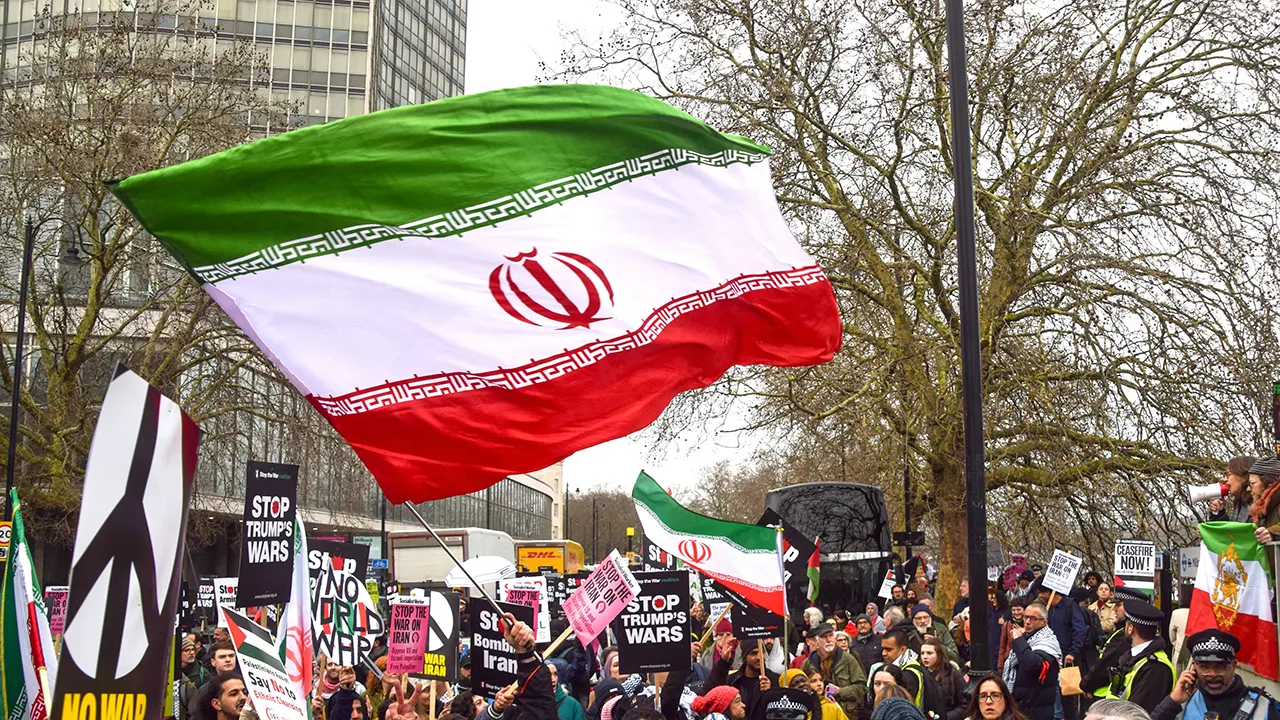
The quiet, leafy streets of Maida Vale, a picturesque neighborhood in west London, have unexpectedly become the battleground for one of the most pressing national security and foreign policy debates in modern Britain. For years, local residents and worshippers walked past the ornate doors of the Islamic Center of England, viewing it simply as a place of spiritual reflection, cultural heritage, and community engagement. However, a series of damning intelligence reports and warnings from leading Middle East experts have cast a dark shadow over the institution, alleging that it functions as a highly sophisticated, covert outpost for Iran’s Supreme Leader, Ayatollah Ali Khamenei. This is not merely a localized dispute over administrative compliance, but a high-stakes geopolitical confrontation happening right on British soil. The revelations emerge at an incredibly volatile moment, precisely when Tehran has publicly warned that the United Kingdom will be deemed a legitimate military target if it permits the United States to utilize British airbases for missions against Iran. The idea that a hostile, foreign dictatorship, actively opposed to Western democratic values, might have established a fully functional ideological and logistical beachhead in the heart of London has sent shockwaves through the public and the political establishment. It forces a deeply uncomfortable realization upon a democratic society: that the very mechanisms of tolerance, religious freedom, and charitable status designed to protect minority communities can be systematically co-opted and weaponized by foreign adversaries to undermine domestic safety and sovereignty from within. For the people who live and work in these neighborhoods, the realization that global geopolitics and state-sponsored espionage are unfolding on their doorstep brings a quiet, nagging sense of vulnerability to their daily lives, transforming their peaceful surroundings into a focal point of international intrigue.
At the core of this escalating controversy lies a staggering loophole within the United Kingdom’s immigration and national security frameworks—one that has allegedly allowed the Islamic Center to actively sponsor visas for foreign imams under the guise of “skilled workers.” This administrative pathway, designed to help British organizations recruit specialized talent from abroad, has transformed into a profound vulnerability that critics argue is being exploited by a hostile state to bypass traditional security screenings. Kasra Aarabi, the director of IRGC Research at United Against Nuclear Iran, has issued an urgent, unequivocal warning about this situation, urging the government to shut down the facility. Aarabi contends that by allowing these visas to be approved, successive British governments have essentially rolled out the red carpet for “Islamic revolutionary agents” whose true allegiance lies with Tehran rather than the local communities they are ostensibly sent to serve. The psychological impact on the British public, and particularly on the thousands of Iranian dissidents who fled their homeland to escape the brutal grip of the Islamic Revolutionary Guard Corps (IRGC), is immense; they now find themselves living in a country where their former persecutors are seemingly granted legal residency and platform. Aarabi argues that the presence of the Supreme Leader’s personally appointed representative in London—an individual who holds immense sway over local networks but lacks diplomatic credentials—presents a clear and present danger that cannot be tolerated. The demand from national security experts is clear: the British government must close these dangerous immigration gaps immediately, revoke the visas of those propagating extremist ideologies, and dismantle the administrative infrastructure that allows foreign agents to operate with impunity. It highlights a critical vulnerability where administrative compliance is mistaken for genuine security, allowing those with hostile intent to operate under a veneer of legitimacy that shields them from scrutiny.
The physical reality of this threat is made even more terrifying by the recent disclosures surrounding the methods of infiltration used by the Iranian regime to bypass conventional borders. A shocking report published by The Daily Telegraph revealed that Iranian officials openly boast about controlling several illegal human smuggling and trafficking routes that stretch from the Middle East all the way across the English Channel. An anonymous Iranian official spoke with chilling confidence, stating that the IRGC does not need to launch sophisticated, multi-million-dollar ballistic missiles to target London; instead, they can simply exploit the ongoing Channel migrant crisis to slip highly trained, radicalized operatives directly into the United Kingdom undetected. This official went on to issue a direct, ominous threat, asserting that Tehran already has “revolutionary people” embedded within the British capital, quietly awaiting instructions to destabilize the city and make it unsafe for its citizens. This represents a deeply disturbing evolution in modern warfare, where a foreign state explicitly uses human suffering and the vulnerabilities of Western asylum systems as weapons of asymmetric conflict. For the average British citizen, this transforms an abstract foreign policy debate into an immediate, visceral concern about physical safety. The realization that the English Channel—traditionally seen as Britain’s natural defensive moat—has been compromised by state-backed human smugglers means that the front lines of global conflict are no longer thousands of miles away, but are actively winding through the streets of London, where covert operatives await the command to strike. The psychological impact of this threat cannot be overstated, as it turns everyday public spaces into potential arenas of conflict, leaving ordinary citizens to bear the emotional burden of geopolitical tensions.
The ideological infrastructure that supports this network is deep-seated and has been quietly expanding for years under the guise of religious education and community outreach. Previous investigations by security services revealed that the Islamic Center of England had allegedly been involved in selling and distributing merchandise that glorified the IRGC and Hezbollah—both of which are recognized as terrorist organizations by the United States and other Western allies. Among the items were stickers and materials commemorating Qassem Soleimani, the infamous commander of the IRGC’s Quds Force who was responsible for the deaths of hundreds of coalition soldiers before being killed in a U.S. airstrike in 2020. Security experts point out that the IRGC’s approach to spreading its influence across the UK closely mimics the radicalization playbooks used by sunni extremist groups like ISIS and Al-Qaeda. By establishing a network of charities, mosques, and cultural centers, the regime has successfully built a “soft power” apparatus designed to nurture a homegrown, radicalized constituency that is ideologically loyal to the theological dictatorship in Tehran. This strategy of nurturing “inspired” extremists rather than direct employees is a highly calculated tactic; it provides the Iranian government with the perfect shield of plausible deniability. If an ideologically motivated individual carries out an act of violence on British soil, the regime can easily distance itself from the perpetrator, making attribution incredibly difficult for British intelligence and significantly lowering the risk of direct military or diplomatic retaliation from the West. This slow-drip radicalization process is particularly insidious because it targets vulnerable individuals within communities, turning them against their own neighbors in the name of a foreign regime’s violent theological agenda.
As these alarming revelations dominate the public sphere, the pressure on the British political establishment to take decisive, uncompromising action has reached a fever pitch. Critics and security advocates are directing their gaze toward the country’s leadership, urging political figures like Andy Burnham to exert pressure on the national administration to finally dismantle Tehran’s domestic apparatus. In response to these mounting concerns, the Home Office has attempted to reassure the public by stating that the Islamic Center has not been permitted to sponsor any workers under the skilled migrant scheme since 2022, and that the Charity Commission is currently conducting a thorough, independent investigation into the organization’s governance and financial dealings. Furthermore, the government has fast-tracked crucial legislative changes under the National Security Act, specifically designed to outlaw support for the IRGC and equip law enforcement and intelligence agencies with enhanced powers to disrupt and prosecute those acting on behalf of hostile foreign states. Yet, for many seasoned observers, these regulatory measures are seen as insufficient half-steps in the face of an existential threat. Aarabi and other hardliners argue that the time for bureaucratic patience has long passed; they are calling for the immediate and total closure of the Islamic Center, the deportation of all non-British staff, and the aggressive prosecution of any individuals found to be aiding the IRGC’s covert campaign, emphasizing that there should be “no ifs or buts” when it comes to defending national sovereignty. For these critics, any hesitation by the government is seen as a sign of weakness that only emboldens Tehran to push the boundaries of its clandestine activities even further on British soil.
On the other hand, the Islamic Center of England has strongly rejected these allegations, defending its status as an independent, legally registered British charity that operates in full compliance with the laws of England and Wales. A spokesperson for the center emphasized that they are subject to the same strict regulatory oversight by the Charity Commission as any other faith-based organization in the country, and that their sponsorship of workers was conducted entirely through official, legal Home Office channels to meet genuine organizational needs. This defense highlights the profound, systemic dilemma that modern liberal democracies face when confronting gray-zone warfare: how to defend national security and protect citizens from hostile foreign influence without eroding the very values of religious freedom, due process, and civil liberties that define a free society. Shutting down a prominent religious institution, seizing its assets, and deporting its staff are heavy-handed measures that carry immense legal, social, and political consequences. Yet, the cost of inaction—allowing a hostile state to quietly cultivate a radicalized base of support and threaten the physical safety of citizens—is a risk that many argue the nation can no longer afford to take. As Britain navigates this complex ethical and security tightrope, the battle over the Islamic Center of England serves as a stark reminder that in the modern world, the most dangerous conflicts are often fought not with armies on distant battlefields, but through the quiet, insidious manipulation of our own laws, institutions, and open societies. Ultimately, the resolution of this crisis will define how Britain and other Western democracies adapt to an era where the battlefield is no longer overseas, but embedded within the very fabric of their own domestic communities.