


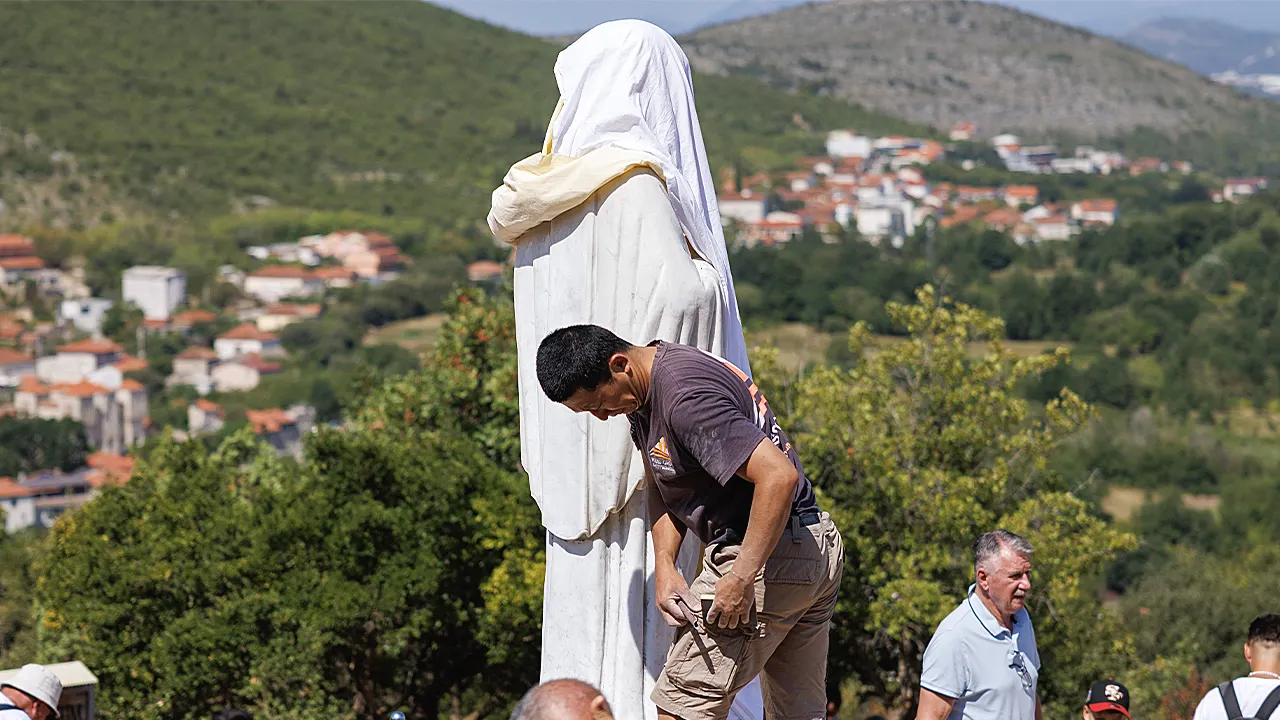
In the quiet, mist-shrouded hours before dawn, when the rugged slopes of Apparition Hill in Medjugorje are typically filled only with the soft whispers of prayer, a shocking act of malice disrupted one of the world’s most cherished Catholic sanctuaries. On the morning of July 27, early rising pilgrims and local residents climbing the steep, rocky path known as Podbrdo were met with a heartbreaking and deeply jarring sight. The pristine white stone statue of the Virgin Mary, which has stood for decades as a global symbol of hope, peace, and maternal comfort, had been aggressively vandalized. Under the cover of darkness, an unidentified perpetrator had coated the statue’s face and hands in thick, defacing black paint. Even more painful for the faithful was the message left behind: scrawled across the clean stone pedestal in stark, dripping black letters was the mocking English phrase, “Devil in a skirt.” The physical and symbolic violation of this beloved monument sent immediate waves of grief, confusion, and deep spiritual pain through the local community of Bosnia and Herzegovina and across the global network of Catholic believers. Bosnian police acted swiftly in the wake of the public outcry, launching an intensive investigation that culminated in the arrest of a male suspect on Tuesday. While authorities have chosen to temporarily withhold the suspect’s identity as they carefully gather evidence, investigators are working diligently to uncover his underlying motives and determine if he acted alone or was responsible for a broader, coordinated series of hostile incidents that plagued the sacred sanctuary that very same night.
The desecration on the hillside was only one part of a dual-pronged assault on the shrine’s sacred geography, as the perpetrator also sought to consume the sanctuary’s physical structures with fire. Down the hill, near the historic St. James Church—the bustling heart of the parish where pilgrims regularly gather under the open sky to receive the sacraments—another act of violence unfolded. Security surveillance footage from the church grounds captured a chilling sequence of events: a lone male figure, moving methodically under the cover of darkness, was seen carrying a container of what investigators believe was gasoline. With deliberate intent, the individual poured the flammable liquid over the outdoor altar before striking a match, sending flames tearing through the sacred space. Fortunately, the fire was quickly noticed and extinguished before it could cause irreversible structural damage to the church itself, but the charred remains of the altar stood as a grim, soot-stained testament to the intruder’s destructive anger. Local fire and police departments arrived promptly to secure the scene, collecting physical evidence and studying the video footage to piece together a timeline of the suspect’s movements. The physical destruction of the altar, coupled with the hateful rhetoric painted onto the hilltop statue, suggested a deeply personal or ideological animosity toward the Catholic faith, prompting law enforcement to treat the incident with the utmost gravity as they work to ensure the safety of the site.
To understand the profound emotional toll of this vandalism, one must look to the unique, complex history of Medjugorje and its place in the modern spiritual landscape. Nestled in the picturesque hills about 85 miles southwest of Sarajevo, this small, unassuming village was thrust into the global spotlight in 1981 when six local children and teenagers claimed to have experienced visions of the Virgin Mary. Over the four decades that followed, Medjugorje transformed from a quiet agricultural hamlet into one of the most visited Catholic pilgrimage destinations on the planet, drawing millions of visitors seeking spiritual renewal, physical healings, and a deeper connection to their faith. The site has not been without controversy; for decades, theologians, skeptics, and Vatican authorities debated the authenticity of the apparitions, making it one of the most heavily scrutinized and contested sites of Roman Catholic practice in modern history. Yet, in a beautiful twist of timing, the Vatican had recently delivered a landmark decision, officially giving the green light for Catholics to continue flocking to Medjugorje and offering formal approval for public devotion at the shrine. This long-awaited validation from Rome had filled the community with an overwhelming sense of joy and legitimacy, making the sudden, hostile desecration of their beloved sanctuary feel like an incredibly cruel and targeted blow to a community that was in the midst of celebrating a historic milestone in its spiritual journey.
The timing of the dual attacks was particularly devastating, occurring just days before the commencement of Medjugorje’s highly anticipated annual youth prayer festival, known globally as Mladifest. This vibrant, week-long spiritual gathering is a cornerstone event for the shrine, expected to draw more than 50,000 young pilgrims, priests, and religious leaders from every corner of the globe. For many of these young people, the journey to Bosnia is a monumental pilgrimage of a lifetime, representing months of saving money, planning, and spiritual preparation. They arrive expecting a sanctuary of peace, joy, and communal solidarity, only to be greeted by the physical scars of hatred and intolerance. The vulnerability of such an open-air shrine, which relies on a welcoming, barrier-free environment to foster spiritual reflection, became glaringly obvious in the wake of the attacks. It forced organizers and local authorities to grapple with the delicate balance between maintaining open access for faithful seekers and implementing heightened security measures to protect both the pilgrims and the sacred art from those who wish them harm. The psychological impact of seeing a place of pure sanctuary violated by fire and hateful rhetoric could easily have cast a dark shadow over the entire festival, threatening to replace the event’s characteristic atmosphere of youthful hope with one of fear, suspicion, and defensive anxiety.
Yet, in the face of this profound violation, the leadership of Medjugorje chose a path of radical grace that serves as a powerful testament to the very teachings they profess. Rather than yielding to natural human impulses of anger, division, or demands for harsh retribution, the Medjugorje Parish Office released a deeply moving statement that sought to disarm the hatred with love. Expressing their profound sadness over the acts of vandalism, church officials firmly urged the global Catholic community to respond not with bitterness or retaliation, but with “prayer, fasting, and forgiveness.” In a world increasingly defined by eye-for-an-eye responses and escalations of conflict, the parish’s message stood as a beacon of Christian mercy. “We pray for the conversion of the hearts of those who committed this act,” the official statement read, pleading with the faithful to ask that God touch the perpetrator’s heart with divine grace and guide them gently onto the path of goodness. By actively pleading for the spiritual well-being and moral transformation of the very person who sought to burn and deface their sanctuary, the parish modeled a profound level of empathy, reminding the world that the ultimate defense of a sacred space lies not in high walls or security cameras, but in the unyielding commitment to bear witness through love, forgiveness, and hope.
This spiritual resilience was instantly matched by a massive, hands-on community effort to erase the physical signs of the assault and restore the sanctuary to its original beauty. Almost immediately after the police concluded their initial on-site investigation, a dedicated army of local volunteers, parish staff, and eager pilgrims descended upon Apparition Hill and St. James Church, armed with cleaning supplies, paintbrushes, and an unshakeable sense of purpose. Working side-by-side in the summer heat, they carefully scrubbed the black paint from the Virgin Mary’s face and hands, restored the defaced pedestal, and began the meticulous process of repairing and restoring the fire-damaged outdoor altar. The parish office expressed deep gratitude to these volunteers, highlighting how their swift action successfully preserved the shrine as “a place of encounter with God, a place of peace.” Despite the physical and emotional scars left by the vandal, church officials proudly announced that the shrine would remain fully open without interruption, maintaining its regular schedule of Holy Mass, confession, and prayer services. Through this seamless blend of practical restoration and spiritual defiance, the people of Medjugorje demonstrated that while stone can be painted and wood can be burned, the true sanctuary—built upon the resilient faith, collective love, and radical forgiveness of its community—remains completely indestructible.