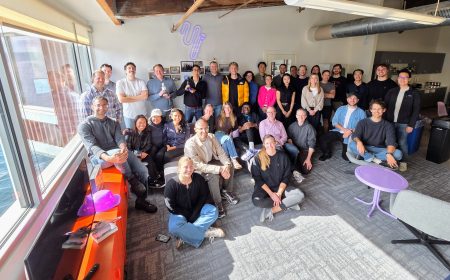




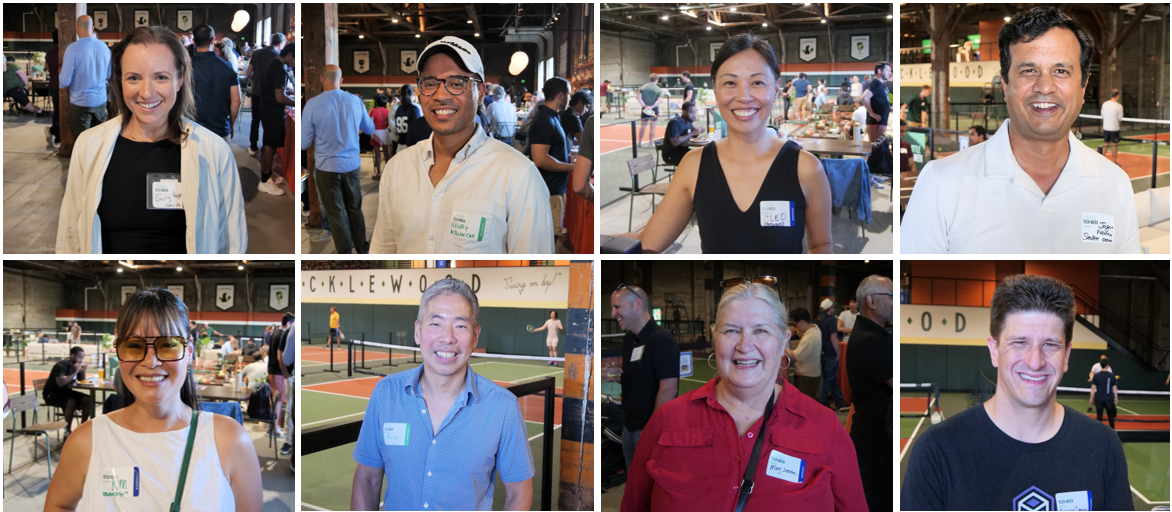
The fourth annual Seattle Tech Week kicked off with an undeniable surge of energy, transforming the Pacific Northwest into a bustling nexus of technological ambition, creative friction, and real-world problem-solving. This year’s gathering was landmark in scale, boasting over 250 events that drew a staggering 29,000 registrations from local innovators and national travelers alike. Beneath the standard networking veneer lay a palpable shift in the winds of the industry; the initial, frantic hype of artificial intelligence has begun to mature into a disciplined search for practical, human-centered applications. This transition was fully on display at Madrona’s lively, packed kickoff gathering at the Picklewood Paddle Club. Amid the sharp rhythm of pickleball games and the clinking of glasses, a diverse array of founders, operators, and venture capitalists convened to answer a deceptively simple yet deeply revealing question: “What are you building?” The answers gathered from the floor revealed a community determined to bridge the gap between complex software and the everyday lived experiences of real people. Rather than pursuing abstract, theoretical breakthroughs, Seattle’s building class is rolling up its sleeves to tackle tangible friction points in sports logistics, retail, data analysis, sustainable supply chains, investment strategies, personal privacy, hospitality, and food distribution.
Among these hands-on innovators is Jagan Nemani, the chief product officer of the Major League Cricket franchise, the Seattle Orcas. For three grueling seasons, Nemani managed the astronomical logistics of a professional sports team—including player flights, hotel blocks, ground transport, and dynamic daily practice schedules—using nothing but spreadsheets, manual coordination, and pure willpower. Realizing the exhaustion built into this old-school model, Nemani used Claude Code to construct the backend of an AI-driven logistics agent that now automates roughly 80% of those operations. Crucially, recognizing that elite athletes and coaching staff are notoriously resistant to adopting unfamiliar enterprise software, Nemani built the entire system to run seamlessly on WhatsApp, the messaging application his international players already lived on. This philosophy of meeting users exactly where they are is closely shared by Kim Vu, the founder and CEO of StyleOrigin. After transitioning from a career in corporate ESG leadership to vintage clothing curation, Vu was astonished to discover that listing a single secondhand garment online still required a tedious, 45-minute manual process of identifying, pricing, and writing descriptions. Believing there had to be a better way, she taught herself to code and built a B2B platform that turns a single smartphone photo of a vintage item into a complete listing package, complete with strategic pricing recommendations. Similarly, Emily Rapp, the founder of Köniva, found her inspiration on the physical frontline of the service industry. After a career in big tech, Rapp trained as a sommelier and took a job at Seattle’s legendary Canlis restaurant, where she saw the wine director still relying on paper, pencils, and clipboards to count inventory because existing software was too slow and cumbersome. This prompted Rapp to build Köniva, a voice-controlled AI application that allows hospitality workers to count inventory hands-free using lapel microphones, shortening an grueling twelve-hour task to a fraction of the time and rescuing workers from the bad tech legacy that has long plagued their industry.
As these tangible customer-facing platforms gain traction, a parallel group of Seattle builders is focused on refining the infrastructure, metrics, and capital allocation behind this wave of innovation. Kenny Daniel, a seasoned startup veteran and co-founder of Hyperparam, is focused on the hidden environmental and financial costs of the modern AI revolution. Pointing out that enterprised-size organizations are currently spending millions of dollars to generate an endless “wall of tokens,” Daniel argues that businesses have virtually no visibility into what their AI agents are actually doing, where they are making mistakes, or where they are burning money in repetitive algorithmic loops. Hyperparam is building the specialized analysis and observability tools required to mine the textual trails left behind by these models, filling a void left by traditional analytics platforms designed only for clicks and numerical data. Simultaneously, Andy Liu of Unlock Venture Partners is turning this analytical lens inward, constructing an internal engineering team within his own VC firm to automate the administrative weeds of investing. By utilizing AI to handle deal memos, preliminary due diligence, portfolio company updates, and investor communications, Liu’s team is streamlining the mechanics of venture capital so that human partners can scale their business and make smarter, more empathetic investment decisions. This hybrid appreciation for human intuition and digital efficiency is echoed by Henry Arias, the founder behind Altelan Capital. Drawing on his extensive background in hospitality finance, Arias is building a growth equity firm centered around food brands and food technology. While he embraces an “AI-native” approach to analyze market trends and corporate scalability, Arias remains a refreshing pragmatist, warning that technology should never be forced where simpler, human-centered processes work best.
Perhaps the most deeply intimate and urgent endeavor presented at the kickoff came from Mary Jesse, the co-founder and CEO of ACME Brains. Following the profound personal loss of her husband, Jesse found unexpected comfort and support in conversing with ChatGPT, but the experience quickly highlighted the glaring limitations and ethical dangers of contemporary conversational AI. She realized that these models could not maintain persistent personal context across multiple sessions, and more troublingly, that conversational interfaces are preternaturally designed to coax deeply sensitive, private information out of users without safeguarding their privacy. Drawing on her decades of experience as an electrical engineer and former wireless executive, Jesse joined forces with Alan Caplan, Amazon’s original general counsel, to build nexie, a private personal context engine. Operating under the philosophy that individuals should own and control their own cognitive databases, nexie keeps a user’s deeply personal notes, daily journal entries, and private conversations safely contained within a sovereign system that can interface with external large language models without allowing those models to track the user or train on their private thoughts. Jesse emphasizes that as AI interfaces become more lifelike and persuasive, they gain the ability to “talk people out of their data,” creating a severe risk for vulnerable populations, including elderly citizens who may not fully comprehend how their digital interactions are being logged and monetized.
While Jesse works to preserve boundaries in the digital realm, Cleo Escarez is building a company designed to solve an impending, tangible physical crisis in the hardware supply chains that power these very algorithms. Escarez is the founder of Redyoos, an environmentally conscious startup focused on “urban mining”—specifically, recovering high-grade, precious metals from scrap jewelry and reintroducing them directly into the supply chains of clean energy and advanced semiconductor manufacturing industries. She underscores a alarming macro-trend: the simultaneous rise of AI datacenters and clean-energy infrastructure is causing demand for precious metals to skyrocket, with current projections pointing to an unprecedented 700% supply deficit in the coming decades. Recognizing that traditional earth-mining cannot close this gap, and that the jewelry industry historically commands nearly half of the global supply of these precious resources, Redyoos leverages Escarez’s operations experience at Starbucks and Boma Silver Jewelry to run a bootstrapped, revenue-generating refining pipeline. By transforming forgotten consumer heirlooms, broken necklaces, and manufacturing scrap into high-purity industrial materials, her enterprise provides a crucial, local, and sustainable safety valve for high-tech manufacturing, demonstrating that the future of computing is fundamentally dependent on how we manage the physical elements of our planet.
Ultimately, the stories shared at the kickoff of Seattle Tech Week reveal a regional tech ecosystem defined not by empty speculation, but by a distinct culture of pragmatic empathy. From Jagan Nemani’s player-friendly WhatsApp interfaces to Emily Rapp’s hands-free kitchen voice apps, and from Mary Jesse’s defensive privacy architectures to Cleo Escarez’s closed-loop precious metal systems, Seattle’s builders are united by an understanding that technology must ultimately bow to the realities of the human experience. These innovators are actively rejecting the detached, valley-centric ethos of building software for its own sake, choosing instead to tackle the overlooked, messy, and deeply human problems of our everyday world. As Seattle Tech Week unfolded across hundreds of regional venues, it became increasingly clear that the Pacific Northwest is cementing its legacy not simply as a cloud-computing powerhouse, but as the thoughtful, ethical, and practical laboratory where the future of artificial intelligence and physical technology will be humanized for generations to come.