

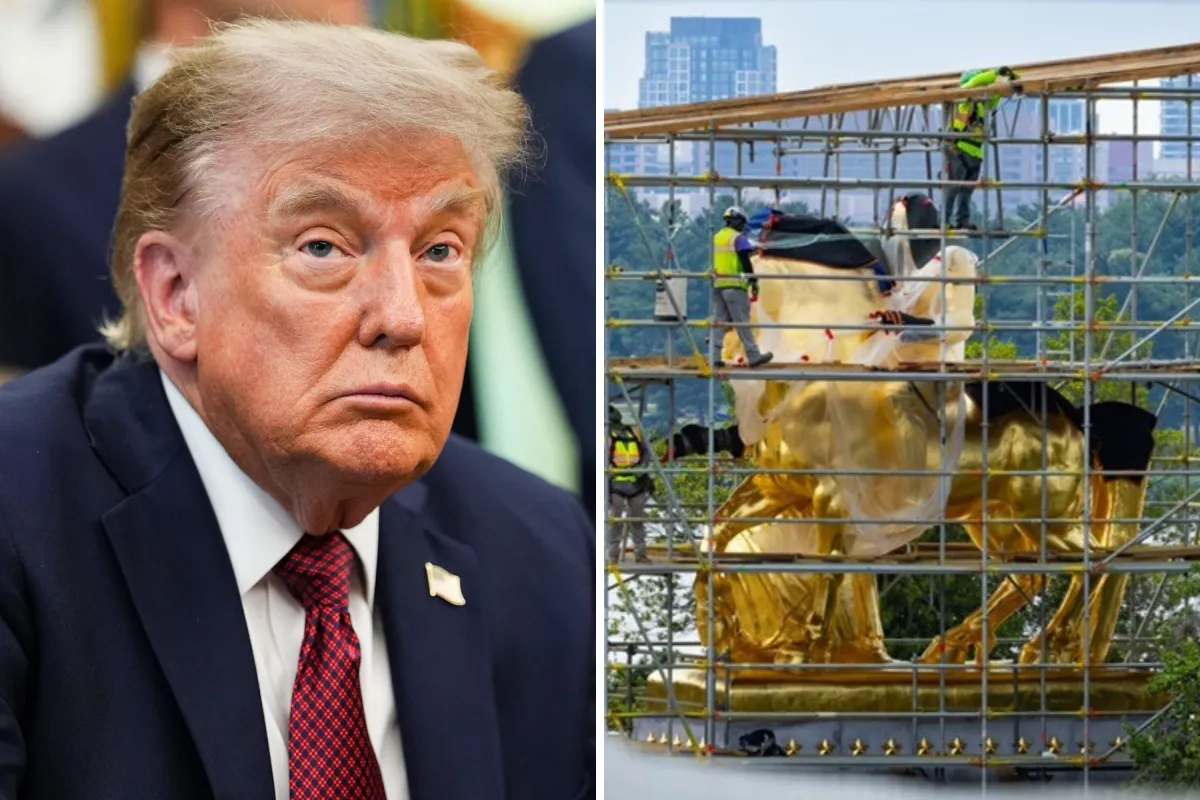
When President Donald Trump returned to the Oval Office in January 2025, he brought with him a highly publicized, sweeping vision to revitalize the aesthetic core of Washington, D.C., and transform the nation’s capital into a showcase of classical grandeur and renewed civic pride. This ambitious design philosophy was put on spectacular public display recently when the President took to Truth Social to share a series of striking, behind-the-scenes photographs capturing the dramatic restoration of some of the city’s most beloved monumental sculptures. The images, which quickly circulated across social media and news outlets, revealed the towering structures of The Arts of War and The Arts of Peace emerging from a dense cage of metal scaffolding, their newly regilded bronze figures shimmering brilliantly against the district sky. “Taking down the scaffolding around the regilded Arts of War sculptures!” Trump enthusiastically declared in his post, highlighting an immediate, highly visible, and deeply symbolic milestone in his administration’s broader urban beautification initiative. For residents and visitors alike, the sight of these towering equestrian monuments undergoing such a meticulous face-lift represents more than just routine municipal upkeep; it serves as a bold physical manifestation of a larger, ongoing effort to polish and preserve the historical symbols that define the American capital. By drawing attention to the sheer scale of the scaffolding and the intricate work of the artisans suspended high above the streets, the President’s post cast a spotlight on the silent, daily labor that goes into maintaining the nation’s monumental heritage, framing the grand restoration not merely as a construction project, but as a celebratory act of cultural reclamation. This dramatic visual reveal marks the first major public success of a comprehensive, highly coordinated campaign designed to breathe new life into the federal district’s historic corridors, setting a majestic tone for a series of even more expansive and controversial construction endeavors slated to reshape the city’s iconic landscape over the coming years.
To fully appreciate the significance of this conservation effort, one must look back to the mid-twentieth century, when these monumental bronze statues were first conceptualized and cast to guard the symbolic gateways of the capital. The Arts of War and The Arts of Peace consist of four massive, gold-leafed bronze sculptural groups that serve as architectural bookends for two of Washington’s most scenic, thoroughly traveled corridors. The Arts of War, masterfully executed by the celebrated American sculptor Leo Friedlander, features two distinct, powerful compositions titled Valor and Sacrifice, which are strategically positioned to frame the grand entrance to the Arlington Memorial Bridge. Sculpted in a bold, muscular Art Deco style characterized by heavy geometric lines and heroic proportions, Friedlander’s work embodies the determination, courage, and solemn tragedy inherent in the nation’s military legacy, offering a poignant greeting to those traveling toward Arlington National Cemetery. Conversely, guarding the entrance to the Rock Creek and Potomac Parkway are The Arts of Peace, designed by the equally legendary American sculptor James Earle Fraser. Fraser’s neoclassical masterpieces, which include the twin sculptural groups Music and Harvest alongside Aspiration and Literature, celebrate the cultural, intellectual, and agricultural pursuits that flourish in a nation when the cannons of war fall silent. Together, these two artistic pairs create a profound philosophical dialogue along the Potomac River, reminding all who pass between them that the strength to wage war and defend liberty is ultimately meant to secure the peace, prosperity, and creative flowering of civilization. Over the decades, however, the relentless Mid-Atlantic weather, pollution, and the passage of time took a heavy toll on the brilliant gold leaf, leaving the bronze dull, oxidized, and heavily weathered—a state of decay that this current, high-profile restoration project aims to permanently reverse.
The physical transformation of these monumental bronze structures is a masterclass in historical preservation, made possible by a rigorous $5.1 million federal contract awarded by the National Park Service in mid-April 2025 to a specialized, Maryland-based gilding studio. This highly technical and painstaking endeavor, which officially commenced in the chilly weeks of early spring and is scheduled to reach its triumphant completion in September, demands an extraordinary level of skill, patience, and physical endurance from the elite team of artisans entrusted with the task. Operating high above the rushing traffic on custom-engineered scaffolding, these modern-day craftsmen must first meticulously clean and prepare the weathered bronze surfaces, treating the metal to halt any ongoing corrosion before beginning the delicate process of regilding. Gilding at this scale is an incredibly precise and labor-intensive art form, requiring workers to manually apply micro-thin, fragile sheets of 24-karat gold leaf to the winding curves of the massive horses and monumental figures, a task made immensely more difficult by the capricious wind, humidity, and scorching heat of a typical Washington summer. Each leaf of gold, though incredibly thin, must be burnished perfectly to the bronze substrate to ensure it can withstand the elements for decades to come, creating a seamless, gleaming skin that reflects the changing light of the sun from dawn until dusk. By focusing federal funding and public attention on this highly specialized craft, the project highlights the vital role of local, highly trained American artisans in preserving the physical fabric of the country’s history, humanizing the capital’s imposing stone and metal monuments by connecting them directly to the skilled hands, enduring patience, and dedicated labor of the highly skilled contemporary workers who work tireless shifts to keep their original beauty alive for all future generations.
While the meticulous restoration of the Friedlander and Fraser statues represents a respectful nod to the historic preservation of the capital’s existing monuments, it is only one component of a far more ambitious, forward-looking architectural campaign initiated by President Trump since his return to office in early 2025. Among the most daring and widely debated proposals put forward by the administration is the planned construction of a colossal, 250-foot-tall triumphal arch to be erected along the banks of the Potomac River. Drawing inspiration from the grand classical arches of ancient Rome, such as the Arch of Constantine, as well as the world-famous Arc de Triomphe in Paris, this massive proposed structure is intended to serve as a triumphant gateway to the city, symbolizing American resilience, exceptionalism, and enduring national strength. Proponents of the project argue that such an imposing monument would provide Washington with a dramatic new landmark on par with the world’s greatest cultural capitals, creating a breathtaking visual anchor along the riverfront that honors the country’s foundational triumphs. Critics, conversely, have sparked intense public debates over the scale, cost, and stylistic direction of the project, questioning whether a classical triumphal arch is appropriate for a modern democracy and debating how such a massive physical structure will alter the historic, low-lying skyline of the federal district. Despite these ongoing civic debates, the administration’s push for the monument underscores a profound belief in the power of classical architecture to inspire public awe and project national stability, framing the proposed arch not merely as an engineering marvel, but as a permanent physical testament to the enduring spirit, political history, and democratic promise of the American republic.
In addition to these grand waterfront monuments, the administration has simultaneously launched an array of diverse urban revitalization projects aimed at enhancing both the symbolic majesty and the daily recreational utility of the capital for its residents and visitors. Within the historic walls of the White House itself, major construction and preservation works have been commissioned to upgrade the executive mansion’s aging infrastructure while maintaining its strict historical integrity, ensuring that the globally recognized symbol of American executive power remains pristine and fully functional for future generations. Simultaneously, the President has directed his attention to the green spaces of the district, driving a comprehensive initiative to renovate and modernize one of Washington, D.C.’s historic public golf courses, a project that seeks to restore a cherished recreational landscape into a world-class facility accessible, affordable, and welcoming to the local neighborhood community, passionate local amateur players, and visiting golf enthusiasts alike. Furthermore, momentum continues to build behind the long-discussed plans for a sprawling, dedicated national statue garden designed specifically to honor and memorialize a vast registry of key figures from American history, including pioneering statesmen, brave explorers, innovative scientists, and military heroes. Unlike traditional, isolated monuments, this planned garden is envisioned as an immersive, highly educational public space where families can walk among lifelike representations of the diverse individuals who built, defended, and defined the nation, creating a peaceful sanctuary of collective memory that merges historical education with beautiful, park-like landscape design. Through this multifaceted approach, which seamlessly blends the upkeep of high-profile political residences with the rejuvenation of public parks, golf courses, and educational gardens, the administration is actively seeking to foster a more vibrant, engaging, and historically grounded urban environment across the entire District of Columbia.
Ultimately, the visible transformation of Washington, D.C.—anchored in this moment by the brilliant, newly regilded surfaces of The Arts of War and The Arts of Peace—serves as a compelling case study in how physical architecture, public monuments, and political leadership intersect to shape a nation’s collective identity and sense of self. The deliberate act of changing these weathered, green-patinaed bronze statues back into their original, radiant golden forms serves as a powerful visual metaphor for a broader philosophical quest to restore national pride, recover lost histories, and project a message of strength and renewal to the world. Whether one views these dramatic civic transformations with unwavering aesthetic enthusiasm, analytical curiosity, or sharp political skepticism, there is no denying the profound emotional impact that monumental art has on the human psyche as it towers over the daily hustle of the capital’s streets. By investing millions of dollars into the preservation of historic masterpieces, while simultaneously proposing bold new monuments like the Potomac triumphal arch, the administration ensures that the physical landscape of Washington, D.C., will remain a dynamic, living canvas of the American story, reflecting both the achievements of the past and the grand ambitions of the present. As the scaffolding continues to fall away throughout the warm summer months leading up to September, revealing the glittering horses and classical figures in their full, restored glory, the people who walk, drive, and work beneath their shadow are invited to pause and reflect on the delicate balance of valor, sacrifice, culture, and progress that these timeless sculptures represent, leaving an indelible imprint on the capital’s skyline, the cultural identity of the metropolis, and the collective hearts of its diverse citizens for generations to come.