


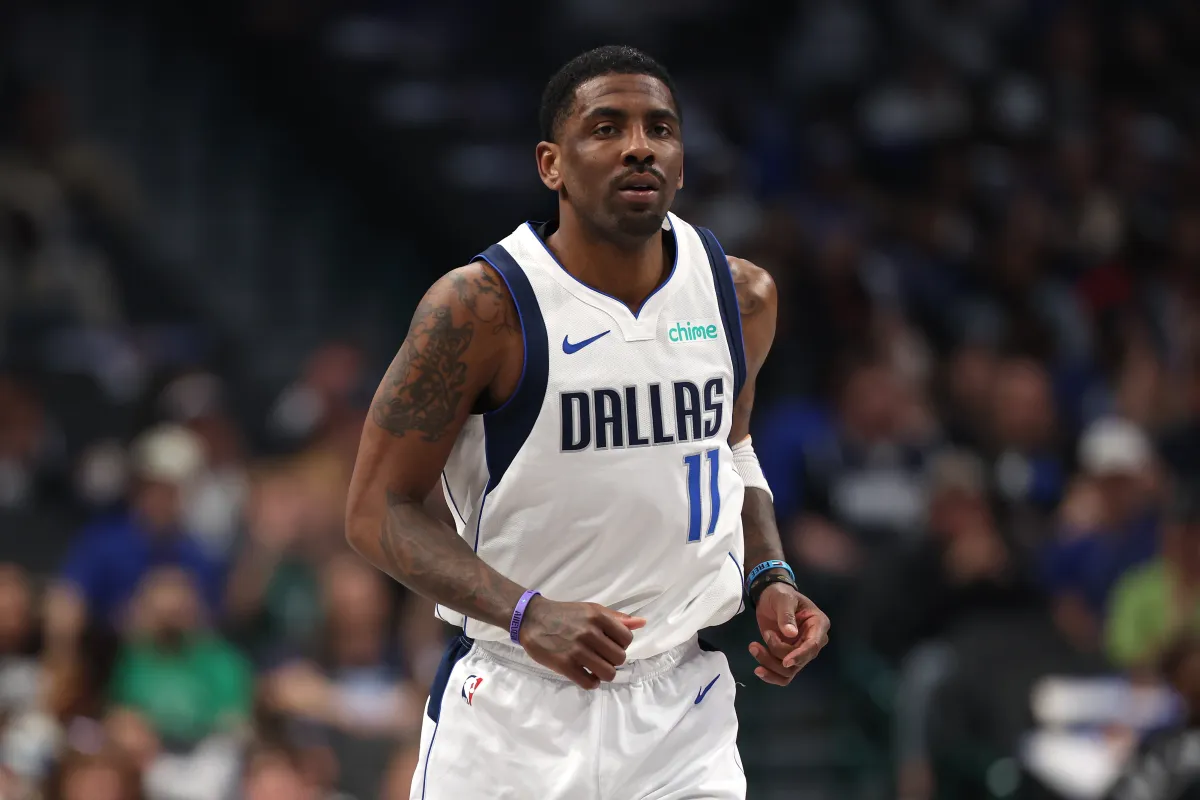
The agonizing stillness that envelops a basketball arena when a superstar collapses to the hardwood is a chilling sensation every fan understands, and that dread became a reality in March 2025 when Kyrie Irving fell. Playing against the Sacramento Kings, the nine-time All-Star and NBA champion suffered a devastating tear of his anterior cruciate ligament (ACL), a catastrophic injury that instantly derailed his spectacular 2024–25 campaign where he was average-shifting the game with 24.7 points, 4.8 rebounds, and 4.6 assists per night. What followed was a taxing, emotionally exhausting odyssey through the silent, clinical world of physical rehabilitation, forcing Irving to entirely miss the subsequent 2025–26 season. For a player whose game is defined by breathtaking, gravity-defying agility, sharp lateral cuts, and an almost dance-like mastery of footwork, such an injury threatened not just his career, but the very essence of his athletic artistry. Yet, the human spirit thrives in adversity, and Irving’s quiet, relentless determination behind closed doors has recently culminated in a triumphant victory. Appearing on “The Stephen A. Smith Show,” ESPN’s elite league insider Shams Charania ignited a wave of collective relief across the basketball landscape by announcing that Irving has made a complete recovery, standing at a resounding one hundred percent health. This medical milestone represents the end of a grueling, lonely path of grueling workouts, ice baths, and psychological battles, transforming the narrative from one of tragic loss to one of inspirational resilience. Irving is no longer a spectator of his own life; he is fully restored, possessing the same explosive first step and mesmerizing handles that have dazzled audiences for over a decade. His return is not merely a roster addition; it is the resurrection of a hardwood genius, poised to remind the world why his basketball brilliance remains peerless.
Without the anchoring presence and steadying hand of their veteran superstar, the Dallas Mavericks spent the 2025–26 NBA season wandering through a harsh, unforgiving basketball wilderness that tested the resolve of everyone involved. The team plummeted to a devastating 26–56 record, a bleak statistic that cast a somber shadow over a franchise accustomed to postseason battles and championship aspirations. This period of athletic purgatory was not simply characterized by tough losses on the court; it was a deeply emotional trial for a fan base and a locker room that felt utterly rudderless. The sense of creeping instability eventually led to desperate, culture-shifting moves, most notably the blockbuster trade that sent superstar big man Anthony Davis packing to the Washington Wizards. Trading away such an elite defensive anchor and premier post presence felt like a white flag, exposing the organization’s immense vulnerability and leaving the remaining roster structurally compromised. Every game night in Dallas became an exercise in survival, highlighting the massive, gaping chasm left by Irving’s missing offensive gravity and clutch-time wizardry. Opposing defenses easily suffocated the Mavericks’ offense, knowing there was no seasoned closer to punish their mistakes or break down perimeter coverage with a flash of brilliance. The atmosphere inside the arena shifted from a loud, celebratory home-court advantage to an anxious theater of longing, where every turnover and defensive lapse served as a painful reminder of what had been lost to injury. This grueling year of transition ultimately stripped the franchise down to its bare studs, proving that the competitive fires of the NBA will mercilessly consume any team lacking the veteran guidance required to weather the storm.
Yet, even in the deepest, darkest trenches of a disastrous season, a dazzling beacon of hope emerged to illuminate the future of Dallas basketball: the spectacular, transcendent rise of Cooper Flagg. Entering the league as the highly anticipated number-one overall draft pick, the teenage phenom bore the immense, almost unfair burden of a proud franchise’s desperate expectations squarely on his young shoulders. Rather than collapsing under the crushing pressure of the media spotlight and a losing environment, Flagg delivered a legendary debut campaign that proved his limitless superstar potential was entirely genuine. Over the course of the grueling eighty-two-game schedule, the sensational rookie put on an absolute masterclass, averaging an astonishing 21 points, 6.7 rebounds, 4.5 assists, and 1.2 steals per contest. These spectacular, incredibly well-rounded numbers earned him the prestigious NBA Rookie of the Year Award, a hardware-clinching confirmation that he was indeed the generational cornerstone the Mavericks had desperately tanked for. Watching Flagg navigate the court was a sheer revelation; he displayed an on-court maturity, defensive tenacity, and playmaking vision that far exceeded his youthful years, stepping into the organizational vacancy of leadership with quiet, focused confidence. He became the solitary, electrifying reason fans filled the arena every night, providing gravity-defying blocks and highlight-reel dunks that kept local basketball culture vibrant during their bleakest months. His nightly performances were not just statistical exercises; they represented a psychological lifeline for a weary franchise, offering a reassuring promise that the struggles of the present were merely paving the way for a glorious future. Flagg proved to the basketball world that he was not a mere rookie placeholder, but a transcendent pillar ready to ignite a championship-level era alongside an elite partner.
Recognizing that a roster housing a generational talent and a recovering legend required visionary leadership to succeed, the Mavericks ownership executed a rapid, ground-up organizational revolution. They took decisive action by parting ways with former head coach Jason Kidd, whose tactical approach had stagnated during the previous year’s struggles. To inject fresh energy and modern tactical sophistication, the front office made a brilliant splash by hiring Dusty May, the celebrated, innovative mastermind fresh off of establishing a highly successful basketball program at the University of Michigan. This coaching change was accompanied by an equally ambitious restructuring of the executive suite, bringing in the globally revered Masai Ujiri as the new president of basketball operations, alongside the sharp, elite evaluating mind of Mike Schmitz as the team’s new general manager. This formidable new brain trust immediately established a modern culture of meticulous preparation and open communication. Significantly, Shams Charania highlighted that Kyrie Irving has already become deeply, unconditionally entrenched in the team’s offseason plans, having engaged in extensive, thoroughly encouraging conceptual debates with May, Ujiri, and Schmitz. For a veteran of Irving’s immense stature and intelligence, being actively embraced and consulted by a brand-new leadership group is incredibly empowering, fostering a deep sense of mutual trust and strategic alignment that was sometimes absent in his previous NBA tenures. Dusty May’s fluid, high-octane offensive systems are a perfect conceptual match for Irving’s legendary creative instincts, and their early positive dialogues have laid the foundational brick for a highly cooperative, respectful partnership. The franchise has abandoned reactive panic; instead, under this elite executive trio, they have designed a sophisticated, player-first environment where their superstar guard is treated as an active architect of the team’s destiny.
With the organizational foundation solidly in place, the new-look front office moved with extraordinary boldness to carefully curate a versatile, high-IQ supporting cast designed to complement Irving and Flagg. This surgical roster construction reached its first major milestone during the NBA Draft, where Dallas strategically utilized their valuable number nine overall selection to pick Morez Johnson Jr., a highly physical and energetic frontcourt force. Johnson’s acquisition was a masterstroke of internal synergy, as he was previously a star player under Coach Dusty May, guaranteeing an instant psychological connection and an immediate grasp of May’s complex schemes. Partnered with the length of Cooper Flagg, Johnson Jr. projects to form a terrifically bouncy, defensive-minded frontcourt capable of switching onto guards and protecting the rim. But Ujiri and Schmitz’s ambition did not stop there; they aggressively exploited the trade market to add depth. They successfully acquired the highly skilled, floor-spacing forward Santi Aldama in a deal with the Memphis Grizzlies, bringing crucial intelligence and reliable outside gravity. Soon after, they pulled off a spectacular three-team trade involving the Atlanta Hawks and Oklahoma City Thunder to secure former top pick Zaccarie Risacher, a physical, long-limbed wing player regarded as an elite perimeter defender. These sweeping acquisitions represent a deliberate, analytical effort to surround their two central stars with elite spacing, length, and defensive versatility. By adding dynamic wing depth and frontcourt grit, Dallas has structured an incredibly modern, flexible lineup capable of executing complex strategies on both ends of the floor. This masterly reconstructed supporting cast removes any excuses, establishing a deep, cohesive rotation that is fully equipped to absorb the intense pressures of a long, physical eighty-two-game season.
Now, as this highly anticipated NBA season rapidly approaches, the basketball world is buzzing with intense, palpable excitement over what a healthy, unified Dallas Mavericks squad can realistically achieve on the floor. The ultimate charm of this upcoming campaign lies in the fascinating, highly dynamic pairing of Kyrie Irving and Cooper Flagg—a beautiful, masterfully balanced blend of experienced championship wisdom and raw, soaring youthful energy. Irving, with his glittering championship pedigree, iconic shot-making ability, and calm, battle-tested locker room presence, represents the perfect superstar mentor and late-game orchestrator to guide Flagg as he continues his spectacular ascension into a true superstar. Together, they form a lethal, complementary duo capable of dismantling opposing defensive schemes from every conceivable spot on the court. Under the modern, high-tempo, and motion-heavy offensive architecture of Dusty May, supported by the elite administrative guidance of Ujiri and Schmitz, the dark, frustrating memories of last year’s 26–56 record have evaporated, replaced by a brilliant, roaring sense of collective purpose. The Mavericks are no longer a struggling lottery team searching for an identity; they are an ambitious, deeply focused squad designed to strike fear into the hearts of the Western Conference and secure a deep postseason run. For Irving himself, this year is a profound, deeply personal opportunity to silence any remaining skeptics, showcasing his enduring greatness and proving that his magical career still has glorious chapters left to be written. With his physical health completely restored to one hundred percent, his sharp mind fully aligned with the front office, and an elite, newly loaded roster of hungry talent eager to follow his lead, the stage is magnificently set for a legendary basketball resurrection in Dallas that will captivate basketball purists for seasons to come.