



Imagine living in a remote, windswept town where the closest specialized medical facility is a three-hour drive away, over treacherous mountain passes or long, isolating stretches of empty highway. For a pregnant mother needing a routine anatomy scan, an elderly veteran requiring a vascular sweep to prevent a stroke, or a worried parent hoping to diagnose an acute abdominal pain, this immense physical distance is not just an inconvenience—it is a dangerous barrier that can delay life-saving care. This stark geographical disparity in modern medicine is the exact systemic challenge that Dopl Technologies, a Bothell, Washington-based startup, is determined to solve. Recognizing that medical expertise is historically concentrated in major metropolitan research centers while rural clinics constantly struggle to attract and retain specialized technicians, Dopl has developed an innovative solution that bridges the physical divide between doctor and patient. Fresh off a successful seed funding round of $6.3 million, which brings their total capital raised to over $8 million, the company is poised to revolutionize the way diagnostic imaging is delivered. Led by SpringTide Ventures and supported by a robust cohort of early-stage investors including WRF Capital, Tacoma Venture Fund, HeartX, Transform Health Ventures, and Precursor Ventures, this crucial financial injection will directly support the development and commercialization of a groundbreaking, remotely operated robotic ultrasound system. By placing cutting-edge technology at the fingertips of local healthcare assistants while keeping the specialized expert virtually present, Dopl is not just building a new medical device; they are constructing a digital highway of health equity destined to bring high-quality, real-time diagnostic capabilities to the doorsteps of historically marginalized and isolated communities.
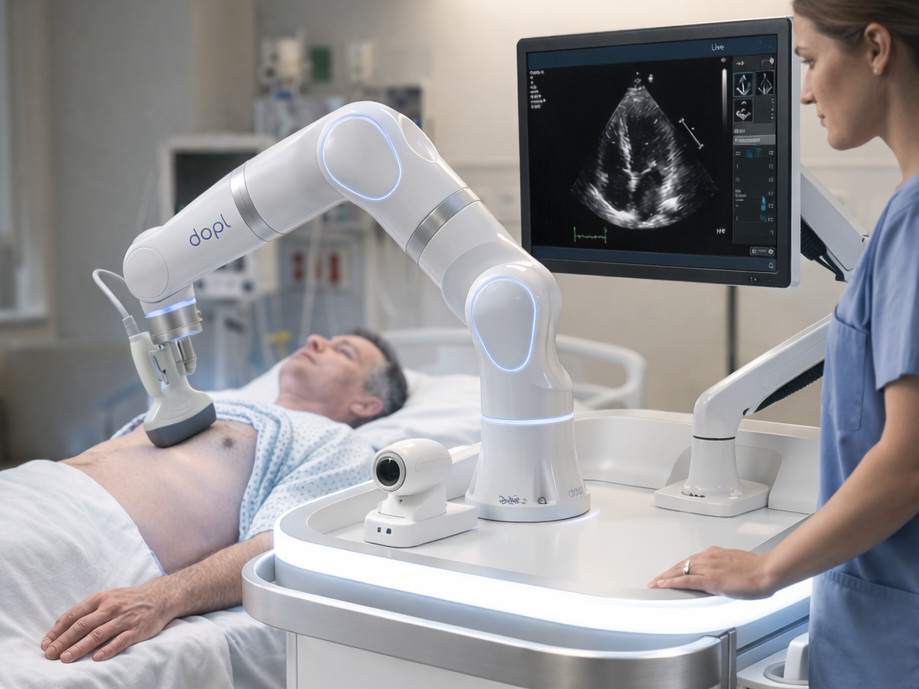
At the heart of Dopl’s revolutionary platform is an elegant fusion of advanced engineering and tactile human intuition, designed to make remote medical examinations feel as natural, safe, and reassuring as an in-person visit. Unlike traditional telemedicine, which is limited to low-impact video consultations, Dopl’s system relies on a sophisticated pairing of standard, off-the-shelf ultrasound probes with highly responsive, commercially available robotic arms. What truly sets this technology apart is its emphasis on sensory feedback, achieved through a complex suite of fine-motor robotic control, advanced computer vision, artificial intelligence, and proprietary haptic interfaces. When a remotely located, highly trained ultrasound technician or sonographer initiates an exam from a metropolitan medical center, they do not merely guide a robotic arm using a simple joystick; they actually feel the physical contour, density, and resistance of the patient’s body through specialized haptic controllers. This rich, real-time feedback allows the sonographer to adjust pressure, angle, and movement with delicate precision, minimizing physical discomfort for the patient while ensuring the high-resolution imaging necessary for an accurate diagnosis. Beyond the mechanical sophistication, the platform actively humanizes the sterile robotic interface by integrating a high-fidelity, real-time video connection that links the remote sonographer, the local patient, and the onsite medical assistant. This interactive communication loop ensures that the human element of care is never sacrificed; patients can ask questions, receive immediate reassurance, and experience a genuinely collaborative atmosphere where technology acts as an invisible facilitator rather than a cold barrier.
The visionary foundation of Dopl Technologies traces back to 2017 at the University of Washington, where co-founders Ryan James, Steve Seslar, and Wayne Monsky began investigating how advanced technology could overcome systemic bottlenecks in remote patient care. Combining the clinical wisdom of Chief Medical Officer Monsky, the operational insight of Chief Operating Officer Seslar, and the technological leadership of Chief Executive Officer Ryan James, the trio realized that ultrasound was the ideal starting point for their ambitious venture. Often referred to by medical professionals as “the new stethoscope,” the ultrasound has long since evolved past its traditional association with routine obstetric examinations during pregnancy to become an indispensable diagnostic tool for broad systemic health evaluations. It is widely used to capture critical, real-time images of the heart, veins, and arteries, facilitating the early detection of cardiovascular diseases, deep vein thrombosis, localized cancers, and life-threatening strokes. Despite its incredible utility and safety, the fundamental drawback of ultrasound has always been its highly operator-dependent nature, requiring a human hand with years of specialized training to correctly position and manipulate the transducer probe. By digitizing and decentralizing this specialized physical skill set, Dopl’s founders realized they could democratize a health service that serves as the first line of defense for countless acute and chronic conditions. Starting with ultrasound, Dopl plans to refine its core robotic and sensory platform, laying down the technological infrastructure that could eventually support an array of other remote physical procedures, effectively proving that geography should never dictate a patient’s access to vital clinical expertise.
Navigating the rigorous and highly regulated landscape of medical device commercialization is no small feat, and Dopl is strategically using its newly secured capital to systematically clear these crucial developmental checkpoints. A significant portion of the $6.3 million seed funding is earmarked for expanding their internal team of regulatory experts, engineers, and clinical coordinators tasked with guiding the proprietary platform through the complex Food and Drug Administration (FDA) clearance process. While currently conducting rigorous clinical evaluations to gather the necessary safety and efficacy data, the startup aims to submit its formal application for FDA clearance within the coming year. In the interim, Dopl is not sitting idle; they currently run a highly successful, hybrid travel service where traveling sonographers use the physical technology locally to deliver care, refining the system in real-world environments while building vital community trust. Once FDA clearance is achieved, however, the true potential of the system will be unlocked, allowing the company to scale remote robotic operations infinitely. Dopl has already laid the strategic groundwork for rapid scaling, highlighted by a formal letter of intent with a pioneering rural healthcare collaborative comprising 31 critical-access hospitals across Washington State, as well as several promising partnerships expanding toward the East Coast. This ambitious growth trajectory perfectly aligns with the historic $50 billion federal Rural Health Transformation Program slated to run from 2026 to 2030, which seeks to identify and fund scalable, innovative technologies that systematically dismantle barriers to care in rural America, placing Dopl at the very forefront of a nationwide healthcare renaissance.
As is the case with any revolutionary medical frontier, Dopl is not operating in a vacuum, finding itself in a dynamic and highly competitive market alongside established multi-billion-dollar ultrasound giants and nimbler tech startups. A prominent international competitor is AdEchoTech, a pioneering French firm founded in 2008 that has already secured FDA clearance to deploy its own remote diagnostic systems within the United States. Despite the presence of such seasoned rivals, Dopl distinguishes itself through its relentless focus on intuitive, human-centric design, specifically its proprietary haptic feedback technology. CEO Ryan James emphasizes that while other systems focus primarily on visual accuracy and mechanical transmission, Dopl’s core differentiator is the tactile loop that enables clinical sonographers to physically “feel” the patient under study as if they were standing directly beside them in the room. This tactile feedback loop is critical, as it bypasses the cognitive fatigue associated with steering a mechanical device purely by sight, restoring the tactile instinct that is fundamental to clinical diagnostic confidence. This compelling technological advantage has not gone unnoticed by the startup and investment ecosystems; Dopl was recently celebrated as a finalist for the highly prestigious “Startup of the Year” at the 2026 GeekWire Awards. This recognition, fueled by support from specialized digital health investors like SpringTide Ventures, underscores the market’s growing confidence in Dopl’s unique ability to blend high-fidelity mechanical engineering with the empathetic, sensory-driven touch that clinicians rely upon to provide compassionate and highly accurate patient evaluations.
Ultimately, Dopl’s mission represents a profound paradigm shift in how we conceptualize the delivery of healthcare in the digital age, charting a course toward a future where “tactile telepresence” replaces the traditional limitations of remote medicine. For decades, telemedicine has been hailed as a revolutionary frontier, yet it has remained largely restricted to verbal discussions, leaving the physical, hands-on touch of specialized diagnostics as an unresolved challenge for rural and underserved patient populations. By seamlessly converging robotics, artificial intelligence, cellular networks, and the human sense of touch, Dopl Technologies is breaking down these final physical barriers, demonstrating that distance is no longer a disqualifier for receiving world-class medical treatment. This evolution shifts the mindset of the entire healthcare industry, moving away from a model where patients must bear the physical and financial burdens of traveling to locate care, to one where the care dynamically travels to them. As the clinical evaluations continue to yield positive results and the regulatory path ahead becomes clearer, the vision of the founders at the University of Washington is transforming into a tangible utility for rural communities. In this emerging era of healthcare, the geographical lottery of birth and residence will no longer dictate a family’s health outcomes, ensuring that a patient in a remote mountain town or a coastal farming village can receive the exact same level of diagnostic excellence as someone living minutes away from a major research hospital, truly humanizing innovation through the power of connection.