

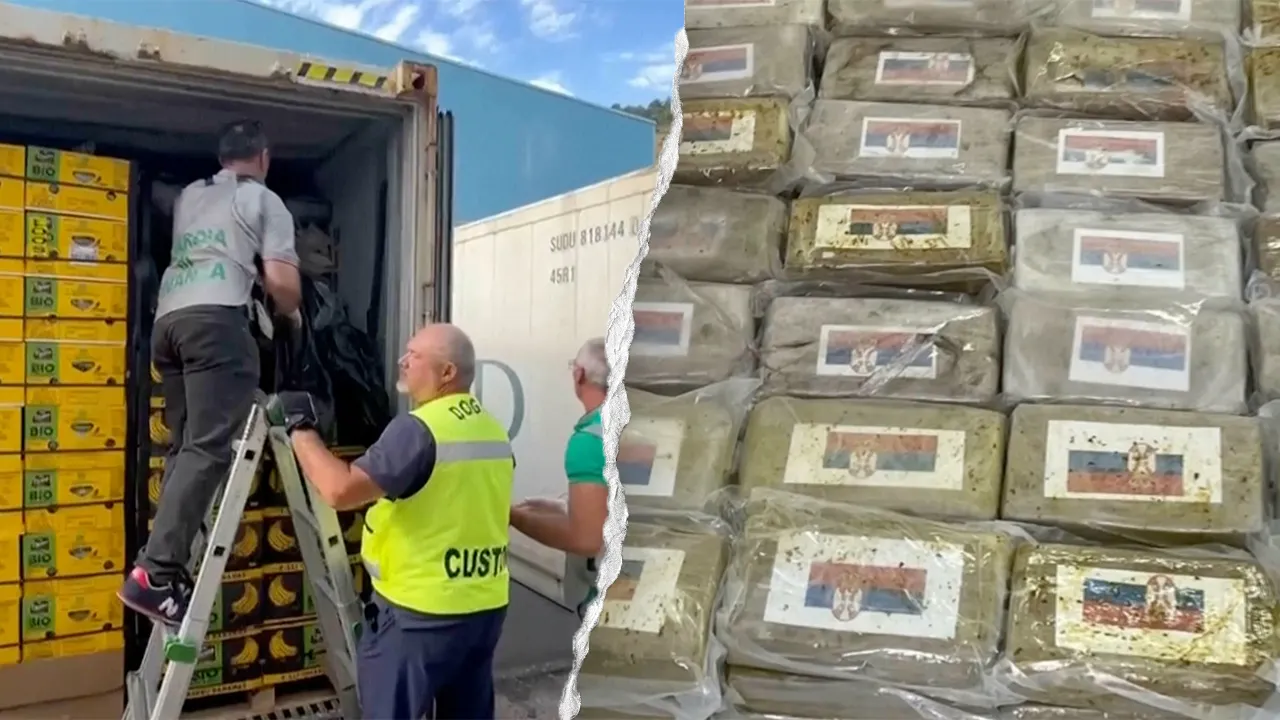
Across the windswept docks of Vado Ligure, a bustling and vital port city nestled along the picturesque northern coast of Italy, the rhythm of global commerce normally moves with predictable, mechanical efficiency. Gantry cranes tower over the harbor like metal giants, lifting shipping containers off ocean-going vessels that have braved weeks of turbulent seas to bring goods to the European market. On a seemingly ordinary Tuesday, however, the routine hum of the port was pierced by a high-stakes law enforcement intervention that would make headlines across the globe. Acting on deep intelligence and sharp instincts, officers from Italy’s Guardia di Finanza—the militarized police force responsible for tackling financial crimes and smuggling—boarded a massive cargo ship that had recently crossed the Atlantic from one of Ecuador’s busiest tropical ports. Inside a refrigerated shipping container designed to keep perishable goods fresh, officers bypasses row after row of sweet, green bananas, only to uncover a staggering, illicit cargo. Carefully wedged and “skillfully concealed” within the cold metal framework of the banana pallets were 650 neatly wrapped, brick-like packages containing roughly 1,700 pounds of extremely pure, high-grade cocaine, an immense haul that represents one of the most significant anti-drug triumphs in the region’s recent memory.
The sheer scale of this interception presents a stark reminder of the astronomical financial currents that flow beneath the surface of the international narcotics trade, as well as the deep human devastation that these drugs carry with them. Had this massive shipment successfully bypassed the keen eyes of Italian customs officials, it would have been systematically broken down, diluted with cutting agents, and distributed into the illicit street markets of Europe, generating an estimated 250 million euros—nearly 290 million US dollars. To put such a monstrous figure into perspective, this single cargo of white powder held an economic value equivalent to the annual operating budget of a medium-sized European city or the collective lifetime earnings of hundreds of hardworking families. Yet, behind these dry economic statistics lies an invisible, heart-wrenching chain of human suffering, stretching from the impoverished farming communities in South America coerced into growing coca leaves to the vulnerable individuals in European cities who struggle daily with the agonizing cycle of substance abuse. In a poignant statement following the seizure, the Guardia di Finanza emphasized that this operation was far more than a victory of asset forfeiture; it was a targeted, compassionate mission to protect the most vulnerable segments of society, shielding youth and struggling families from the destructive, generational fallout that inevitably follows the influx of hard drugs into local neighborhoods.
This monumental drug bust did not happen by mere chance, but was rather the hard-won result of exhaustive, tedious intelligence work and meticulous data analysis carried out behind closed doors. For months, international law enforcement agencies had been quietly mapping the intricate maritime highways that bind South America to the shores of Southern Europe, recognizing that Vado Ligure’s state-of-the-art logistics facilities and rapid connections to continental motorways make it an incredibly attractive target for powerful organized crime syndicates, such as the elusive ‘Ndrangheta. Drug cartels operate much like multi-national corporations, constantly searching for vulnerable pressure points in global supply chains where they can blend their contraband with legitimate commodities like fresh fruit, which must be processed quickly through customs to prevent spoilage. By analyzing shipping anomalies, cargo weights, and vessel histories, Italian intelligence officers were able to flag this specific refrigerated container as a high-risk anomaly, stepping in to disrupt the transnational pipeline at its European entry point. This high-stakes chess match between sophisticated cartels and dedicated customs investigators underscores a fundamental truth of modern policing: in an increasingly connected world, protecting local communities requires global vision, massive database integration, and an unwavering commitment to outthinking highly adaptable criminal organizations.
The global nature of this struggle becomes even more apparent when looking across the Atlantic, where law enforcement officials in the United States face the exact same clever tactics and high-stakes smuggling operations. Just weeks before the dramatic events unfolded in the Italian port, a remarkably similar drama was playing out in the sweltering, dusty heat of the Pharr Port of Entry along the Texas-Mexico border. There, U.S. Customs and Border Protection officers were systematically inspecting a commercial tractor-trailer that had crossed the border carrying what appeared to be a mundane load of fresh cabbages. Much like the Italian banana shipment, the sheer everyday nature of the agricultural cargo was a calculated disguise designed to exploit the fast-paced nature of international food distribution networks. However, upon closer inspection, officers discovered a massive, multi-million-dollar secret buried deep within the leafy heads of cabbage: 477 packaged bricks containing more than 1,100 pounds of cocaine, carrying an estimated street value of nearly 10.8 million dollars. This close parallel demonstrates that whether it is bananas in the historic ports of the Mediterranean or green cabbages in the dry heat of America’s southern border, international cartels rely on the sheer volume of global food logistics to mask their toxic trade, banking on the hope that customs officers will prioritize speed over scrutiny.
Unmasking these highly sophisticated smuggling operations requires a harmonious blend of cutting-edge technology, human intuition, and the ancient, unmatched senses of animal partners. At the Texas border, the unraveling of the cabbage-bound drug shipment began with a non-intrusive imaging scan, a high-tech X-ray system that allows officers to peer inside packed steel containers to spot structural anomalies that are invisible to the naked eye. Yet, while digital imaging can point to a suspicious density, the final, undeniable proof is often delivered by the wet nose of a highly trained detection canine, whose extraordinary sense of smell can easily penetrate layers of plastic, vacuum packing, and pungent agricultural odors to pinpoint the exact location of illicit narcotics. These dogs and their dedicated handlers form an irreplaceable line of defense, working tirelessly in extreme weather conditions to inspect thousands of vehicles that cross international borders every single day. The synergy between a technician analyzing digital scans, an officer physically dismantling a heavy pallet, and a canine eagerly searching for a scent showcases the diverse and deeply human effort required to keep illicit substances from reaching residential streets, highlighting the immense dedication of the men and women who serve on the front lines of border security.
Ultimately, these back-to-back mega-seizures in Italy and the United States serve as a sobering reflection on the relentless, hydra-headed nature of the global drug trade, which continues to adapt and flourish despite massive law enforcement pressures. While the removal of nearly 3,000 combined pounds of cocaine from the streets represents an undeniable victory that undoubtedly saved lives, it also highlights the staggering scale of production and the seemingly infinite financial resources available to modern drug cartels, who often view these multi-million-dollar losses as merely the unavoidable price of doing business. Yet, the story of these seizures is also one of profound hope and human resilience, detailing the quiet heroism of customs officials, maritime police, and border patrol agents who wake up every day to stand guard at our global gateways. By continuously sharing international intelligence, embracing advanced technology, and focusing on the human lives they are sworn to protect, these global guardians ensure that the highways of international commerce remain pathways of connection and prosperity, rather than conduits of crime, addiction, and despair.