

Like most people in their early twenties, I had a vivid, beautiful blueprint for how I wanted my life to unfold. I was ambitious, full of hope, and felt like I was standing on the precipice of a bright future. But life has a way of rewriting our plans without our permission. At just 23 years old, my world was turned upside down when I was diagnosed with arrhythmogenic right ventricular cardiomyopathy (ARVC), a progressive genetic heart disease that slowly replaces healthy heart muscle with fat and scar tissue. Suddenly, my youth was defined by beta-blockers to keep my heart rate down and a defibrillator implanted in my chest. We held onto the desperate hope that we could slow the deterioration and manage the condition for decades, but my heart had other plans. Over the next ten years, despite undergoing two heart ablations and trying endless combinations of medications, my heart simply gave up. By age 33, it was beyond repair, and my only hope of survival was to be placed on the heart transplant list, waiting for a miracle.
That miracle seemed to arrive on the morning of November 5, 2025, when I was woken up with the life-changing news that a matching donor heart was available. I walked into the operating room wrapped in the love of my family, feeling an overwhelming sense of hope that this surgery would mark the beginning of a vibrant, healthy new chapter. Tragically, the reality that awaited me was a terrifying nightmare. Immediately following the transplant, my body went into acute organ failure and I developed severe sepsis, plunging me into a critical battle for survival that absolutely no one had anticipated. To save my life, doctors placed me into a medically induced coma on life support. The post-surgery awakening I had dreamed of for years was replaced by three and a half weeks of unconsciousness. I was connected to an extracorporeal membrane oxygenation (ECMO) machine, which kept me alive because my new heart refused to beat on its own; in fact, it took six agonizing days for my new heart to finally take its first independent beat.
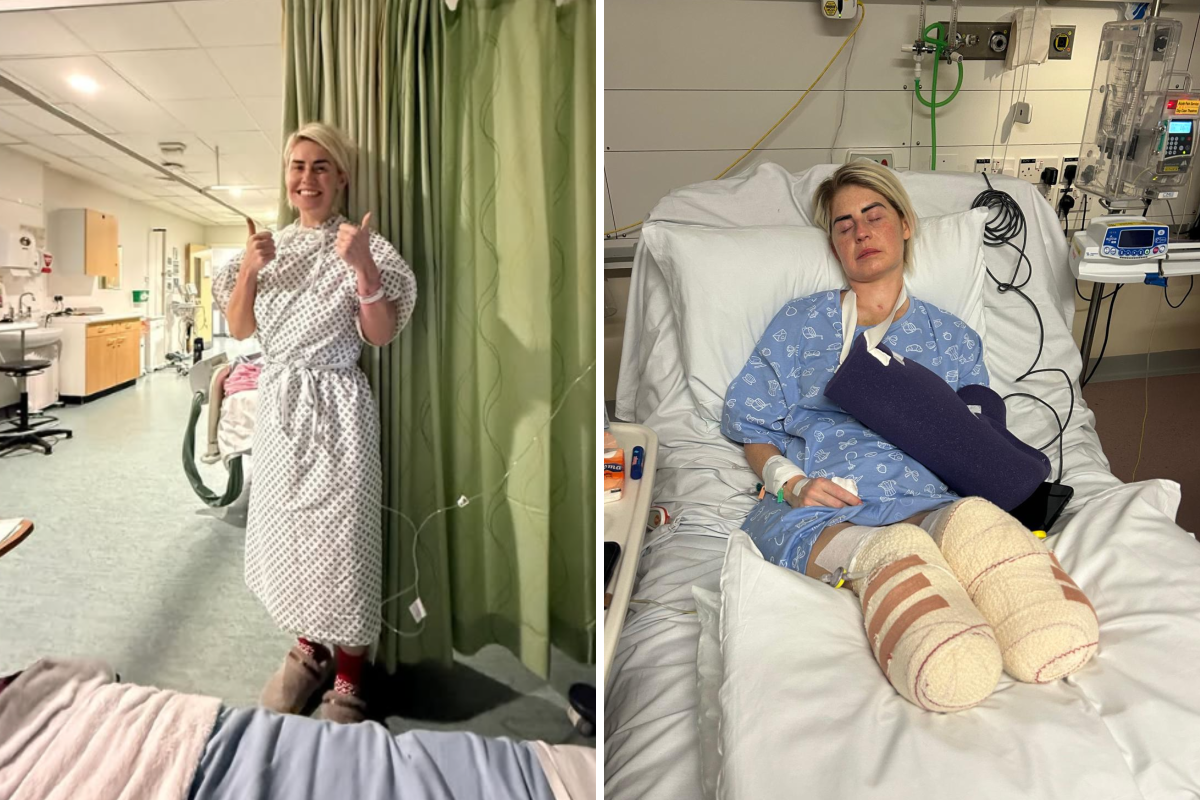
While the ECMO machine successfully saved my life, the cost of that survival was devastatingly high. To protect my vital organs, the machine redirected my body’s blood supply inward, leaving my extremities completely starved of oxygen. When I finally emerged from the coma nearly a month later, I immediately sensed that something had gone terribly wrong. The doctors delivered a crushing blow: not only had I barely survived organ failure, but the lack of blood flow had caused irreversible necrosis in my lower limbs and left hand. My feet, as well as my left thumb and index finger, had turned black and died. There was no alternative, no miraculous therapy to undo the damage. To stop the spread of infection and relieve the agonizing pain, I had to undergo amputations. On January 13, 2026, I went back into surgery to have both of my legs amputated below the knees, along with my thumb and finger from the first knuckle.
Adjusting to this new reality has been an incredibly grueling physical and emotional roller coaster. It has been only eight months since my heart transplant and six since my amputations, and the contrast between my old self and my new life is stark; I entered the hospital for a transplant and emerged 121 days later as a completely different version of myself. The simplest, most mundane daily routines have become exhausting hurdles, and I often battle intense frustration and a heavy sense of mother’s guilt. Having a three-year-old son means I constantly worry that I cannot be the active, hands-on mother I always dreamed of being. Yet, whenever the darkness threatens to consume me, I look at my son and remind myself of how close I came to never seeing him grow up. My family was once told I wouldn’t survive the night. Recognizing how close I came to death fills me with an profound, echoing wave of gratitude for my organ donor, whose precious gift ultimate kept me on this earth to be a mother.
Fueled by this second chance at life, I threw myself into intensive physiotherapy, working tirelessly to rebuild my core and leg strength. Through muscle electrolysis, balance training, and sheer determination, I eventually graduated from a wheelchair to prosthetic legs. Learning to walk again has been a slow, painful process, and there are still many days when the pain is too severe and I must rely on my wheelchair, but my mobility is steadily returning. My new heart, meanwhile, is performing beautifully, allowing me to push physical boundaries I never thought possible. In a testament to the power of human resilience, I went from wondering if I would survive the new year to completing a 10K race on my prosthetics in May. Through that race, I raised £7,575 ($10,158) for the British Heart Foundation, hoping to show others that even when the odds are stacked heavily against you, hope and determination can carry you through the darkest valleys.
Today, at 34 years old, I live in Liverpool, United Kingdom, and use my voice and social media platform to advocate fiercely for organ donation and to raise honest awareness about life after amputation. My message to anyone facing an seemingly impossible mountain is simple: do not let the odds define who you are or limit what you can achieve; if you set your mind to it, you can rebuild a beautiful life from the ashes. I also urge everyone to consider registering as an organ donor. My life is a living testament to the fact that organ donation does not just save a life—it ripples outward, allowing a mother to stay with her child, and giving a broken soul the chance to start entirely anew. This journey has redrawn the map of my life, but I am still here, still moving forward, and endlessly grateful for every single heartbeat.