

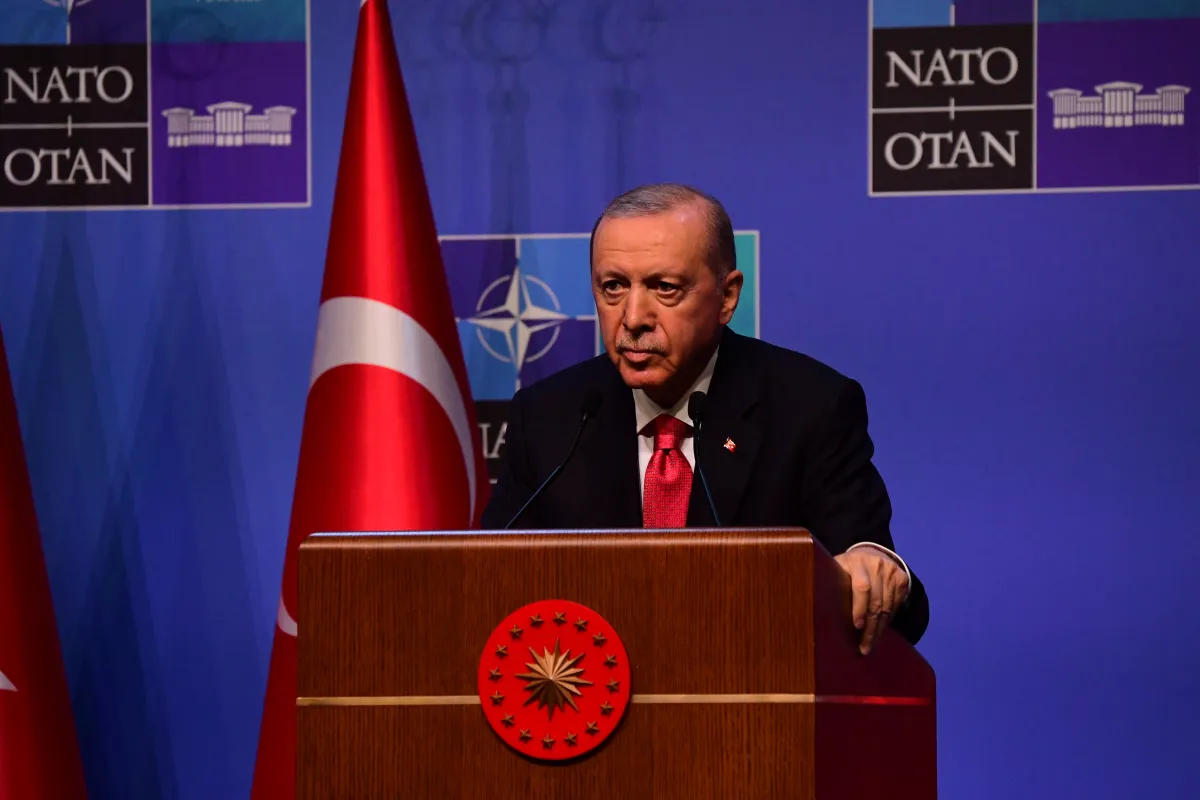
As leaders departed the recent NATO summit in Ankara, they carried with them an unexpectedly literal memento of defense cooperation: personalized, engraved revolvers gifted by Turkish President Recep Tayyip Erdoğan. Complete with live ammunition and a waiver lifting Turkey’s domestic export restrictions, the parting gesture raised eyebrows and presented an immediate bureaucratic puzzle for the attendees. While some recipients embraced the gesture with diplomatic poise, others found themselves navigating a dense web of international customs regulations, safety protocols, and import laws just to get the weapons back to their home countries. For a summit meant to address high-level geopolitical strategy, the sudden logistical scramble over handguns added a touch of practical absurdity to the high-stakes gathering.
The firearm in question is a Gumusay .357 Magnum, a rare and beautifully crafted six-shooter produced by the Turkish state-owned defense company MKE. Hand-delivered in a sleek wooden presentation box bearing the Turkish flag and the NATO emblem, each revolver was individually engraved with the recipient’s name. According to Istanbul-based defense analyst Yörük Işık, the choice of gift historically honors a classic, boutique Turkish design, making it a highly symbolic emblem of the host nation’s heritage. Given that the core objective of the NATO summit revolved around collaborative weapons procurement and defense readiness, Işık argued that the gift was entirely thematic. He suggested that critics were overanalyzing the gesture, noting that in the context of global defense partnerships, presenting a finely crafted firearm is a traditional, if old-fashioned, nod to shared security goals.
Despite the symbolic intent, the reality of transporting live ammunition and handguns across international borders quickly created an administrative headache for several prime ministers and presidents. Because European firearms regulations are notoriously strict, Erdogan’s export waivers were only half the battle; leaders still had to comply with their own countries’ rigorous import laws. Polish President Karol Nawrocki’s revolver was temporarily held up by customs officials at the Warsaw Airport, while German Chancellor Friedrich Merz opted to leave his weapon behind in Ankara for the time being. Meanwhile, Canadian Prime Minister Mark Carney managed to fly home with his revolver but chose to leave the live ammunition in Turkey to avoid violating strict transit security protocols.
Other leaders took immediate steps to distance themselves or their offices from the lethal aspect of the gift, redirecting the weapons to secure custody. Belgian Prime Minister Bart De Wever admitted to being thoroughly surprised by the gesture and promptly handed his revolver over to airport police to be locked away in a secure safe upon his arrival. The Netherlands and Sweden directed their embassies in Ankara to take possession of their respective firearms; the Dutch government plans to have the firing mechanism permanently disabled, while the Swedish delegation waits for formal import paperwork to clear. Showing a different approach to diplomatic archiving, European Union Commission President Ursula von der Leyen announced she would bypass personal ownership entirely by donating her engraved Magnum directly to a military museum.
The unconventional gift also sparked a wave of bemused and startled reactions across diplomatic circles. Hungarian Prime Minister Péter Magyar took to social media to call it “an unusual gift,” while other diplomats privately remarked that a traditional bottle of high-end whiskey might have been a more standard and less complicated way to ease tension, especially given ongoing global crises like the hostilities in the Strait of Hormuz. Spain’s Pedro Sánchez, whose country has faced persistent pressure from allies regarding its defense spending, confirmed that all leaders received the exact same model, while the U.K. Prime Minister’s office noted with dry British humor that Keir Starmer’s gift at least came with a practical cleaning kit.
While some commentators viewed the presentation of deadly weapons as a tone-deaf or overly aggressive gesture, security experts suggest the controversy is overblown and misses the larger picture. Işık criticized the dramatic reactions of some European leaders as “ridiculous,” pointing out that Europe is currently facing its most severe security environment in decades, marked by the ongoing Russian threat and shifting American commitments. From this perspective, a beautifully crafted handgun is a minor distraction. In a world where NATO members are actively debating the shipment of heavy artillery, fighter jets, and missile systems, a symbolic Turkish revolver is simply a reminder of the raw, unapologetic reality of defense diplomacy.