



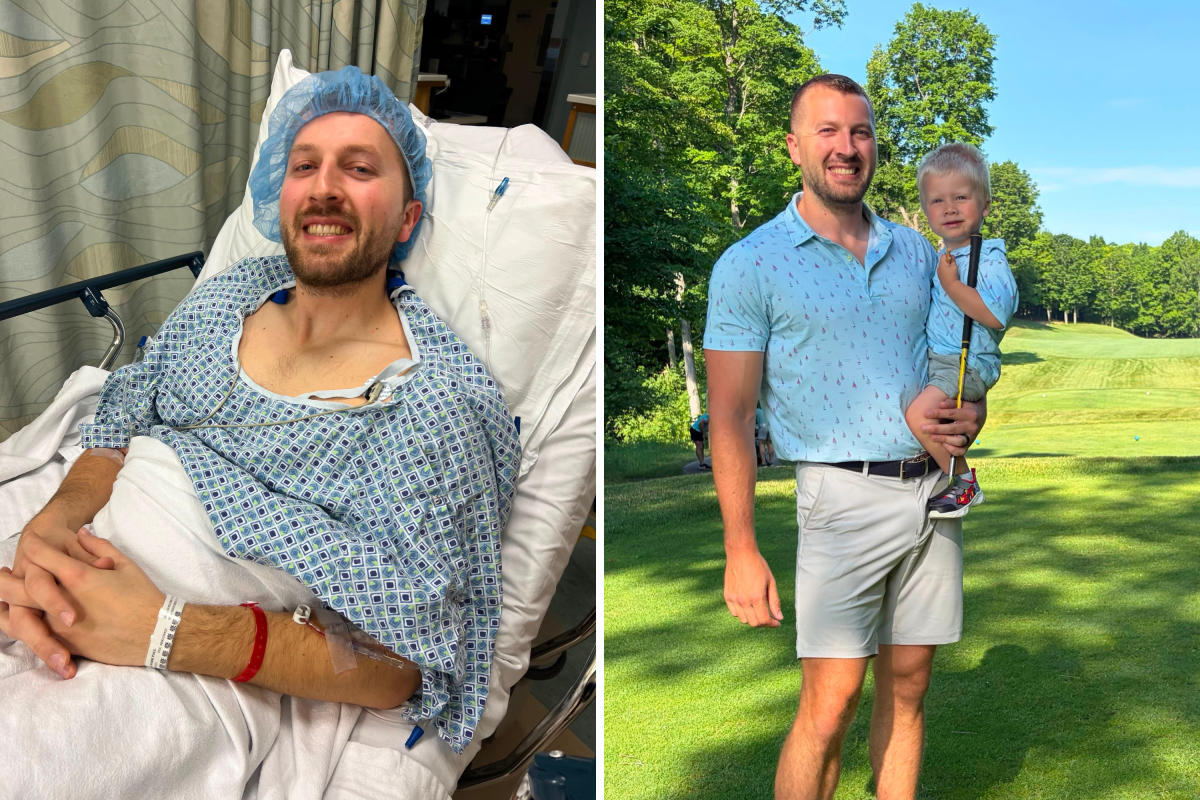
At twenty-nine years old, Paul Klug was a young man who seemed to have successfully secured the foundation of a bright, prosperous, and exceptionally healthy life. As a thriving sales manager living in Michigan, Paul was the very picture of youthful vitality and personal responsibility: he was a dedicated fitness enthusiast, maintained an incredibly nutritious and balanced diet, never smoked, and had recently celebrated both a beautiful marriage and the purchase of his family’s very first home. Furthermore, after navigating the emotionally and physically exhausting path of IVF, he and his wife had recently welcomed their firstborn son, Gordon, into the world, completing a picture-perfect vision of domestic happiness. Yet, underneath this veneer of physical strength and newly minted fatherhood, a silent, predatory force was quietly taking root inside his body, culminating in a sudden, shocking diagnosis of stage III colorectal cancer. The news fell like a devastating hammer blow, instantly shattering the comforting illusion of youthful invincibility that Paul, like so many others in their twenties, had take for granted. A stage III diagnosis meant that the highly aggressive disease had already broken past the primary walls of his colon and established a foothold in his regional lymph nodes, signaling a critical, high-stakes race against time. The emotional transition from planning a long, vibrant life with his infant son to suddenly contemplating his own mortality was an agonizing, deeply disorienting experience. This terrifying diagnosis forced Paul to quickly confront the reality that cancer is a completely non-discriminatory force—one that does not care about clean living, physical strength, or the beautifully fragile milestones of a young father who has only just begun to experience the profound joy of holding his child.
In the traumatic weeks following his diagnosis, Paul began to intensely examine the psychological barriers and cultural myths that had previously blinded him to the possibility of serious illness, identifying five specific, deep-seated “lies” he had willingly hand-crafted to protect his peace of mind. He had convinced himself that he was far too young for such a devastating illness, that his clean and vegetable-rich diet acted as an impenetrable biological shield, that early warning signs like blood in his stool were merely harmless hemorrhoids, that a lack of family history guaranteed immunity, and that his peak physical fitness made him entirely untouchable. These dangerous misconceptions are not unique to Paul; rather, they represent a widespread and highly lethal societal blind spot that oncologists are desperately trying to dismantle. The Cancer Research Institute has highlighted a terrifying modern trend in global healthcare: early-onset colorectal cancer is rising at an unprecedented and alarming rate among younger demographics, with approximately one in five new diagnoses now occurring in individuals under the age of fifty-five. This dramatic and unexplained shift has rapidly elevated colorectal cancer to a leading cause of cancer-related mortality within this younger, historically low-risk age bracket. While medical researchers point to a complex, modern web of potential contributing factors—ranging from environmental toxins and microplastics to sedentary work environments and diets heavily reliant on ultra-processed foods—there remains no single, definitive explanation for why so many young, active bodies are falling victim, making personal awareness and immediate clinical action our primary lines of defense.
For Paul, the highly insidious onset of symptoms began subtly toward the end of 2024, easily masked by the normal, chaotic physical exhaustion of caring for a newborn baby. He began experiencing persistent, unexplained bouts of diarrhea and a highly noticeable, sudden shift in his regular bowel habits, which occurred despite making absolutely no modifications to his clean diet or active lifestyle. When he initially brought these concerning changes to a primary care physician, he was met with the standard, reassuring advice to simply monitor the symptoms for a couple of months—a common medical response for young, seemingly healthy patients that tragically often delays crucial, life-saving interventions. As the symptoms refused to subside, Paul was eventually referred to a specialist gastroenterologist who suggested benign possibilities such as internal hemorrhoids or Crohn’s disease, but prudently recommended a diagnostic colonoscopy to definitively rule out anything more severe. It was during this routine procedure that the medical team discovered a highly alarming, seven-centimeter tumor lodged within his colon, which was immediately sent off for urgent biopsy. Up to that decisive point, Paul had only noticed occasional, faint traces of blood in his stool, an understated and easily dismissed symptom that was far too easy to write off as a minor, temporary inconvenience. The subsequent biopsy results confirmed his worst nightmare, instantly transforming what was supposed to be a journey of joyful early fatherhood into an immediate, high-stakes battle for survival.
Faced with this life-altering diagnosis, Paul was immediately thrown into a rigorous and exhausting medical gauntlet, commencing high-dose chemotherapy just one week after his biopsy results were finalized. For six grueling months, his body was subjected to a powerful chemical onslaught designed to eradicate the cancer cells from his system, followed immediately by an intensive, seven-week regimen of localized radiotherapy. Balancing the severe physical side effects of these cumulative treatments with the daily demands of his career and his role as a brand-new father was an extraordinary exercise in human resilience; incredibly, Paul managed to continue working and even exercising throughout much of this grueling process, refusing to let the illness dictate his identity. Yet, the emotional toll on his family was immense, as he and his wife navigated the delicate, sleepless era of their son’s infancy while carrying the crushing weight of cancer treatments, a new home, and a young marriage that had been initiated only eighteen months prior. During the absolute darkest, most physically painful moments of his treatment—when severe fatigue, nausea, and existential dread threatened to consume his spirit—Paul found his sanctuary and his ultimate motivation in his infant son, Gordon. The primal, powerful desire to survive so that his son could grow up with a present, loving father became the fuel that kept him pushing forward, transforming a cold, clinical battle into a deeply personal testament to the power of a father’s love.
The ultimate turning point in Paul’s journey occurred in February 2025, when surgeons performed a complex operation to remove the section of his colon that had been compromised by the tumor. In an incredible testament to the efficacy of his pre-operative oncology team, the aggressive combination of chemotherapy and radiotherapy had worked perfectly, leaving no visible evidence of active cancer remaining in the tissue by the time of his surgery. However, the path of post-surgical recovery brought its own unique, deeply humbling trials, as Paul was required to use an ostomy bag for three long months while his altered digestive system healed. He recalls this particular period as the most physically and psychologically demanding phase of his entire journey, as the appliance severely restricted his mobility and made the everyday tasks of parenting, walking, and regaining his physical strength feel like monumental, exhausting hurdles. Despite these profound challenges, the ostomy was a temporary sacrifice that paved the way for his complete recovery; once the device was successfully reversed, Paul began to reclaim his life with an entirely new perspective on what it means to be healthy. Today, Paul has been in complete clinical remission for a full year and describes feeling absolutely fantastic, his joy made complete by the wonderful news that he and his wife are currently expecting their second child in October, representing a beautiful and triumphant new chapter of life after survival.
Now standing safely on the other side of his harrowing ordeal, Paul has dedicated a significant portion of his life to raising awareness, using his popular TikTok platform under the handle @paul_fights_cancer to directly challenge the cultural taboos and pride that frequently prevent men from seeking medical help. He speaks candidly about the dangerous “suck it up” mentality that is so deeply ingrained in modern masculinity, warning that a stubborn refusal to address bodily warning signs out of pride is costing far too many young men their lives. By opening up about the highly personal details of his symptoms, his ostomy, and his emotional vulnerability, Paul hopes to dismantle the stigma surrounding bowel movements, normalize the discussion of colonoscopies, and empower young adults to advocate fiercely for their own health. According to the American Cancer Society, key symptoms like persistent changes in bowel habits, blood in the stool, abdominal pain, fatigue, and unexplained weight loss should never be ignored. Paul’s mission is to ensure that no one else brushes off the quiet warning signs of a changing body, emphasizing that listening to your doctors and seeking early intervention is not a sign of weakness, but an act of profound courage that can quite literally save your life. Through his advocacy, Paul has transformed his personal survival story into a powerful public crusade, ensuring that his painful experiences serve as a life-saving warning beacon for countless others.