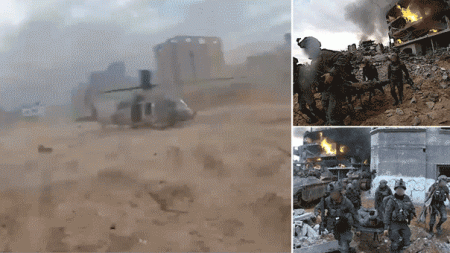



Deep within the rugged terrain of Iran’s Zagros Mountains, a highly fortified underground facility known as “Pickaxe Mountain” has become the latest flashpoint in the global effort to monitor the regime’s nuclear ambitions. While the International Atomic Energy Agency (IAEA) remains locked out of the secret site, a chilling new report from the Washington-based Institute for Science and International Security (ISIS) has sounded an urgent alarm. Experts warn that Tehran’s refusal to halt construction or grant international inspectors access to the mountain fortress is casting a shadow of doubt over its willingness to abide by a critical memorandum of understanding (MOU) negotiated with the Trump administration. This growing friction comes in the wake of “Operation Epic Fury,” a joint military strike launched by the United States and Israel on February 28, 2026, which targeted Iran’s nuclear and missile infrastructure. For many watchdogs, Pickaxe Mountain represents a dangerous, unmonitored blind spot that could undermine years of delicate diplomacy and rekindle fears of a nuclear-armed Iran.
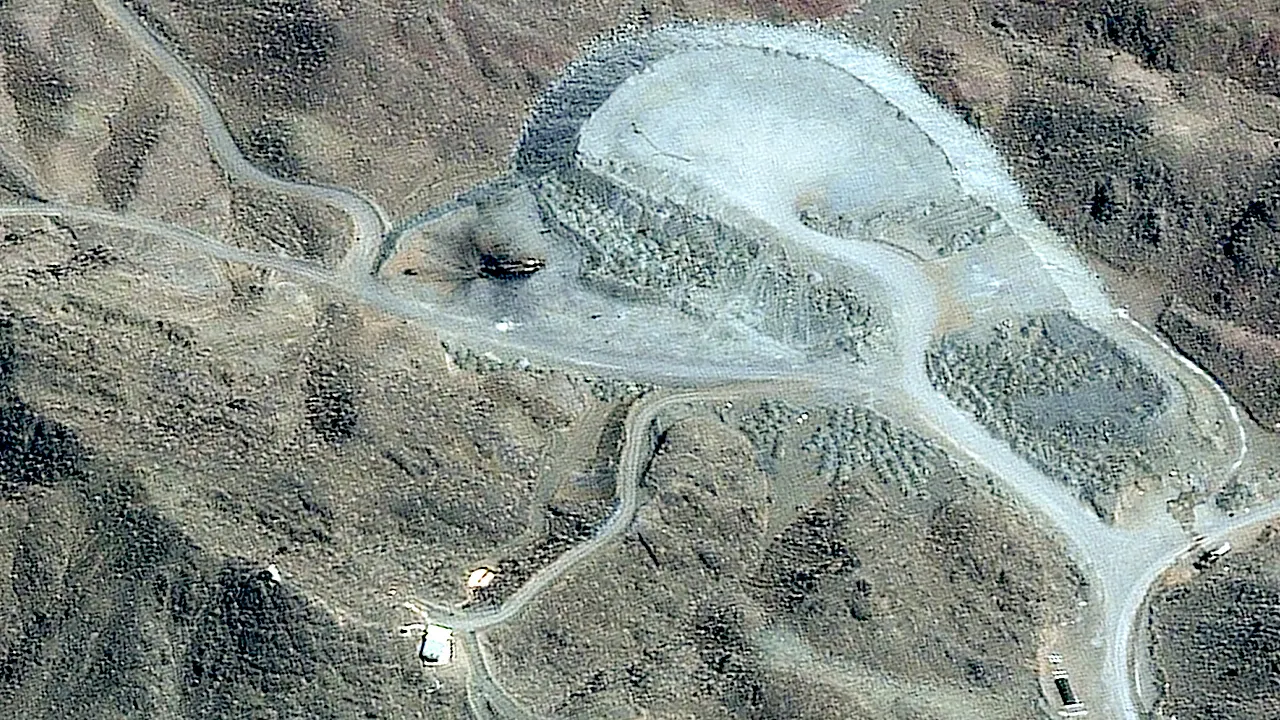
The continuous activity at the mountain site suggests a troubling pattern of deception rather than a genuine desire for peace. Satellite imagery analyzed by ISIS reveals that construction inside the complex has proceeded steadily since at least 2020, even as Iran engaged in high-stakes negotiations with world powers. According to Spencer Faragasso, a senior fellow at the institute who specializes in illicit trade and nuclear proliferation, the subterranean facility is likely massive enough to house a major uranium enrichment plant. Industry observers view the ongoing work as a strategic insurance policy for the Iranian regime. By quietly building a highly protected facility deep underground, Tehran is effectively hedging its bets, ensuring that if diplomatic talks collapse, it will already possess a late-stage nuclear site ready to go online. For critics, this behavior highlights the severe limitations of previous international agreements, which often left key facilities hidden from view.
The latest satellite intelligence, captured in late June 2026, paints a vivid picture of ongoing engineering efforts at the site. The images show heavy vehicle traffic moving along the roads leading to the western tunnel portals of Pickaxe Mountain. This activity indicates that workers are not only tunneling deeper into the earth but are also actively hardening the entrances to withstand potential airstrikes. Under the terms of the bilateral MOU, Iran is strictly required to preserve the status quo, a mandate that should theoretically prohibit any ongoing construction at nuclear-related facilities. Despite these clear violations, the IAEA has remained conspicuously quiet, declining to comment on whether inspectors will formally request access to the mountain. This lack of transparency has fueled frustration among security experts who argue that allowing international monitors into Pickaxe Mountain is the ultimate litmus test of Iran’s good faith.
While the tunnels of Pickaxe Mountain hum with activity, other notorious Iranian nuclear installations present a starkly different, post-conflict landscape. At the heavily damaged Natanz facility, which once served as a primary hub for uranium enrichment, satellite imagery shows very little movement. The underground enrichment halls remain crippled, with personnel entrances completely destroyed and vehicular access routes severely damaged. A solitary vehicle was spotted near the Pilot Fuel Enrichment Plant, a facility that was destroyed in mid-2025 and subsequently covered up by Iranian authorities. Similarly, the key nuclear site at Isfahan shows no signs of life, with its tunnel portals remaining completely backfilled with dirt and debris. These idle sites offer a grim visual testament to the sheer scale of the military strikes carried out during Operation Epic Fury, which temporarily paralyzed several nodes of Iran’s nuclear network.
Further north, near the holy city of Qom, the Fordow enrichment site remains a focal point of intense suspicion. Deep inside another mountainous stronghold, the regime has taken deliberate steps to protect the facility from ground-based threats. Satellite data from May and June 2026 revealed that Iranian forces have installed precise, alternating piles of earth and rock chicanes along the access roads leading to the tunnel portals. According to ISIS analysts, these obstacles are designed not to block the roads entirely, but to prevent rapid vehicles from storming the entrance—likely to safeguard against a sudden commando raid or an international inspection team trying to force entry. Backfilled with dirt and guarded by these defensive chicanes, Fordow remains a sleeping giant, ready to be reactivated if the regime decides to abandon its diplomatic commitments entirely.
Ultimately, the unfolding situation at Pickaxe Mountain underscores the immense difficulty of verifying arms control agreements with a highly secretive and hostile adversary. Despite the heavy tolls inflicted by American and Israeli airstrikes, the Iranian regime appears determined to keep its nuclear options open through subterranean engineering. As Fox News Digital reached out to both the U.S. State Department and the Iranian Mission to the United Nations for answers, the silence from key diplomatic channels spoke volumes about the fragility of the current peace. For the international community, the mountain stronghold remains a stark symbol of defiance. Until inspectors are allowed to peer inside the dark tunnels of the Zagros Mountains, any hope of a lasting diplomatic resolution will remain overshadowed by the specter of a hidden atomic threat.