

The Battle for the Strait of Hormuz: How Confrontation and Conflicting Narratives Are Reshaping Global Energy Security
The Geopolitical Chokepoint Under Siege: Conflicting Narratives and Market Anxiety
                             ___
                            /
                    _______/     _______
                   /  __             __
                  /  /             /
                 |  |    |  IRAN   |    |  |
                 |  |    |         |    |  |
                    __/  GULF OF  __/  /
                   ____   OMAN      ____/
                           ___   /
                         _/   _/
                          Strait of
                           Hormuz
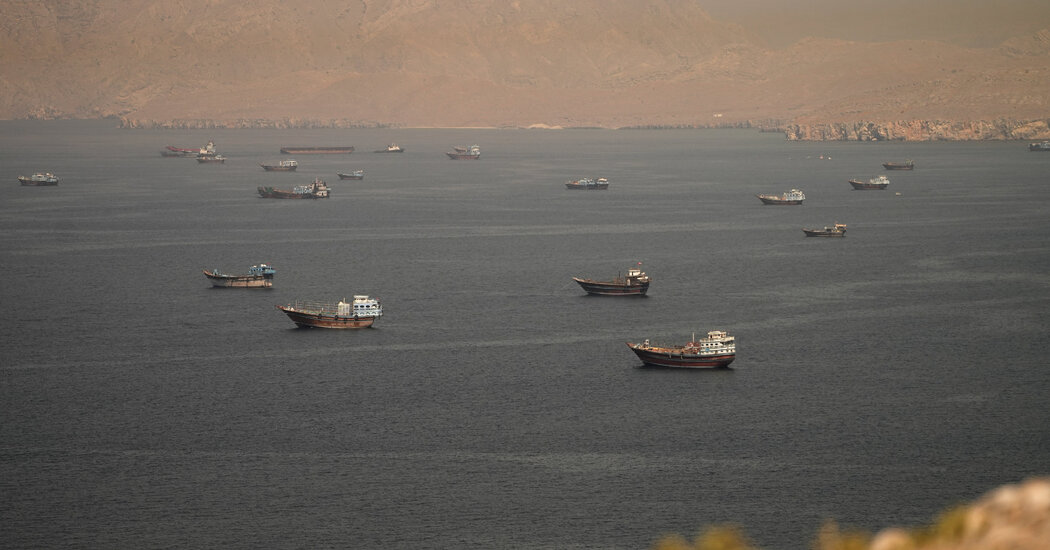
The critical maritime corridor of the Strait of Hormuz descended into a state of profound geopolitical ambiguity on Sunday, as the United States and Iranian militaries offered starkly contradictory assertions regarding whether the world’s most vital energy transit artery remained open to international commercial shipping. This escalating standoff, playing out across the narrow waters that separate the Persian Gulf from the Gulf of Oman, has rapidly emerged as the most volatile flashpoint in ongoing, high-stakes diplomatic talks aimed at bringing a definitive end to a devastating regional war that began in late February. For global energy markets, shipping syndicates, and international security analysts, the conflicting declarations represent more than just a localized dispute; they represent a destabilizing struggle for sovereign control over a chokepoint that historically facilitated the transit of approximately one-fifth of the globe’s daily petroleum supply. As maritime intelligence agencies scrambled to interpret fragmented telemetry data amid a noticeable drop in vessel traffic, the lack of clarity on the water mirrored the diplomatic friction on land, turning the waterway into a high-stakes bargaining chip where physical control and psychological deterrence are continuously weaponized by both Washington and Tehran.
Threats, Ultimatums, and the High-Stakes Swiss Diplomatic Track
           WASHINGTON                           TEHRAN
     [ President Trump ]                  [ Iranian Officials ]
             |                                      |
     "You close it and you                          |
     won't have a country."                         |
             |                                      |
             +---------------> [ SWITZERLAND ] <----+
                                      |
                               [ VP JD Vance ]
                               (Peace Talks)
Adding immense rhetorical fuel to this maritime confrontation, President Donald J. Trump delivered a blunt, uncompromising ultimatum to Tehran during an exchange with a Fox News reporter on Sunday, revealing that he had spoken directly with undisclosed Iranian officials overnight to issue a severe warning against any attempt to obstruct the waterway. In typical high-velocity fashion, Trump reportedly informed the Iranian leadership that closing the strait would result in catastrophic consequences for their regime, declaring, “You close it and you won’t have a country”—a stark warning of total military retaliation that overshadowed the delicate, backchannel diplomatic efforts concurrently unfolding in Switzerland. There, Vice President JD Vance was actively leading an American delegation in grueling, face-to-face negotiations with Iranian diplomats, trying to salvage a fragile preliminary cease-fire agreement that had been signed only a week prior. This complex diplomatic structure was pushed to the brink when the Iranian military announced on Saturday its unilateral decision to close the strait, accusing the United States of directly violating the newly minted truce by failing to restrain Israel’s aggressive military campaign against Hezbollah, the heavily armed, Iran-backed militant movement in Lebanon, thereby linking the freedom of global shipping directly to the multi-front proxy conflicts of the Levant.
The Battle of Narratives: Naval Warnings and Claims of Sovereign Control
[ IRGC Naval Wing ] [ US Central Command ]
“Approach at your own risk.” <== VS ==> “Iran does not control the strait.
Corridor is closed. Traffic flows; we are watching.”
The immediate operational crisis began when the naval wing of Iran’s Islamic Revolutionary Guards Corps (IRGC) broadcasted stern warnings to international merchant fleets, asserting that any vessel attempting to approach or transit the Strait of Hormuz was actively putting its security and crew at grave risk. This aggressive posturing was designed to project absolute sovereign authority over the northern shipping lanes, which lie within Iran’s territorial waters and exclusive economic zone, effectively daring western naval powers to challenge their claim of closure. However, the United States Central Command (CENTCOM) moved swiftly to dismantle Iran’s narrative of control, issuing a counter-assessment just hours later that flatly denied any operational blockade of the international waterway. Captain Tim Hawkins, speaking authoritatively on behalf of CENTCOM, publicly asserted that Iran does not possess operational or legal control over the Strait of Hormuz, reassuring the global shipping industry that traffic continued to flow through alternative corridors and that American naval forces, along with coalition allies, were actively monitoring the theater to ensure the uninterrupted passage of commerce.
Deciphering the Telemetry: Rising Hesitation and the Rise of “Dark” Transits
NORMAL TRANSIT STANCE UNDER THREAT
[AIS Transponder ON] [AIS Transponder OFF]
Visible to tracking, “Dark” transit, avoiding detection,
typical pre-war route. navigating southern lanes.
Despite Washington’s assurances of safety, real-time maritime telemetry and intelligence reports paint a much more cautious and alarming picture of commercial behavior on the water, indicating that global shipping companies are refusing to take chances in such a highly volatile environment. According to data compiled by prominent maritime intelligence firm Ambrey, there was a visible halt in commercial vessels attempting to navigate the northern, more direct shipping lanes nearest to the Iranian coast, proving that Tehran’s threats of retaliation have successfully reinstated a climate of fear and hesitation among merchant mariners. This assessment was corroborated by Windward, another leading maritime data analytics provider, which tracked a mere 12 transits through the strait by Sunday afternoon—a marked decline from the previous day’s numbers and a microscopic fraction of the historical, pre-war baseline of approximately 130 merchant ships per day. To mitigate the immense risk of boarding or missile strikes, a growing number of captains chose to turn off their Automatic Identification System (AIS) transponders, slipping quietly through the strategic passage in a dangerous practice known as “dark transits,” which further distorts available tracking data and highlights the return of deep anxiety to this vital trade corridor.
Navigating the Minefields: The Strategic Shift to Southern Shipping Lanes
[ NORTHERN LANES ] ========> [ IRGC Minefields / Active Hazard Zone ]

[ SOUTHERN LANES ] ========> [ US Navy Escorted Shipping Corridor ]
To counter Iran’s efforts to choke off maritime trade, the United States military has had to engage in highly complex, active escort operations, redirecting merchant fleets away from danger zones and toward heavily defended pathways. On Sunday, U.S. Energy Secretary Chris Wright sought to project confidence by announcing that 67 commercial vessels had successfully completed transits through the Strait of Hormuz within the preceding 24 hours, pointing to this volume as evidence of continued maritime operations. However, this flow of goods was only possible because the U.S. military actively guided these vessels through a specially designated shipping lane located south of the main traffic separation scheme—a southern channel carefully secured by coalition warships to bypass the northern waters that have been heavily mined by Iranian forces. This shift in maritime traffic patterns highlights the intense daily effort required to keep the strait open, transforming a standard commercial shipping lane into a highly organized military convoy operation where civilian vessels must rely heavily on active naval protection to survive the passage.
The Fragile Equation: Global Economic Stakes and the Path of Diplomacy
[ Escalating Conflict ] —> [ Choked Strait ] —> [ Global Energy Shock ]
^ |
| v
[ Swiss Peace Talks ] <======================== [ Economic Realities ]
As the standoff drags on, the economic consequences of a prolonged bottleneck in the Strait of Hormuz threaten to hit a global economy already strained by months of conflict. Although the 55 transits recorded on Saturday and the 67 claimed on Sunday represent a significant recovery from the absolute standstill seen in the earliest weeks of the war, they still fall dangerously short of the historical average of 130 daily transits, leaving a massive deficit in the global supply chain for crude oil, liquefied natural gas (LNG), and refined petroleum products. For countries in Europe and Asia that rely on these steady flows to power their industries, any reduction in traffic through the Persian Gulf threatens to drive up inflation, trigger energy shortages, and disrupt manufacturing. Ultimately, the resolution of this maritime standoff will not be decided by naval maneuvers alone, but rather by the delicate diplomatic talks taking place in Switzerland; until Vice President Vance and his Iranian counterparts can find common ground on regional security and revive the cease-fire agreement, the Strait of Hormuz will remain a highly volatile flashpoint, where a single miscalculation could spark a broader conflict with global consequences.