


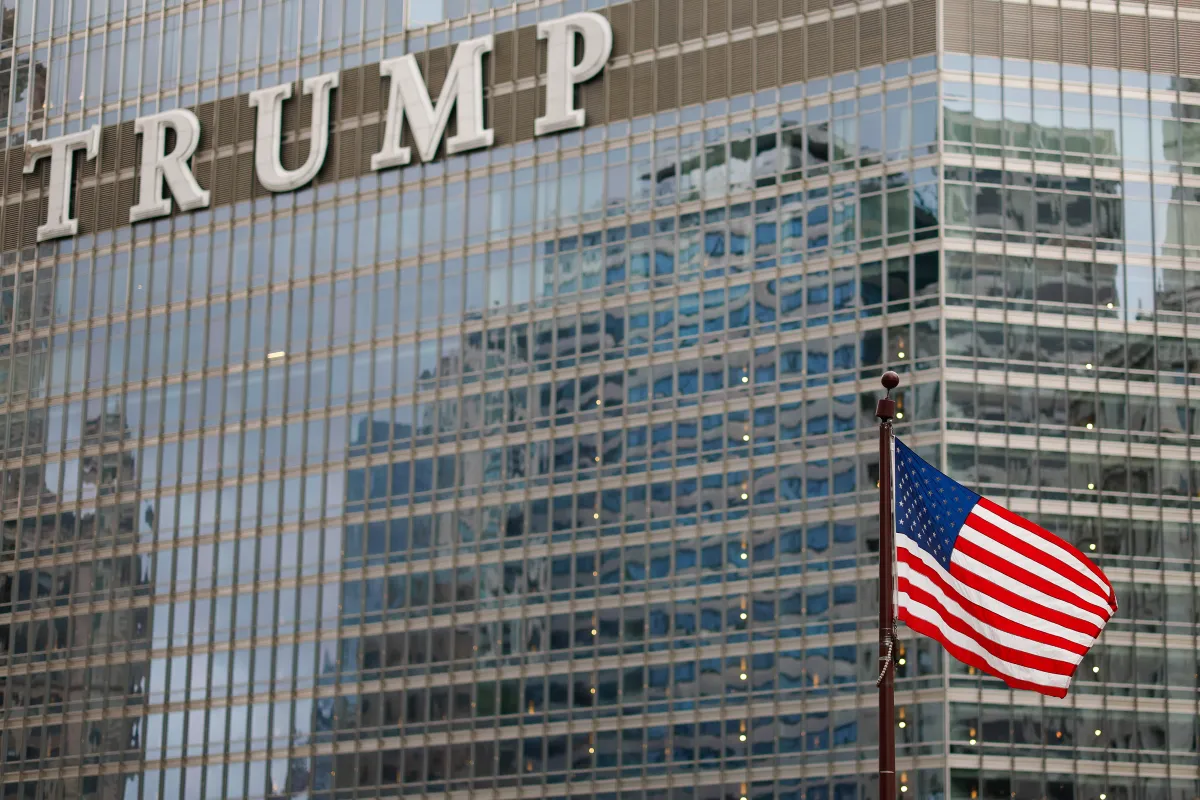
The glittering, ninety-two-story monolith of the Trump International Hotel & Tower has long dominated the scenic visual landscape of Chicago’s downtown riverfront, casting a literal and metaphorical shadow over the heart of the Windy City. Yet, beneath its massive metallic branding, a quiet but rapidly accelerating grassroots rebellion is underway, seeking to permanently alter the physical and psychological landscape surrounding the skyscraper. A citizen-led drive to rename the prominent stretch of North Wabash Avenue—the very street that flanks the luxury property—to “Barack Hussein Obama Avenue” has transformed from a localized symbolic protest into a major municipal zoning battle. What began as a modest online petition on Change.org launched by local advocate Bryce Jones has ballooned to over thirty thousand signatures, capturing the imagination of Chicagoans who wish to see their city’s central corridors reflect values of progressive hope, inclusivity, and community organization rather than real-estate branding. For Jones and his legions of supporters, rewriting the literal postal address of Donald Trump’s prized Chicago asset is a deliberate, highly visible exercise in civic reclamation. The proposal has forced its way into the halls of local government, finding a legislative champion in Alderman Brendan Reilly, who recently introduced a measure to grant the street an honorary designation. Yet, this push faces immediate administrative hurdles, as the Chicago City Council’s standardized rules traditionally prohibit honorary street designations for living individuals. As the ordinance heads to the Committee on Pedestrian and Traffic Safety, it represents far more than a routine bureaucratic debate; it is a battle for the soul and identity of Chicago’s public spaces, pitting the built legacy of one president against the living memory of another.
This architectural and symbolic confrontation is unfolding against the backdrop of a major milestone on the city’s historic South Side: the grand opening of the highly anticipated Obama Presidential Center. Sprawling across nearly twenty acres of historic parkland, the center represents the most expensive and architecturally ambitious presidential project in American history, representing a massive shift away from the traditional, insular archives of past administrations toward an open, community-centric campus. Designed to revitalize the surrounding neighborhood through public programming, educational spaces, and athletic facilities, the center stands as a horizontal monument to collaborative civic life. In stark, dramatic contrast, Donald Trump’s vision of presidential remembrance remains resolutely vertical and commercial; the former president has laid out plans for a rival presidential library housed in a towering Miami skyscraper, complete with a replica White House ballroom, a parked presidential jet, and perhaps even a luxury hotel. To Trump, the Obama Center’s modern, organic architecture is an easy target for mockery. Ahead of its official opening, Trump took to his digital platforms to lambast the design, calling the state-of-the-art campus a “total disaster” and “not too pretty.” He went as far as sharing an AI-generated image depicting the sleek, stony structures of the Obama Center overrun by discarded garbage and surrounded by a dense sprawl of homeless encampments, a provocative visual argument meant to devalue the former president’s physical legacy.
This digital mudslinging is merely the latest chapter in a long-standing, deeply personal feud that has increasingly prioritized online shock value over political discourse. Trump’s attacks escalated dramatically with his sharing of another AI-generated image that depicted Barack and former First Lady Michelle Obama as monkeys, an act that triggered immediate, widespread national outrage and condemnation. Such raw hostility illustrates how the rivalry has moved past policy disagreements and mutated into a persistent culture war. To understand why Trump is so deeply invested in dismantling Obama’s legacy, one must look at the psychological landscape of both men. Obama’s political career was built on the concepts of hope, systemic change, and sophisticated civic engagement, elements that Trump has consistently sought to frame as weak, fraudulent, and elitist. By weaponizing digital media to distort the images of the former first couple and their physical monument in Chicago, Trump seeks to strip them of their historic dignity. However, this aggressive posturing also reveals a persistent anxiety regarding how history will ultimately compare the two men: one, a community organizer who rose to build a public park on Chicago’s South Side; the other, a real estate mogul whose primary legacy is written in gold leaf upon private high-rises.
Beyond personal attacks, the feud has regularly used the city of Chicago itself as a political punching bag. For years, Trump has painted the nation’s third-largest city as a dystopian, crime-ridden warzone ruined by Democratic governance, frequently clashing with local leaders like Illinois Governor J.B. Pritzker and Chicago’s mayoral office over issues of policing, federal resources, and immigration. Following a tragic weekend in the city that left seven people dead and thirty-eight others wounded, Trump seized the moment to broadcast his familiar law-and-order narrative on Truth Social, lamenting the “killing going on in Chicago” and demanding to know why Governor Pritzker had not begged him for federal intervention. Trump asserted that under his leadership, he could transform Chicago into one of the safest cities in the world within a single month, pointing to his alleged pacification of Washington, D.C., during his presidency as proof of his executive strength. This rhetorical exploitation of local tragedy deeply frustrates Chicagoans, who find their real, complex struggles with systemic violence reduced to talking points for national campaigns. While local police statistics do indicate a minor rise in shooting incidents compared to the previous year, the broader reality is far more nuanced, with violent crime rates in Chicago and across the country showing a steady, multi-year decline—a reality that direct political rhetoric often ignores.
The roots of this bitter animosity run deep, stretching back nearly two decades to a defining period of American political history. Between 2008 and 2011, Trump systematically elevated his own national political profile by championing the infamous “birther” conspiracy theory, casting doubt on Obama’s American citizenship and the legitimacy of his presidency. Even after Obama took the extraordinary step of releasing his long-form birth certificate from Hawaii, Trump continued to fan the flames of skepticism, establishing a template for the post-truth political era. The turning point of their public relationship occurred at the 2011 White House Correspondents’ Dinner, where Obama, sitting just yards away from Trump, delivered a devastatingly witty, highly publicized roast of the real estate mogul, poking fun at his conspiracy theories and his reality television career. Many political analysts believe that this public humiliation was the exact catalyst that solidified Trump’s determination to run for the presidency himself, turning a personal grudge into a historical crusade to dismantle every policy, treaty, and symbolic progress associated with the Obama administration. Throughout his 2016 campaign and his subsequent presidency, Trump made the systematic undoing of Obama’s achievements his primary domestic goal, ensuring that their names would remain permanently linked in the annals of American political warfare.
Despite the relentless provocations radiating from Mar-a-Lago, allies of Barack Obama have largely chosen to respond with a strategy of dignified resistance and civic invitation. Rather than trading insults on social media, officials at the Obama Foundation have worked to keep the public focus trained squarely on the community mission of the new South Side campus. In a move that perfectly illustrates this contrasting approach, Valerie Jarrett, the CEO of the Obama Foundation and a long-time senior advisor to the former president, issued a public invitation to Trump during an interview, encouraging him to visit the new center and experience it firsthand. Jarrett expressed confidence that once visitors step onto the spectacular, inclusive campus, the physical beauty and community-centered reality of the space will speak for itself, offering to personally give Trump a tour of the facility so he could judge its merits without the distortion of digital filters. This gesture of radical hospitality serves as a powerful counterweight to Trump’s hostility, demonstrating a refusal to let the legacy of the nation’s forty-fourth president be defined by the grievance of the forty-fifth. As the municipal fight over North Wabash Avenue prepares to wind its way through Chicago’s City Council, the city finds itself acting as a living canvas for this historic struggle, where the names of two rivals remain permanently etched into the concrete, the glass, and the collective memory of the American people.