


The geopolitical landscape of the Middle East was violently shaken on Sunday when President Donald Trump and the Iranian regime finalized a surprise Memorandum of Understanding (MOU), initiating what Washington promises will be a new era of stability but what many in Israel fear is a strategic trap. The unexpected announcement, confirmed swiftly by Iran’s Supreme National Security Council, declared an immediate and permanent halt to all military operations across multiple active fronts, most notably including the volatile borderlands of southern Lebanon. For a battle-weary Israeli public still reeling from the profound trauma of the October 7, 2023, massacres, the sudden prospect of a Washington-brokered diplomatic freeze sparked an intense national debate, characterized by a fragile wait-and-see pragmatism on one side and fierce, existential alarm on the other. In Washington, President Trump celebrated the diplomatic milestone with characteristic bravado, triumphantly announcing the reopening of the vital Strait of Hormuz to international shipping and declaring to global markets to “let the oil flow,” framing the accord as a supreme triumph of transactional statecraft. Yet, beneath the celebratory rhetoric of the White House and the triumphant spin emanating from Tehran’s state apparatus, lies a deep and agonizing friction between American diplomatic ambitions and Israel’s non-negotiable security requirements. The 60-day window established for the negotiation of a comprehensive, permanent treaty has effectively placed the entire region on a knife-edge, forcing Israeli policymakers to rapidly dissect whether this agreement represents a genuine path toward neutralizing the Iranian threat or a dangerous capitulation that will ultimately leave the Jewish state isolated and exposed to its most implacable foe.
In the immediate wake of the announcement, the Israeli defense establishment moved swiftly to draw an uncompromising line in the sand, signaling that diplomatic breakthroughs in Washington would not dictate the physical realities of Israel’s borders. Defense Minister Israel Katz emerged as the primary voice of military defiance, deliberately withholding direct condemnation of President Trump’s efforts while simultaneously asserting that the Israel Defense Forces (IDF) have no intention of abandoning their hard-won strategic positions. Katz made it emphatically clear that Israeli troops would remain deployed in newly established security zones across southern Lebanon, Syria, and the Gaza Strip indefinitely, dismissing any proposed timeline for withdrawal as an unacceptable compromise to national survival. Characterizing these territorial buffers as some of the IDF’s most significant strategic achievements in the grueling multi-front war, Katz warned that any hostile attempt by Iran or its local proxies to exploit the new diplomatic framework would be met with devastating, asymmetrical military force. To ensure there was no misunderstanding in the American capital, Katz emphasized that both he and Prime Minister Benjamin Netanyahu had directly communicated these red lines to President Trump and his incoming Secretary of War, Pete Hegseth. This firm military stance highlights a profound disconnect between the high-level diplomatic theater of superpower negotiations and the grim, tactical reality of defending vulnerable border communities who cannot afford to rely on the hollow promises of a distant diplomatic accord.
Adding intellectual weight to these worries is the expert community’s deep skepticism regarding the opaque details of the framework, which many fear may ultimately legitimize Iran’s regional dominance rather than dismantle it. Yossi Kuperwasser, the former head of the IDF’s Military Intelligence research division and current leader of the Jerusalem Institute for Strategy and Security, cautioned that the current secrecy surrounding the negotiations suggests the leaked details may have been strategically disseminated by hardline factions within Tehran to project an illusion of victory. Kuperwasser outlined the uncompromising parameters of what would constitute a genuinely “good deal” from a seasoned intelligence perspective: the absolute elimination of every single component of Iran’s nuclear program, the immediate relinquishment of its highly enriched uranium stockpiles, and the establishment of an invasive, unhindered international monitoring regime capable of inspecting clandestine military installations. Furthermore, he argued that any legitimate agreement must explicitly ban the development of ballistic missiles designed to carry nuclear payloads, while fiercely criticizing the inclusion of Lebanon in the Washington-Tehran dialogue. By allowing Iran to negotiate on behalf of Lebanese interests, the agreement inadvertently validates Tehran’s imperialist grip over Beirut, ignoring the sovereign rights of the Lebanese state and providing a diplomatic shield behind which a heavily battered Hezbollah can quietly regroup, rearm, and prepare for the next inevitable phase of its campaign against the communities of northern Israel.
This strategic anxiety has quickly ignited a political firestorm within Israel’s notoriously fractured domestic arena, where opposition leaders have seized upon the emerging deal to launch a scathing critique of Prime Minister Netanyahu’s wartime leadership. Former Prime Minister Yair Lapid, now leading the parliamentary opposition, did not mince words in condemning the agreement, declaring it an unmitigated disaster that fails to achieve a single one of Israel’s clearly defined war aims. Lapid publicly accused Netanyahu of allowing Israel to be marginalized on the world stage, arguing that under the Prime Minister’s watch, the country is being reduced to little more than a submissive “client state” that meekly accepts foreign dictates regarding its most vital national security interests. This political onslaught cuts directly to the heart of the security doctrine Netanyahu articulated as recently as mid-March, which explicitly pledged to remove the Iranian nuclear threat, destroy its ballistic missile capabilities before they could be buried in invulnerable underground bunkers, and foster the geopolitical conditions necessary for the oppressed Iranian populace to reclaim their democratic freedom. From the opposition’s perspective, the Trump-concluded memorandum leaves the fundamentalist regime in Tehran entirely intact, preserves its advanced missile infrastructure, and allows the ayatollahs to systematically rebuild their atomic program, representing a historic failure of Israeli deterrence and an abandonment of the country’s existential red lines.
Simultaneously, the most nationalist elements of the ruling coalition have adopted a posture of absolute sovereign defiance, warning that Jerusalem will never allow its security to be outsourced to any foreign power, regardless of how friendly the administration in Washington may be. National Security Minister Itamar Ben-Gvir took to social media to deliver a blunt, populist rejection of the Memorandum of Understanding, declaring flatly that the state of Israel is an independent, sovereign nation that is not subject to the whimsical shifts of American foreign policy. While expressing profound admiration for the American people and sincere gratitude for President Trump’s historic support, Ben-Gvir colorfully asserted that Israel is “not a banana republic” and would refuse to be bound by an agreement that fails to guarantee the safety of its citizens, soldiers, and the broader Jewish diaspora. This fierce rhetorical pushback exposes the growing pains of the right-wing alliance, revealing a deep-seated domestic resolve that refuses to trade tactical military advantages on the ground for diplomatic praise abroad. For Ben-Gvir and his significant political constituency, the physical security of Israel’s borders must remain entirely under the control of the IDF, free from the constraints of international treaties that have historically failed to protect the state from regional aggression and terror.
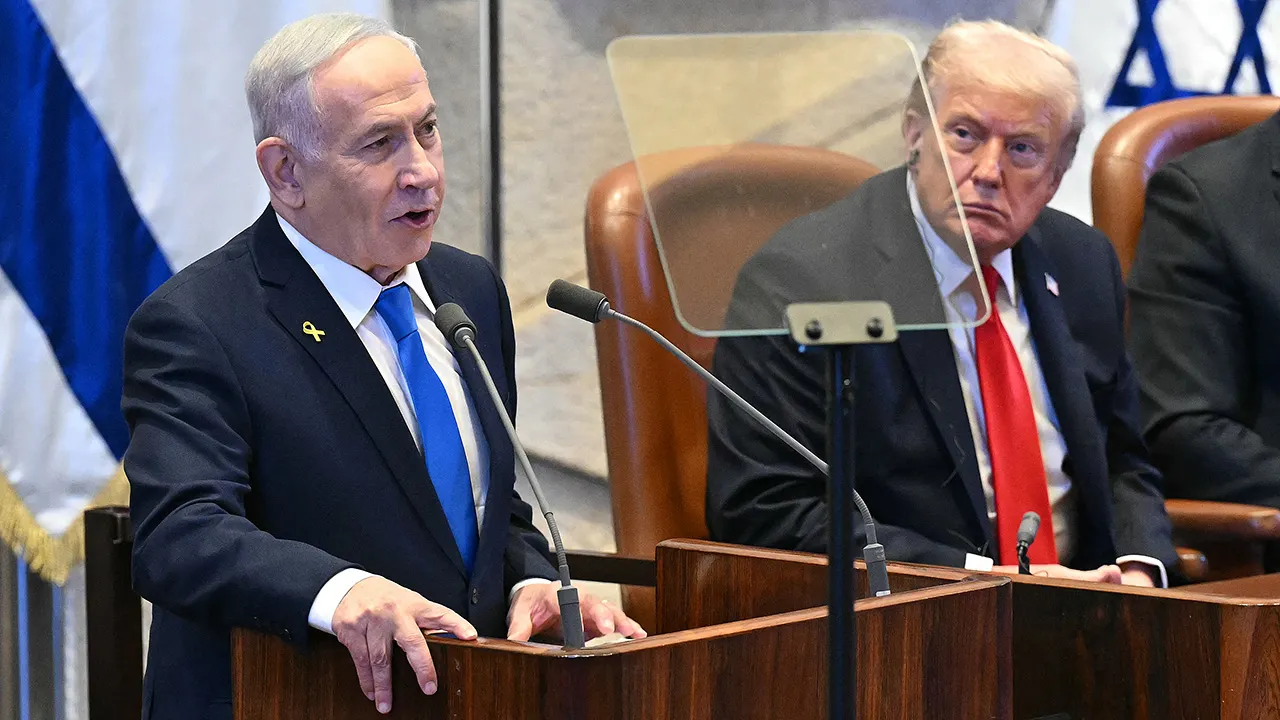
Faced with this complex web of military, political, and strategic pressures, Prime Minister Benjamin Netanyahu finds himself walking a delicate diplomatic tightrope, attempting to honor his vital alliance with Donald Trump while steadfastly preserving Israel’s ultimate freedom of military action. In an carefully calibrated statement released by his office, Netanyahu sought to bridge this gap by expressing deep appreciation for Trump’s ultimate vision—specifically highlighting the President’s commitment to eventually dismantling Iran’s enrichment infrastructure, removing its enriched fissile material, and cutting off Tehran’s funding for regional terror proxies. Yet, the Prime Minister pointedly reminded the international community that Israel was not a formal party to the memorandum, asserting with absolute clarity that as long as he remains in office, Iran will never be permitted to cross the threshold into a nuclear-armed power. Drawing upon his three decades of relentless global campaigning against the Iranian nuclear threat, Netanyahu cast himself as the historic sentinel of Jewish survival, reminding both critics and allies alike that but for his uncompromising resistance, the regime in Tehran would have long ago acquired the atomic arsenal necessary to carry out its promised destruction of the Jewish state. Ultimately, this delicate posture reveals that while Israel is willing to grant its closest ally the diplomatic space to test Iran’s sincerity, the nation reserves the unilateral, sovereign right to launch a preemptive strike if the illusions of diplomacy threaten to pave the way for an existential catastrophe.