



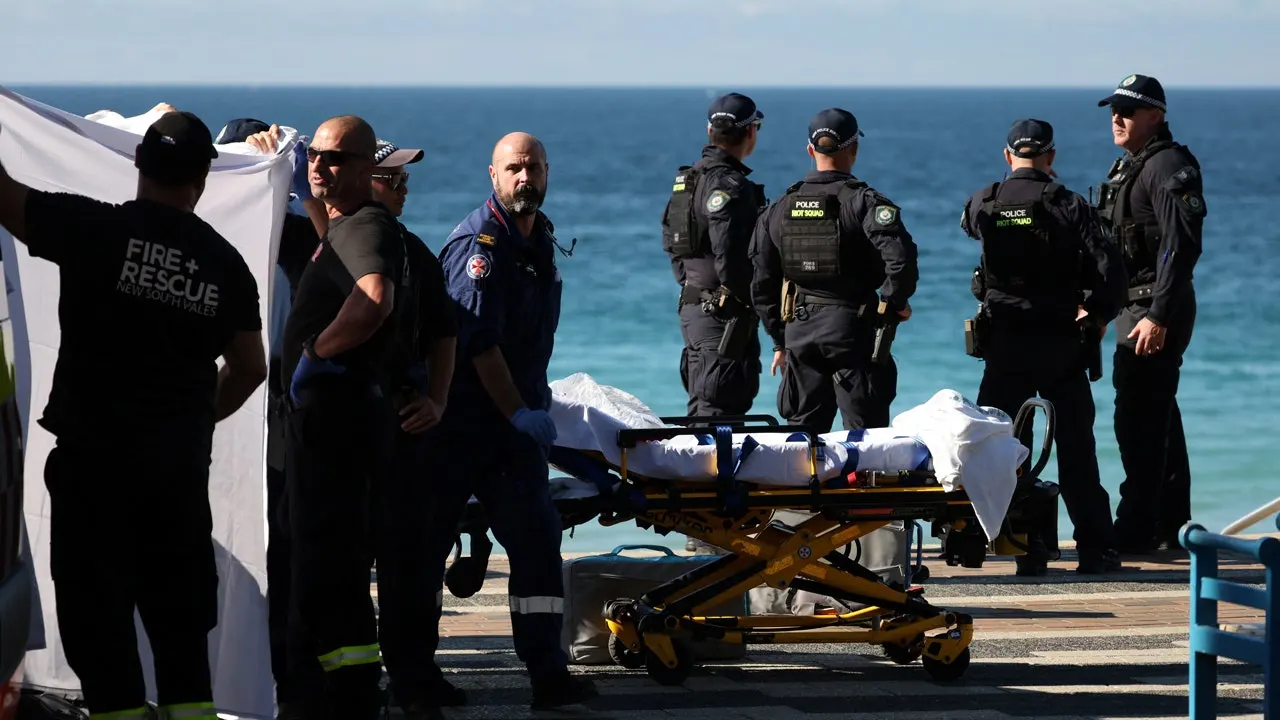
On a quiet, sun-drenched Saturday morning, the golden sands of Sydney’s iconic Coogee Beach were transformed from a place of weekend sanctuary into a scene of sudden, harrowing crisis. As beachgoers basked in the early warmth and swimmers coasted through the gentle, rolling surf, the peaceful rhythm of the ocean was instantly shattered by a terrifying encounter. A 30-year-old woman, swimming just off the shore, found herself in a desperate struggle for survival when she was suddenly and violently attacked by a shark. In moments of extreme dread, humanity’s finest instincts often rise to the surface, and this morning was no exception. Rather than panicking or fleeing the water, heroic members of the local community rushed directly into the surf to rescue the severely injured swimmer, dragging her back to the safety of the shoreline where they immediately began administering vital, life-saving first aid.
The frantic efforts on the sand soon merged with a highly orchestrated medical response as emergency sirens echoed down the coastal streets. Paramedics and police rushed to the scene to assist the brave bystanders, realizing quickly that the young woman’s injuries to her arm and leg were critical and required urgent, specialized care. A rescue helicopter was dispatched to airlift her directly to a nearby hospital, leaving behind a stunned crowd of witnesses grappling with the fragile line between a beautiful morning swim and a life-altering tragedy. In the immediate aftermath, local authorities acted swiftly to close Coogee Beach along with two neighboring coastlines, transforming the usually bustling waters into quiet, empty stretches of blue, as the community tried to make sense of the sudden violence that had visited their shores.
This shocking incident is not an isolated misfortune; rather, it represents the latest chapter in a deeply unsettling period of heightened shark activity along the vast, diverse coastlines of Australia. Just a week prior to this attack, a somber cloud settled over the community of Albany in Western Australia when a 35-year-old fisherman was killed by a massive shark, estimated to be nearly fifteen feet in length, while spearfishing near Michaelmas Island, a pristine and protected marine sanctuary. The tragedy was compounded by memories of May 24, when 39-year-old Michael Jensz lost his life after being struck by a suspected bull shark while enjoying a spearfishing excursion along the breathtaking Great Barrier Reef. Merely days before that, on May 16, the vibrant community near Rottnest Island—a world-famous tourist haven off Western Australia—was left grieving the loss of 38-year-old Steve Mattabonni, who was killed in a suspected great white shark attack, illustrating the immense peril and unpredictable nature of the deep ocean.
To understand why these encounters are occurring with such devastating frequency, experts point to a complex interplay of environmental factors and shifting weather patterns that alter marine habitats. Earlier in the year, severe and persistent rainstorms swept across Australia’s eastern coast, washing heavy land runoff, organic debris, and nutrients into the coastal waters. This environmental disturbance turned the usually crystal-clear tides of the Pacific into murky, low-visibility zones, creating optimal conditions for predatory hunting. Sharks, particularly bull sharks, thrive in these darker, nutrient-rich waters where their keen senses can easily locate prey while their human targets are left virtually blind to the surrounding dangers, a reality that unfortunately led to the closure of dozens of beaches in January alone after four shark attacks occurred in a mere forty-eight-hour window.
The emotional weight of these events is felt deeply throughout a nation where the ocean is not merely a geographic boundary, but a central component of the cultural identity. For Australians, the beach is a sacred public space of joy, connection, and athletic pursuit, making the recent string of encounters—including the tragic death of a 12-year-old child in Sydney Harbour earlier this year—feel like a profound disruption to their way of life. The average of twenty shark attacks annually across the continent speaks to the inherent risks of stepping into a wild, untamed ecosystem, forcing a national conversation about how to protect human lives with shark nets, drumlines, and aerial drones without severely disrupting the delicate marine life that calls these waters home.
Ultimately, the incident at Coogee Beach serves as a powerful reminder of both human fragility and our enduring connection to the natural world. As the 30-year-old survivor begins what will undoubtedly be a long and difficult physical and emotional recovery in the hospital, the thoughts of the nation remain with her and the grieving families of those who did not survive their encounters. The ocean will always beckon to the human spirit with its beauty and mystery, but these events demand a renewed sense of vigilance, humility, and deep respect for the powerful creatures who rule the depths beneath the waves.