


The Grand Metamorphosis: Why Binance’s Migration from Toncoin to Gram Marks a Full-Circle Evolution for Web3 and Telegram’s Legacy
The Historical Pivot and the Return to Telegram’s Original Vision
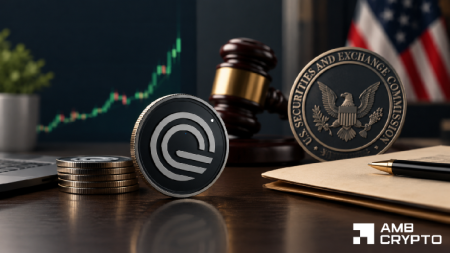
In the highly volatile and rapidly evolving arena of the global cryptocurrency market, brand identity and systemic evolution often move in lockstep, reflecting the strategic adjustments of decentralized protocols seeking both technological maturity and regulatory harmony. The recent announcement that Binance, the world’s preeminent virtual asset exchange by trading volume, will comprehensively support Toncoin’s ($TON) transition to its original moniker, Gram (GRAM), represents far more than a nominal corporate makeover. It is a profound, narrative-rich return to the genesis of one of modern Web3’s most resilient layer-1 networks. Originally conceptualized by the Durov brothers and the core engineering squad behind the Telegram messenger application, the blockchain initiative was famously halted in its tracks in late 2019 and early 2020 following an intense, highly publicized regulatory offensive by the United States Securities and Exchange Commission (SEC).
+——————————————————————-+
| CHRONOLOGY OF THE ECOSYSTEM EVOLUTION |
+——————————————————————-+
| 2018 – 2019: Telegram Open Network (TON) raises $1.7 billion. |
| 2020 : SEC halts launch; Pavel Durov relinquishes project. |
| 2021 – 2024: Community-led TON Foundation scales “Toncoin”. |
| 2026 : Alliance with Binance restores original “Gram” name.|
+——————————————————————-+
The subsequent migration of the open-source code to independent community developers—who coalesced under the banner of the TON Foundation—kept the architectural dream alive, cultivating an ecosystem that effectively bridged Web2 chat interfaces with Web3 decentralized finance. By resurrecting the historical name “Gram,” the ecosystem is executing a calculated philosophical and strategic realignment. This shift sheds its intermediary mantle to embrace the authentic moniker that first captured the imagination of the global developer community and venture capital landscape half a decade ago, signaling to the world that the protocol has matured past its historical legal hurdles and is ready to fulfill its original destiny as the native currency of an integrated, global social ecosystem.
Decoding the Binance Migration Mechanics and Trade De-listing Protocols
Institutional transitions of this scale require rigorous, highly structured operational protocols to prevent market fragmentation, price disparities, and order book manipulation during the migration window. Binance’s meticulously detailed schedule reveals that the curtain will fall on the active trading of Toncoin ($TON) on June 30, 2026, at precisely 06:00 UTC. At this critical hour, the global exchange will purge every existing spot trading pair associated with the native digital asset from its active matching engines. This radical removal includes crucial global liquidity gateways such as:
- Stablecoin Corridors:
TON/USDT(Tether)TON/USDC(USD Coin)TON/FDUSD(First Digital USD)
- Fiat & Regional Gateways:
TON/TRY(Turkish Lira)TON/IDR(Indonesian Rupiah)
- Specialty Pairings:
TON/UTON/USD1
Traditional Spot Markets ──► [ June 30, 06:00 UTC ] ──► Complete Cancellation of Open Orders
Simultaneously, all pending limit, market, and stop-loss orders on these pairs will be automatically cancelled by the exchange’s automated execution engines. This programmatic flush is designed to shield retail and institutional traders alike from erratic slippage and artificial volatility spikes that inevitably manifest when market depth thins ahead of a network-wide asset conversion. Market observers note that this operational shutdown serves to isolate the token’s value, forming a stable baseline value from which the subsequent conversion to Gram can be cleanly measured and executed without the persistent noise of active, high-frequency spot speculation.
Operational Suspension and User Action Contingencies
The transition window between the closure of active spot trading and the full network freeze is a high-risk zone characterized by extreme coordination challenges across globally distributed validators, liquidity providers, and custodians. Following the spot market removal, Binance will initiate a temporary but absolute freeze on all incoming deposits and outgoing withdrawals of native $TON on June 30, 2026, at 06:30 UTC—exactly thirty minutes after the trading pairs cease to exist. This brief, thirty-minute gap of relative systemic quiet is optimized to process final pending on-chain ledger confirmations, allowing the underlying consensus mechanism of the network to lock transactional states.
For global market participants, liquidity providers, and casual holders, this temporary operational blackout demands meticulous preparation and foresight. Network latency, transaction queuing times, and potential spikes in congestion across the Toncoin blockchain imply that transfers executed immediately prior to the cutoff run a severe risk of being trapped in processing limbo. Industry professionals are strongly advising market participants to complete all essential on-chain movements well in advance of the 06:30 UTC deadline, ensuring that all assets are securely booked inside internal personal wallets or centrally held on the exchange to avoid settlement discrepancies during the systemic changeover.
              CRITICAL CUTOFF TIMEWINDOW (UTC)

 06:00 UTC                                 06:30 UTC
+————–+————————–+————–+
| Spot Trading | Grace Period for Last | Deposits & |
| Terminated | On-Chain Transactions | Withdrawals |
| | | Suspended |
+————–+————————–+————–+
The Birth of Gram Trading and Liquidity Re-establishment
Following a meticulously calculated period of behind-the-scenes system adjustments and data reconciliation, the newborn digital asset, Gram (GRAM), will officially emerge to reclaim its place in the global digital asset ecosystem. The grand re-opening of the network’s transactional gates will begin on July 2, 2026, at precisely 10:00 UTC, at which point Binance will reinstate full services for deposits and withdrawals of the newly designated GRAM token. Almost immediately thereafter, at 11:00 UTC—an hour-long window designed to let liquidity find its footing on the exchange’s ledger—the trade matching engines will spark back to life.
A comprehensive suite of spot trading pairs will be inaugurated, seamlessly replicating the previous market structure:
$$text{GRAM/USDT}, quad text{GRAM/USDC}, quad text{GRAM/FDUSD}, quad text{GRAM/TRY}, quad text{GRAM/IDR}, quad text{GRAM/U}, quad text{and} quad text{GRAM/USD1}$$
By re-establishing these key stablecoin and fiat gateways concurrently, market makers and institutional desks will be capable of immediately routing capital back into the rebranded ecosystem. This localized liquidity will ensure that the newly minted Gram token avoids the catastrophic price discovery phases often associated with newly launched altcoins, leveraging Toncoin’s deep existing base of market support to guarantee smooth, low-slippage trade execution across diverse geographic regions.
   DEPOSIT / WITHDRAWAL REOPENING         SPOT TRADING LAUNCH
   +----------------------------+        +--------------------------+
   |   July 2, 2026, 10:00 UTC  |  ───►  |  July 2, 2026, 11:00 UTC |
   +----------------------------+        +--------------------------+
Behind the Scenes of Automated Exchange Conversions
To the untutored observer, the total migration of an entire layer-1 blockchain’s native token appears almost magical, yet it represents one of the most sophisticated feats of software engineering and administrative coordination a custodial trading platform can execute. Binance has officially confirmed that for the average retail user holding assets directly within their web or app-based exchange wallets, the migration is completely transparent, requiring absolute zero manual intervention or technical troubleshooting. Under the hood, Binance’s proprietary database management systems and ledger custody protocols will programmatically debit all existing $TON balances and credit corresponding balances of Gram (GRAM) at a clean, pre-determined conversion ratio.
                              +-----------------------+
                              | Binance Custodial DB  |
                              +-----------------------+
                                          |
                 +------------------------+------------------------+
                 |                                                 |
                 v                                                 v
    [ Old Token Ledger: $TON ]                       [ New Token Ledger: GRAM ]
    - Debited to 0                                   - Credited proportionally
    - Deposit addresses retired                      - New addresses generated
This back-end synchronization involves aligning historical ledger states, rewriting database schemas, and re-mapping user deposit addresses without interrupting the broader exchange’s continuous trading services. Once this intricate procedure is completely finalized, any residual support for the original $TON smart contract configurations, addresses, and transactional parameters will be permanently decommissioned. Consequently, any post-deadline attempt to route native Toncoin using outdated network coordinates could result in the irrevocable loss of digital assets, emphasizing the absolute necessity of Binance’s comprehensive infrastructure overhaul.
Strategic Implications: The Vision and Ecosystem Maturity
Ultimately, this monumental shift from Toncoin to Gram represents far more than a logistical reorganization; it serves as a harbinger of a new era of decentralized application scaling, native application integration, and ecosystem maturity. The transition aligns perfectly with the network’s contemporary roadmap, which envisions Gram acting as the ultimate native asset powering a massive Web3 layer integrated into Telegram’s massive global user base of over 900 million active monthly users. By matching its name with its original vision, the project shakes off the last vestiges of legacy legal disputes and steps forward as a fully sovereign, mature, and community-driven layer-1 layer designed for consumer-scale payments, decentralized storage, and sovereign communications.
As institutional adoption continues to prioritize clarity, compliance, and product-market fit, Gram emerges uniquely positioned to capture real-world utility by transforming raw social engagement into self-custodial financial interactions. As the global digital asset economy enters a new era of mainstream commercial integration, the rebirth of Gram on the world’s most influential market platform could very well be remembered as the moment the original vision of decentralized, consumer-centric technology was fully and finally realized.
Disclaimer: This article is for informational and journalistic purposes only and does not constitute financial, investment, or legal advice. Cryptocurrency markets are highly volatile and speculative. Readers should conduct their own research and consult with a professional financial advisor before making any investment decisions.